
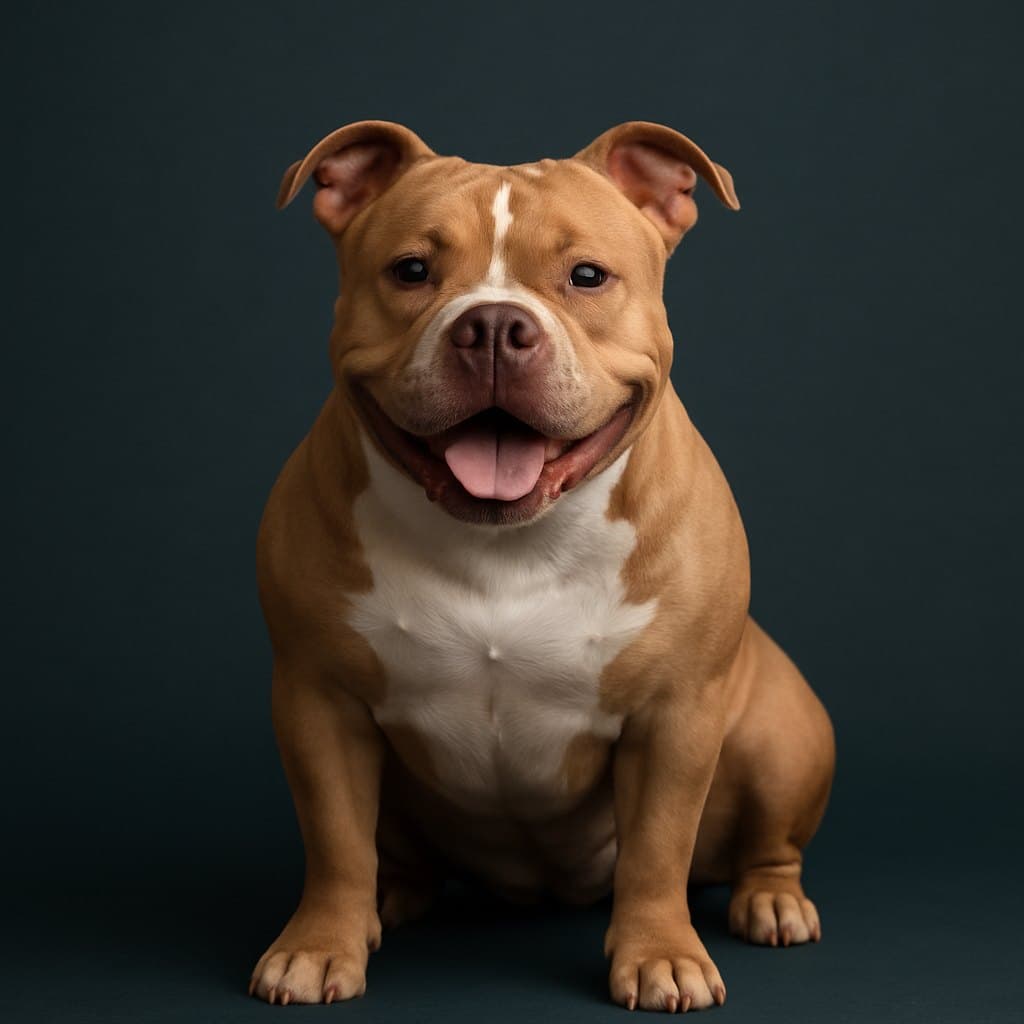
This is general guidance. Always ask your vet.
How long does a American Bully live?
A American Bully lives 8 to 13 years.
Veterinary sources commonly cite a lifespan between 8 and 12 or 13 years.
[S8][S9]What health problems are common in the American Bully?
The most common in the American Bully are: Hip & Elbow Dysplasia, Brachycephalic Obstructive Airway Syndrome (BOAS), Congenital & Inherited Heart Disease, Allergic Dermatitis & Skin Fold Pyoderma, Congenital Ichthyosis (NIPAL4-type).
Hip & Elbow Dysplasia [S21]
This condition involves malformation or joint laxity in the hips and elbows, which can cause joint degeneration.
Ask your vet about:
- PennHIP pelvic radiographs
- OFA hip and elbow radiographs
Brachycephalic Obstructive Airway Syndrome (BOAS) [S22]
This respiratory disorder involves upper airway abnormalities that cause breathing obstruction and reduced exercise tolerance.
Ask your vet about:
- Sedated visual upper airway examination
- Clinical respiratory exercise tolerance grading
Congenital & Inherited Heart Disease [S23]
These heart conditions include structural defects such as subaortic stenosis, pulmonic stenosis, and dilated cardiomyopathy.
Allergic Dermatitis & Skin Fold Pyoderma [S24]
These conditions involve skin allergies and bacterial infections within facial or bodily skin folds.
What is a American Bully's temperament like?
The American Bully is a stable, outgoing, and affectionate companion. It exhibits low prey drive and shows an eager willingness to please its household.
[S3][S4][S5][S13][S14][S15]How much exercise does a American Bully need?
A American Bully needs 45 to 60 minutes of exercise a day.
The breed has moderate daily energy needs. Activities such as on-leash walks, low-impact fetch, and nose work provide stimulation while protecting joints.
- Energy3 / 5
How much does a American Bully shed, and how do you groom it?
Brush the coat weekly with a rubber curry brush or firm bristle mitt. Bathe only every 4 to 8 weeks or when physically dirty.
smooth, short, glossy, and close-lying
- Shedding3 / 5
Is a American Bully good with children and other pets?
The breed is patient and sturdy around children, though adult supervision is necessary because of its physical strength. Same-sex dog reactivity can occur without clear boundaries. Apartment life works well when daily exercise needs are met and stairs are limited.
- With children4 / 5
- With other pets3 / 5
- In an apartment3 / 5
Is a American Bully easy to train?
American Bullies are intelligent and food-motivated. Use consistent, positive-reinforcement techniques and focus early on loose-leash walking and recall to manage muscular pull.
- Ease of training4 / 5
What does a American Bully eat at each life stage?
- PuppyFeed a measured growth diet formulated for large-breed puppies to regulate calcium-to-phosphorus ratios and protect bone development.
- AdultFeed portion-controlled meals formulated for adult maintenance to maintain a lean body condition and avoid extra weight that stresses joints.
- SeniorConsult your veterinarian to adjust calorie levels and portion control to prevent excess body fat and protect aging joints.
Where does the American Bully come from?
Breeders developed the American Bully in the mid-1990s primarily by crossing the American Pit Bull Terrier and the American Staffordshire Terrier with bulldog-type breeds. The American Bully Kennel Club standardized the breed in 2004, followed by United Kennel Club recognition in 2013 and American Dog Breeders Association recognition in 2015.
Country of origin: United States.
[S1][S2][S3]Fun facts about the American Bully
- The American Bully Kennel Club recognizes the breed in four sizes: Pocket, Standard, Classic, and XL. [S30]
- The United Kennel Club classifies the American Bully in the Companion Dog Group rather than a working group. [S2]
- Merle coat coloration is strictly disqualified or penalized in official breed show rings due to health concerns. [S2][S5]
- The Classic Bully shares the exact same height limits as the Standard Bully but carries a lighter frame and bone structure. [S7]
- Several countries regulate or ban the breed under breed-specific legislation, including the United Kingdom, Ireland, the UAE, and Germany. [S2]
Tips by life stage and weather
- PuppyTeach structured leash walking early so you can guide your dog safely as its physical strength grows.
- PuppyLimit stair climbing during early development to protect heavy, growing frames from joint strain.
- AdultProvide 45 to 60 minutes of daily physical exercise, combining on-leash walks with interactive scent games.
- AdultMeasure every meal carefully to prevent weight gain that could burden the heart and joints.
- SeniorRely on low-impact exercise routines like gentle leash walks to keep muscles active without overtaxing joints.
- SeniorSchedule regular checkups with your veterinarian to monitor heart health and joint mobility.
- Hot seasonWalk your dog during early mornings or late evenings to protect airways and avoid respiratory distress.
- Hot seasonOffer shaded resting spots and constant access to fresh water during hot days.
- Cold seasonProvide an indoor bed away from cold drafts because the breed has a short, close-lying coat.
- Cold seasonKeep outdoor exercise sessions active to help maintain muscle warmth during chilly mornings.
- Rainy seasonDry your dog thoroughly with a clean towel after damp walks, checking skin folds to prevent moisture buildup.
- Rainy seasonEngage your dog with indoor nose work to satisfy daily mental energy needs when wet weather cuts outdoor walks short.
In the Kiba Vet app, your pet's breed profile shows a tip of the day based on its age and the weather where you live.
This is general guidance. Always ask your vet.
Checked against sources; veterinary review pending. Updated on September 29, 2026.
Written with the help of AI from the cited sources and checked fact by fact against them by a second model.
Sources
Every health fact and every number on this page comes from these sources. Identifiers from Wikidata (CC0).
- S1 adbadog.com
- S2 American Bully - Wikipedia
- S3 About the breed | Complete Bullies - Elite XL American Bully kennel
- S4 American Bully Pedigree Database
- S5 American Bully – THE AMERICAN BULLY KENNEL CLUB
- S6 What height are American Bully? - Bullymon | Mini Exotic and Pocket Bully Puppies Dog For Sale
- S7 American Bully Standard, Classes & Breed Guide (2026)
- S8 American Bully Lifespan: How Long Do Bullies Live?
- S9 American Bully Lifespan, Health Problems, and Care
- S13 bullyassure.com
- S14 ebkc.org
- S15 rover.com
- S16 american bully progression
- S17 10 Key Facts to Know Before Buying an American Bully Puppy | Lancaster Puppies
- S18 The Gentle Guardian: American Bully Breeds Explained - Showtime Bullies
- S19 American Bully: Characteristics & Care | Wag!
- S20 American Bully Breed Guide: Quirks, Pictures, Personality – BARK
- S21 Health Testing the American Bully | Border City Bullies
- S22 Pocket Bully Health Problems & Warning Signs | Venomline
- S23 4 common health problems in bully breeds
- S24 American Bully: Health Problems
- S25 Dog Breed Disease Predispositions, Inherited Disorders and Congenital Conditions | Dr. Bob's Pet Health Information
- S26 #1 Guide to Health Testing — American Bully | Good Dog
- S27 purina.com
- S28 Best Dog Food for American Bully Dogs: 5 Picks
- S29 The American Bully Feeding Guide: Fueling Muscle Without the Extra Pou
- S30 American Bully Sizes: Micro vs Pocket vs Standard (2026)