
This is general guidance. Always ask your vet.
How big does a American Pit Bull Terrier get?
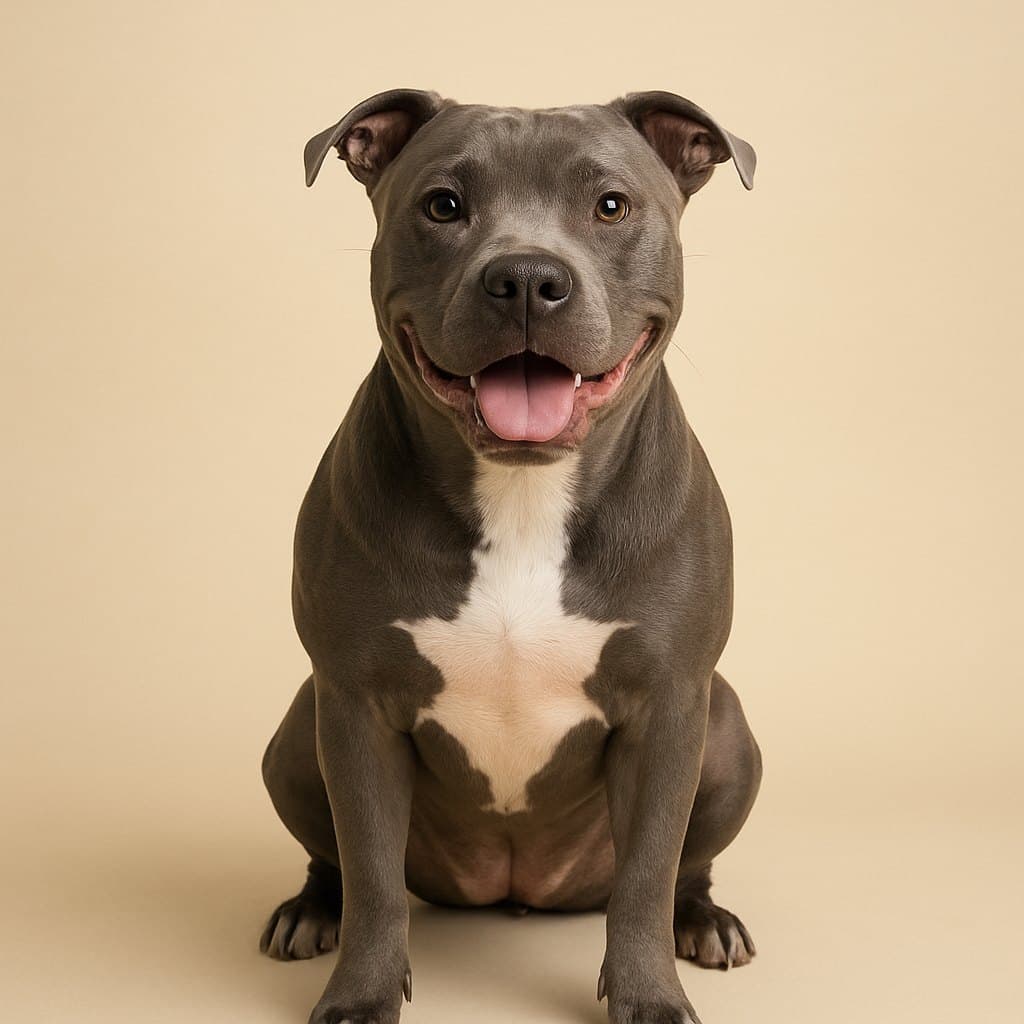
An adult American Pit Bull Terrier weighs 14 to 27 kg and stands 43 to 53 cm at the withers.
ADBA conditioned show weights range from 13.6 kg to 34 kg across sexes without fixed height limits. UKC male heights range from 48 cm to 53 cm, while UKC female heights range from 43 cm to 51 cm.
[S3][S4][S5]How long does a American Pit Bull Terrier live?
A American Pit Bull Terrier lives 12 to 16 years.
Companion animal studies indicate a median lifespan between 12.0 and 14.0 years for medium bull-type terriers, with healthy individuals living up to 16 years.
[S6][S7]What health problems are common in the American Pit Bull Terrier?
The most common in the American Pit Bull Terrier are: Hip and Elbow Dysplasia, Atopic Dermatitis, Congenital Heart Defects, Hypothyroidism, Demodectic Mange, Cerebellar Ataxia.
Hip and Elbow Dysplasia [S19][S20]
Joint malformations where bones fit poorly into hip or elbow sockets, causing wear and mobility issues.
Ask your vet about:
- OFA radiographic hip evaluations
- OFA elbow evaluations
- PennHIP distractive radiography
Atopic Dermatitis [S21][S22]
An inflammatory skin reaction triggered by environmental allergens.
Ask your vet about:
- Intradermal skin allergy testing
- Serum allergen-specific IgE testing
- Exclusion diet trials
Congenital Heart Defects [S23][S24]
Structural abnormalities of the heart present from birth, such as subaortic stenosis.
Ask your vet about:
- OFA Advanced Cardiac examination
- Cardiac auscultation
- Doppler echocardiography
Hypothyroidism [S19][S25]
A metabolic disorder caused by low production of thyroid hormones.
Ask your vet about:
- Baseline serum Free T4 panel
- Total T4 panel
- cTSH panel
- OFA thyroglobulin autoantibody test
Demodectic Mange [S22]
A skin infestation caused by Demodex canis mites multiplying on the skin and hair follicles.
Ask your vet about:
- Deep skin scrapings
- Trichograms
- Cytological analysis
What is a American Pit Bull Terrier's temperament like?
This breed demonstrates high enthusiasm, confidence, and strong affection toward humans. Historical selection created high prey drive and varying degrees of dog reactivity, while human-directed aggression is considered a serious standard fault.
[S1][S3][S8][S9][S10]How much exercise does a American Pit Bull Terrier need?
A American Pit Bull Terrier needs 60 to 90 minutes of exercise a day.
The breed needs vigorous daily activity and structured canine performance sports such as weight pulling, dock diving, rally obedience, or agility to prevent destructive chewing and escape attempts.
- Energy5 / 5
How does a American Pit Bull Terrier handle heat and cold?
Dense muscle mass generates high internal heat during exercise, elevating the risk of heat exhaustion. A short, single coat without an undercoat makes the breed vulnerable to hypothermia in cold conditions.
- Handles heat2 / 5
- Handles cold2 / 5
How much does a American Pit Bull Terrier shed, and how do you groom it?
Brush weekly with a rubber curry brush or soft bristle brush. Bathe once every 4 to 8 weeks to protect skin lipids.
Short, smooth, stiff, and glossy single coat without undercoat
- Shedding2 / 5
Is a American Pit Bull Terrier good with children and other pets?
The breed shows patience with children but requires supervision to avoid accidental knock-downs. Innate prey drive can trigger pursuit of smaller pets and dog reactivity. Apartment living is manageable with high daily exercise, though local housing rules and breed restrictions apply.
- With children4 / 5
- With other pets2 / 5
- In an apartment3 / 5
Is a American Pit Bull Terrier easy to train?
The breed learns well with positive reinforcement and structured reward markers. Early puppy socialization builds neutrality around novel stimuli, while strong pulling ability requires dedicated leash training and secure six-foot fencing.
- Ease of training4 / 5
What does a American Pit Bull Terrier eat at each life stage?
- PuppyOffer a puppy diet that satisfies growth standards for medium-to-large breeds to support steady bone, tendon, and joint growth.
- AdultProvide an adult maintenance diet rich in quality animal proteins and balanced fats to preserve lean muscle tissue during intense activity.
- SeniorFeed an adjusted senior formula with reduced caloric density, dietary fiber, and Omega-3 fatty acids like EPA and DHA to protect joints and skin.
Where does the American Pit Bull Terrier come from?
In nineteenth-century Great Britain, breeders crossed the Old English Bulldog with terriers to produce strong, agile dogs for pit ratting and animal fighting. Immigrants brought these bull-and-terrier crosses to the United States before the Civil War, where handlers used them as farm dogs, hunters, and livestock catch dogs.
Country of origin: United Kingdom.
[S1][S2]Fun facts about the American Pit Bull Terrier
- The United Kennel Club registered the American Pit Bull Terrier as its very first breed in 1898 under founder C.Z. Bennett. [S3]
- Breed standards from the UKC and ADBA disqualify dogs with merle coat patterns due to non-purebred outcrossing. [S1][S4]
- A Pit Bull mix named Sergeant Stubby received decorations in World War I for warning soldiers of incoming artillery shells and gas attacks. [S28]
- American propaganda posters from the World War I era used illustrations of the Pit Bull to represent physical courage and resilience. [S28]
Tips by life stage and weather
- PuppyBegin positive socialization between 3 and 16 weeks of age to foster neutral responses to novel stimuli and other animals.
- PuppyPractice loose-leash walking early to manage the breed's natural pulling power as it grows.
- AdultEngage your dog in structured canine sports like dock diving, rally obedience, or weight pulling to fulfill daily energy needs.
- AdultEnclose outdoor yards with sturdy six-foot fencing to prevent jumping and climbing escapes.
- SeniorSchedule regular veterinary evaluations to monitor joint mobility and body condition.
- SeniorMaintain gentle daily physical routines to protect muscle tone without straining older joints.
- Hot seasonExercise your dog during the early morning or late evening hours to avoid peak temperatures and direct sunlight.
- Hot seasonKeep your dog inside air-conditioned spaces during hot afternoons to prevent rapid body overheating.
- Cold seasonProvide warm coats or sweaters during outdoor winter walks to protect your dog's single coat from freezing winds.
- Cold seasonKeep bedding elevated and away from cold floor drafts inside the home.
- Rainy seasonTowel dry your dog's coat and paws immediately after damp walks to prevent skin irritation.
- Rainy seasonReplace wet outdoor exercise sessions with indoor mental games and obedience drills to prevent boredom.
In the Kiba Vet app, your pet's breed profile shows a tip of the day based on its age and the weather where you live.
This is general guidance. Always ask your vet.
Checked against sources; veterinary review pending. Updated on September 29, 2026.
Written with the help of AI from the cited sources and checked fact by fact against them by a second model.
Sources
Every health fact and every number on this page comes from these sources. Identifiers from Wikidata (CC0).
- S1 World Bully Registry
- S2 The History of Pit Bulls – Love-A-Bull
- S3 17.3. United Kennel Club – A Breed Of Dogs Called Pit Bulls: Fact Or Myth
- S4 American Pit Bull Terrier - Wikipedia
- S5 Heritage American Pit Bull Terrier Conformation Standard®
- S6 Dog Lifespan Chart by Breed & Size | 50+ Breeds Compared (2026)
- S7 What Is a Pitbull’s Average Lifespan? – Bully Crew CBD
- S8 American Pit Bull Terriers: What You Need to Know - Inkopious
- S9 dogbreedinfo.com
- S10 History – UAPBTO
- S11 American Pit Bull Terrier Animal Facts - Canis lupus familiaris - A-Z Animals
- S12 Do Pit Bulls Shed? - A-Z Animals
- S13 Do Pitbulls Shed? Facts on Pitbull Shedding – Waggle
- S14 azhumane.org
- S15 American Pit Bull Terrier Health and Care | PetMD
- S16 American Pit Bull Terrier Breed Information - Vetstreet | Vetstreet
- S17 American Staffordshire Terrier Dogs Breed - Information, Temperament, Size & Price | Lancaster Puppies
- S18 Pit Bull Lifespan: How Long Do Pit Bulls Live?
- S19 What OFA Testing & CHIC Numbers Mean For Your Dog’s Health
- S20 Canine Health (CHIC) — Barbet Club of America - Official Site
- S21 Pitbull: Complete Breed Guide - Ollie Blog
- S22 How to Treat Pit Bull Skin Problems: 7 Vet-Approved Ways | Hepper Pet Resources
- S23 OFA Health Testing - Iska Kennels
- S24 Good Dog
- S25 Pit Bull Breed Information | MetLife Pet Insurance
- S26 American Staffordshire Terrier / American Pit Bull Terrier Breed Information | Vetstreet
- S27 How to Reduce Dog Shedding at Home: Grooming Tips That Work | PetPlace.com
- S28 American Pit Bull Terrier Dogs Breed - Information, Temperament, Size & Price | Lancaster Puppies