
This is general guidance. Always ask your vet.
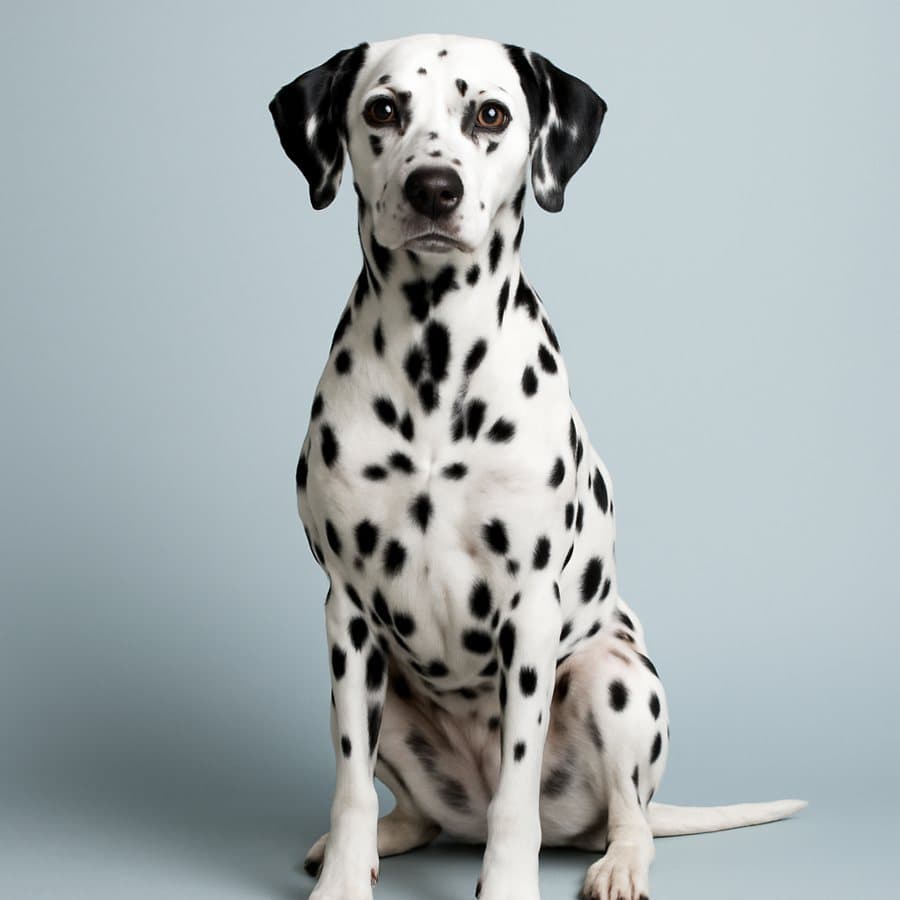
How big does a Dalmatian get?
An adult Dalmatian weighs 20.4 to 32 kg and stands 48.3 to 61 cm at the withers.
FCI standard specifies male height as 58 to 61 cm and female height as 56 to 58 cm, with male weight around 27 to 32 kg and female weight 24 to 29 kg. AKC standards accept heights from 48.3 to 61 cm and weights from 20.4 to 31.8 kg.
[S3][S5][S6][S7][S8][S9]How long does a Dalmatian live?
A Dalmatian lives 10.4 to 13.3 years.
UK epidemiological studies show median longevity around 13.2 years, veterinary cohort data records 10.36 to 12.39 years, and breed registries report 11 to 13 years.
[S10][S11][S12]What health problems are common in the Dalmatian?
The most common in the Dalmatian are: Hyperuricosuria and Urate Urolithiasis, Hereditary Congenital Sensorineural Deafness, Hip Dysplasia, Autoimmune Thyroiditis, Copper-Associated Hepatopathy, Ocular Disorders (Iris Sphincter Dysplasia and Cataracts).
Hyperuricosuria and Urate Urolithiasis [S28][S29][S30][S31]
A genetic condition where the dog excretes uric acid instead of allantoin, leading to the formation of urinary stones.
Ask your vet about:
- DNA testing for the SLC2A9 mutation
- Urinalysis to detect ammonium urate crystals
- Abdominal ultrasonography and contrast radiography
Hereditary Congenital Sensorineural Deafness [S5][S27][S30][S32]
A congenital hearing defect linked to extreme white piebald pigmentation in the inner ear.
Ask your vet about:
- Brainstem Auditory Evoked Response (BAER) hearing test between 5 and 12 weeks of age
Hip Dysplasia [S32][S33][S34]
A developmental joint laxity of the hip that leads to stiffness, pain, and secondary arthritis.
Ask your vet about:
- OFA pelvic radiography evaluation
- PennHIP distraction index testing
Autoimmune Thyroiditis [S32]
An immune-mediated inflammation of the thyroid gland that leads to hypothyroidism.
Ask your vet about:
- Blood panel for Free T4, canine TSH (cTSH), and Thyroglobulin Autoantibodies (TgAA)
Copper-Associated Hepatopathy [S12][S27][S30]
An abnormal accumulation of copper within liver tissues leading to hepatic disease.
Ask your vet about:
- Hepatic serum biochemistry (ALT and AST)
- Abdominal ultrasound
- Liver biopsy with copper quantification
Ocular Disorders (Iris Sphincter Dysplasia and Cataracts) [S30]
Abnormalities of the iris structure and lens opacities affecting vision.
Ask your vet about:
- Annual ACVO eye specialist examination
What is a Dalmatian's temperament like?
The Dalmatian is an outgoing, dignified, and alert breed. It shows strong loyalty and affection toward family members. Its natural vigilance makes it an effective watchdog, though it can show a reserved attitude toward unfamiliar people and may exhibit stubbornness if bored.
[S2][S3][S7][S13][S14][S15][S16][S17][S18]How much exercise does a Dalmatian need?
A Dalmatian needs 90 to 120 minutes of exercise a day.
Dalmatians have high endurance and speed from their history as carriage runners. They need daily vigorous activities such as jogging, agility, or off-leash running in secure yards to prevent anxiety and hyperactivity.
- Energy5 / 5
How does a Dalmatian handle heat and cold?
Their short single-layer coat and light color reflect solar radiation and support warm-weather adaptation, though midday heat should be avoided. The lack of an insulating undercoat causes low tolerance for freezing weather.
- Handles heat4 / 5
- Handles cold1 / 5
How much does a Dalmatian shed, and how do you groom it?
Weekly brushing with a rubber curry comb or grooming mitt removes loose, stiff shedding hairs. Bathe every 4 to 8 weeks and clean ears weekly to prevent moisture buildup.
Short, hard, dense, sleek single coat
- Shedding5 / 5
Is a Dalmatian good with children and other pets?
Because of their exuberant physical energy, they fit better with older children. They get along well with horses and other dogs. A home with a securely fenced yard supports their high activity needs better than confined spaces.
- With children3 / 5
- With other pets4 / 5
- In an apartment2 / 5
Is a Dalmatian easy to train?
These dogs learn quickly through positive reinforcement, toys, and food rewards. Harsh methods cause them to shut down or become stubborn. Early socialization before 16 weeks helps prevent aloofness.
- Ease of training3 / 5
What does a Dalmatian eat at each life stage?
- PuppyOffer high-quality puppy food that supports steady growth while avoiding purine-dense organ meats such as liver, kidney, and spleen.
- AdultFeed a low-to-moderate purine maintenance diet using protein from poultry, eggs, or dairy while excluding yeast, organ meats, game meats, and sardines. Provide constant access to water and consider adding water to kibble to promote urinary dilution.
- SeniorSelect calorie-controlled, moisture-rich meals with strict low-purine ingredients to protect kidney and liver function while guarding against excess weight gain on older joints.
Where does the Dalmatian come from?
Historical documents and church chronicles from the 16th to 18th centuries trace the breed to the region of Dalmatia in Croatia, recorded as Canis Dalmaticus. The dogs gained prominence in Victorian England working alongside horse carriages to clear paths and protect teams. This natural rapport with horses later led them to serve as escorts for horse-drawn fire apparatus in the United States.
Country of origin: Croatia.
[S1][S2][S3]Fun facts about the Dalmatian
- Dalmatian puppies are born solid white; their dark spots develop at 10 to 14 days of age and continue appearing until 18 months. [S5][S6][S27]
- In 19th-century England, people nicknamed the breed 'Plum Pudding Dog' and 'Spotted Dick' after traditional spotted desserts. [S3][S5]
- Dalmatians served as firehouse dogs by running ahead of horse-drawn steam pumpers to clear street traffic and guard the horses at emergency scenes. [S2][S3]
- Most Dalmatians carry a gene mutation that causes them to excrete uric acid in their urine, a trait shared with humans and great apes. [S28][S37]
- Dalmatians can show a submissive facial expression known as 'smiling', in which they bare their front teeth while wagging their bodies. [S6]
Tips by life stage and weather
- PuppySchedule a BAER hearing test between 5 and 12 weeks of age to evaluate hearing status.
- PuppyBegin socialization and reward-based training before 16 weeks to build confidence around new people.
- AdultProvide at least 90 minutes of daily exercise like running or agility to satisfy their high stamina.
- AdultAdd clean water to your dog's meals to increase urine volume and encourage regular bladder emptying.
- SeniorMonitor your older dog's weight carefully to reduce stress on aging joints.
- SeniorAsk your vet to run periodic blood and urine profiles to check liver and kidney function.
- Hot seasonAvoid intense exercise during the hottest midday hours to prevent heat exhaustion.
- Hot seasonProvide constant access to clean, fresh drinking water throughout the day.
- Cold seasonDress your dog in an insulated coat or sweater during cold outings because their single coat provides little warmth.
- Cold seasonKeep outdoor exercise sessions brief when temperatures drop toward freezing.
- Rainy seasonDry your dog's drop ears thoroughly after wet walks to prevent trapped moisture inside the ear canal.
- Rainy seasonProvide mental enrichment games inside your home when wet weather interrupts their outdoor running routine.
In the Kiba Vet app, your pet's breed profile shows a tip of the day based on its age and the weather where you live.
This is general guidance. Always ask your vet.
Checked against sources; veterinary review pending. Updated on September 29, 2026.
Written with the help of AI from the cited sources and checked fact by fact against them by a second model.
Sources
Every health fact and every number on this page comes from these sources. Identifiers from Wikidata (CC0).
- S1 STANDARD FCI | Spotty Memories FCI Dalmatians Kennel
- S2 Dalmatian | VCA Animal Hospitals
- S3 Dalmatian — Breed Guide, History & Characteristics | Prestige Breed
- S5 Dalmatian dog - Wikipedia
- S6 Dalmatian (Dalmatian Pointer), breed description - WARSAW DOG
- S7 Dalmatian: All about this breed - DogsPlanet.com
- S8 Breed Standard – Dalmatian Club of America
- S9 Dalmatian Weight Chart by Age, Growth Chart & Size Guide
- S10 Dog Lifespan Chart by Breed | 155 Breeds Compared
- S11 Premature mortality analysis of 52,000 deceased cats and dogs exposes socioeconomic disparities - PMC
- S12 Dalmatian Health – Dalmatian Club of America Foundation
- S13 Dalmatian Dog Breed Information
- S14 Dalmatian Breed Guide & Pet Insurance Plan | Healthy Paws
- S15 askavet.com
- S16 American Express
- S17 Dalmatian Training Tips & Guide | Zoom Room
- S18 Dalmatian Breed Information | Lifetime Pet Cover
- S19 kutya-tar.hu
- S20 zippypaws.com
- S21 Dogs & Cold Weather: How Long Can My Dog Be Outside? | Hill's Pet
- S22 How Cold is Too Cold for a Dalmatian? Exact Temperatures - Guide
- S23 Factors to Consider When Deciding If Your Dog Should Wear a Coat
- S24 Dalmatian | National Kennel Club
- S26 How to care for a Dalmatian: health, diet, training
- S27 Dalmatian | VCA Canada Animal Hospitals
- S28 Genetic Test for a Mutation Causing Canine Hyperuricosuria Facilitates Selective Breeding to Produce Healthier Dogs - TUFTSBG2009 - VIN
- S29 Hyperuricosuria and hyperuricemia or urolithiasis (HUU) | Cornell University College of Veterinary Medicine
- S30 Health Testing | Meadow Brook Dalmatians
- S31 Understanding Hyperuricosuria in Dalmatians and the Role of Back Breeding
- S32 CHIC Certification Tool for Dalmatians Breeding | Purina Pro Club
- S33 Dalmatian Lifespan & Senior Care – La Petite Labs
- S34 CHIC – Dalmatian Club of America Foundation
- S35 Hyperuricosuria - Dog genetic disease testing
- S36 Hyperuricosuria — Pet Health Knowledge Base | Peqaboo
- S37 Mutations in the SLC2A9 Gene Cause Hyperuricosuria and Hyperuricemia in the Dog - PMC