
This is general guidance. Always ask your vet.
How big does a Miniature Schnauzer get?
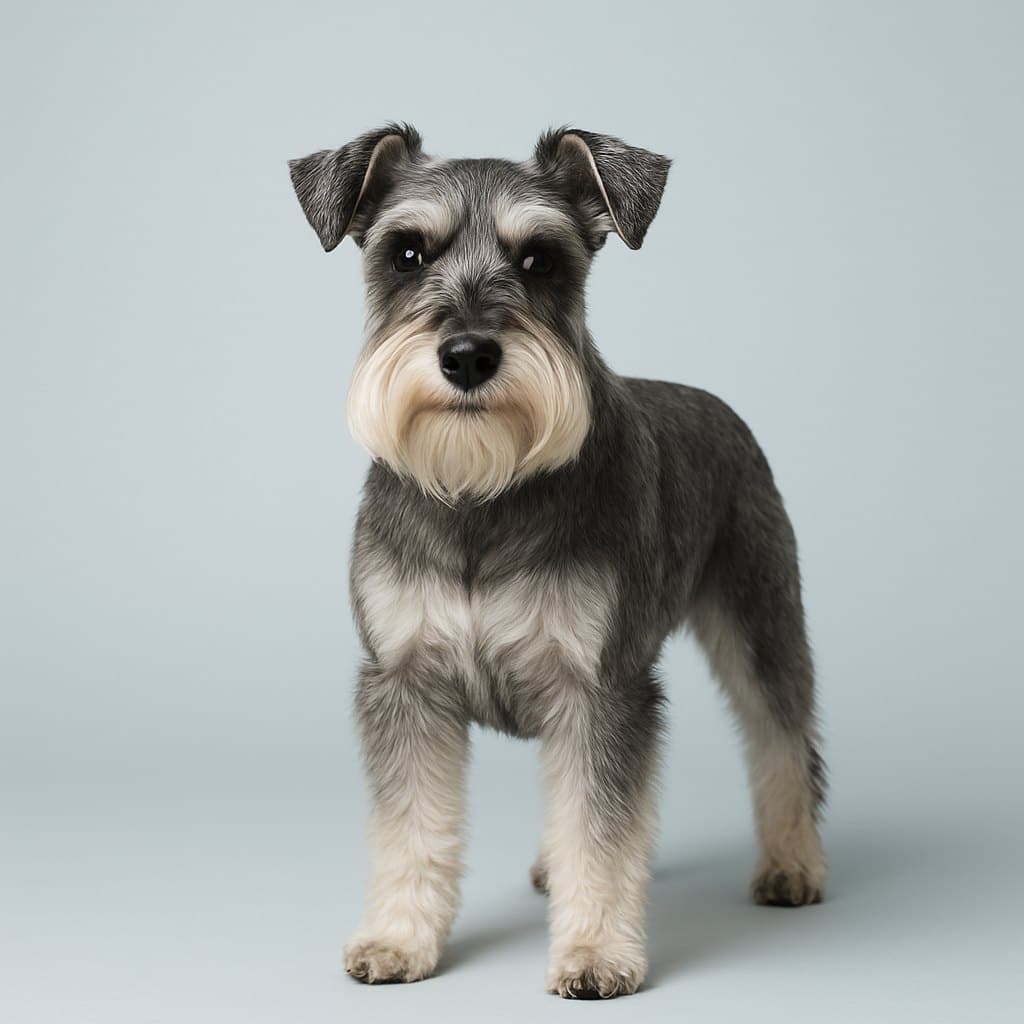
An adult Miniature Schnauzer weighs 5 to 11 kg and stands 30 to 35.6 cm at the withers.
FCI standard specifies 30 to 35 cm height for both sexes, while AKC sets 30.5 to 35.6 cm. Weight ranges from 5.0 to 9.1 kg in general pet references, with UK studies noting male averages around 11.0 kg and females around 9.0 kg.
[S1][S2][S6][S7][S8]How long does a Miniature Schnauzer live?
A Miniature Schnauzer lives 11.7 to 15 years.
Standard kennel clubs report a life span between 12 and 15 years, a UK study found a median of 13.3 years, and an RVC study reported a mean of 11.7 years.
[S2][S8][S9][S10][S11][S12][S13]What health problems are common in the Miniature Schnauzer?
The most common in the Miniature Schnauzer are: Primary Idiopathic Hyperlipidemia, Pancreatitis, Urolithiasis (Bladder Stones), Eye Disorders (Cataracts and PRA), Myotonia Congenita, Mycobacterium Avium Complex (MAC) Sensitivity, Cardiac Conduction Defects and Sick Sinus Syndrome.
Primary Idiopathic Hyperlipidemia [S20][S21]
This inherited metabolic disorder causes high fat concentrations in the bloodstream.
Ask your vet about:
- Fasting serum triglyceride panel
- Fasting cholesterol panel
Pancreatitis [S20][S21][S22]
This condition involves inflammation of the pancreas, frequently linked to elevated blood fat levels or rich foods.
Ask your vet about:
- Spec cPL test
- Abdominal ultrasound
- Complete blood count
Urolithiasis (Bladder Stones) [S23][S24]
Mineral deposits form in the urinary tract, with calcium oxalate stones being frequent.
Ask your vet about:
- Urinalysis with sediment check
- Abdominal radiographs
- Urinary tract ultrasound
Eye Disorders (Cataracts and PRA) [S14][S18][S25][S26]
These conditions cause clouding of the eye lens or degeneration of the retina, leading to vision loss.
Ask your vet about:
- Annual ACVO ophthalmic examination
- DNA test for PRA Type B (HIVEP3 variant)
Myotonia Congenita [S26][S27][S28][S29]
A hereditary muscular defect that creates stiffness and a rigid hopping gait.
Ask your vet about:
- CLCN1 gene DNA mutation test
What is a Miniature Schnauzer's temperament like?
This breed shows strong intelligence, an enduring nature, and high alertness. They form close bonds with their families and often vocalize to announce visitors.
[S1][S2][S14]How much exercise does a Miniature Schnauzer need?
A Miniature Schnauzer needs 45 to 60 minutes of exercise a day.
They have moderate-to-high energy that requires daily walks and mental stimulation such as puzzles or agility to channel their working instincts.
- Energy4 / 5
How does a Miniature Schnauzer handle heat and cold?
Their dense double coat offers balanced protection, requiring mindful care during seasonal extremes.
- Handles heat3 / 5
- Handles cold3 / 5
How much does a Miniature Schnauzer shed, and how do you groom it?
Show dogs require hand-stripping every 4 to 6 weeks, while family pets undergo clipping every 6 to 8 weeks. Daily to twice-weekly brushing is needed for furnishings and beards.
Double coat with a harsh, wiry outer jacket and a soft, dense undercoat.
- Shedding1 / 5
Is a Miniature Schnauzer good with children and other pets?
They make sturdy and patient companions for children and suit apartment life well when walked daily. Their hunting background gives them a natural prey drive.
- With children5 / 5
- With other pets3 / 5
- In an apartment5 / 5
Is a Miniature Schnauzer easy to train?
They pick up commands quickly due to their high working intelligence. Positive reinforcement techniques yield the best outcomes.
- Ease of training4 / 5
What does a Miniature Schnauzer eat at each life stage?
- PuppyProvide high-quality puppy food while avoiding table scraps, grease, or high-fat treats to protect metabolic health.
- AdultSelect a maintenance diet with moderate protein and low-to-moderate fat levels, strictly avoiding fatty human food to prevent pancreatitis.
- SeniorContinue feeding a low-fat dietary profile and monitor weight closely, maintaining restrictions on rich foods to prevent hyperlipidemia flares.
Where does the Miniature Schnauzer come from?
Breeders developed the Miniature Schnauzer in Germany in the late 19th century by crossing the Standard Schnauzer with smaller breeds like the Affenpinscher and Miniature Pinscher. Originally called rough-haired Zwergpinschers, they worked as farm dogs and vermin hunters.
Country of origin: Germany.
[S1][S2][S3]Fun facts about the Miniature Schnauzer
- The breed name comes from the German word 'Schnauze', meaning muzzle or snout, highlighting their prominent facial beard. [S2][S4]
- The earliest documented record of a Miniature Schnauzer in breeding texts was a black female named Findel in October 1888. [S4]
- The FCI standard recognizes pure white coats for competitions, but the AKC standard treats pure white as a disqualification. [S5][S16]
- The Miniature Schnauzer historically leads the three Schnauzer sizes in AKC annual registration counts. [S2]
Tips by life stage and weather
- PuppyWalk your puppy on a secure leash outdoors to safely control their natural vermin-hunting instincts.
- PuppyIntroduce gentle brushing on leg furnishings and facial hair early so your puppy accepts daily grooming.
- AdultProvide interactive puzzle toys and obedience exercises daily to give your dog required mental tasks.
- AdultSchedule professional coat clipping every 6 to 8 weeks or hand-strip dead coat every 4 to 6 weeks.
- SeniorAsk your veterinarian for routine blood and urine screenings to check organ function and monitor for bladder crystals.
- SeniorClean and dry facial beards after meals to remove trapped food debris and maintain skin comfort.
- Hot seasonWalk your dog during early morning or evening hours to avoid intense midday sun.
- Hot seasonKeep fresh, cool water accessible at all times inside your living space.
- Cold seasonMaintain their coat thickness or provide a warm sweater during chilly winter outings.
- Cold seasonSet up a draft-free, comfortable resting area away from cold floors.
- Rainy seasonTowel-dry their dense undercoat and facial furnishings thoroughly after wet outdoor walks.
- Rainy seasonBrush the leg hair after damp strolls to prevent matting and remove damp street debris.
In the Kiba Vet app, your pet's breed profile shows a tip of the day based on its age and the weather where you live.
This is general guidance. Always ask your vet.
Checked against sources; veterinary review pending. Updated on September 29, 2026.
Written with the help of AI from the cited sources and checked fact by fact against them by a second model.
Sources
Every health fact and every number on this page comes from these sources. Identifiers from Wikidata (CC0).
- S1 fci.be
- S2 Miniature Schnauzer Dog Breed: Size, Personality and More | Dog Food Advisor
- S3 kusa.co.za
- S4 Miniature Schnauzer | VCA Animal Hospitals
- S5 ZWERGSCHNAUZER
- S6 The Official Standard for the Miniature Schnauzer - The American Miniature Schnauzer Club
- S7 pawlicy.com
- S8 rvc.ac.uk
- S9 Miniature Schnauzer Lifespan - How Long Do They Live?
- S10 Dog Lifespan Chart by Breed | 155 Breeds Compared
- S11 Aging in dogs - Wikipedia
- S12 Miniature Schnauzer Lifespan & Health Problems
- S13 rvc.ac.uk
- S14 Miniature Schnauzer | VCA Canada Animal Hospitals
- S15 Miniature Schnauzer Dog Breed -Temperament, Personality and Characteristics Traits | Hill's Pet US
- S16 CMSR - About Miniature Schnauzers
- S17 Miniature Schnauzer Size Chart: Adult Weight | Sugar Sweet
- S18 Health & FAQ | bellevista
- S19 5 Common Miniature Schnauzer Health Concerns
- S20 vin.com
- S21 Hyperlipidemia | VCA Animal Hospitals
- S22 vin.com
- S23 Miniature Schnauzer Breed Guide | PupPilot
- S24 6 Common Schnauzer Health Problems | Lucy Pet
- S25 Health Tests for Miniature Schnauzers - EmbarkVet – Embark Vet
- S26 Canine Health Topics - The American Miniature Schnauzer Club
- S27 LABOKLIN (UK)| Genetic Diseases | Dogs| Miniature Schnauzer Bundle (CMT, MAC, Myotonia congenita, PMDS, TypB1-PRA, Comma-defect)
- S28 .... MSCC Health Pages ....
- S29 Schnauzer (Miniature) Archives - CombiBreed
- S30 Why Miniature Schnauzers Are Prone to Pancreatitis - Norgate Animal Hospital