
This is general guidance. Always ask your vet.
How big does a Persian get?
An adult Persian weighs 3 to 7 kg and stands 25 to 38 cm at the withers.
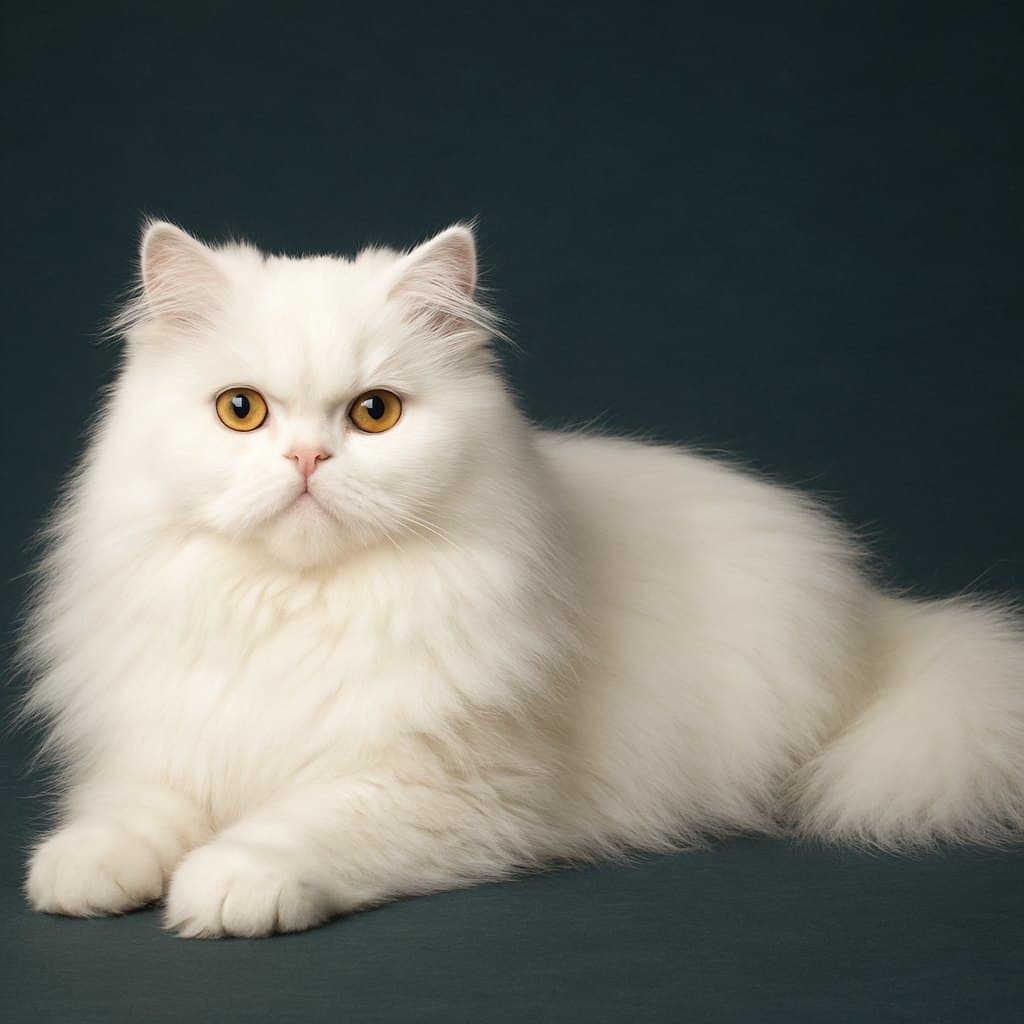
Persians feature a sturdy, low-slung, and compact cobby build. Across both sexes, typical heights span 25 cm to 38 cm, while males generally carry more mass than females.
[S6][S10][S11][S12][S13][S14]How long does a Persian live?
A Persian lives 12 to 16 years.
Studies document median lifespans between 11.7 and 13.5 years, while well-managed indoor cats frequently reach 12 to 16 years.
[S8][S14][S15][S16][S17]What health problems are common in the Persian?
The most common in the Persian are: Polycystic Kidney Disease (PKD), Brachycephalic Obstructive Airway Syndrome (BOAS), Entropion and Epiphora, Hypertrophic Cardiomyopathy (HCM), Progressive Retinal Atrophy (PRA), Idiopathic Facial Dermatitis, Hip Dysplasia.
Polycystic Kidney Disease (PKD) [S30][S31]
An inherited disorder that causes fluid-filled cysts to grow inside the kidneys, eventually impairing organ function.
Ask your vet about:
- PKD1 genetic mutation DNA test
- Bilateral renal ultrasound screening
Brachycephalic Obstructive Airway Syndrome (BOAS) [S23][S24][S27]
Upper respiratory impairment caused by a flattened skull, narrowed nostrils, and an elongated soft palate.
Ask your vet about:
- Visual upper airway evaluation for stenotic nares and palate length
- Thoracic radiography
Entropion and Epiphora [S14][S24][S32]
Facial bone compression leads to excessive tear overflow and inward-rolling eyelids that irritate the cornea.
Ask your vet about:
- Fluorescein dye test for tear duct patency and corneal integrity
- Physical eyelid examination
Hypertrophic Cardiomyopathy (HCM) [S32][S33]
A cardiac condition characterized by abnormal thickening of the muscular heart walls.
Ask your vet about:
- Echocardiography (cardiac ultrasound)
- OFA feline cardiac evaluation
Progressive Retinal Atrophy (PRA) [S32]
A genetic disease that causes degeneration of the retina and leads to blindness.
Ask your vet about:
- Feline genetic DNA panel testing
- Indirect ophthalmoscopic examination
Idiopathic Facial Dermatitis [S27]
An inflammatory skin disorder causing black, waxy crusts in the facial folds.
Ask your vet about:
- Skin cytology and superficial scrapings
- Dermatophyte culture and skin punch biopsy
Hip Dysplasia [S32]
Abnormal development of the hip joint that produces joint looseness and secondary lameness.
Ask your vet about:
- OFA pelvic radiography
What is a Persian's temperament like?
Persians are calm, docile, and affectionate companions that thrive in predictable, quiet households.
[S3][S4][S5][S10][S11][S13][S18][S19]How much exercise does a Persian need?
A Persian needs 10 to 15 minutes of exercise a day.
Persians are sedentary cats that prefer lounging over running. Brief daily interactive sessions keep them active without overtaxing their joints or airways.
- Energy1 / 5
How does a Persian handle heat and cold?
Due to brachycephalic facial anatomy, Persians cannot cool themselves efficiently by panting and suffer heatstroke easily. Their dense coat provides moderate cold protection indoors, but exposure to damp, freezing air must be avoided.
- Handles heat1 / 5
- Handles cold3 / 5
How much does a Persian shed, and how do you groom it?
Persians need daily combing with a wide-toothed metal comb to prevent painful mats. They also need daily facial wipe-downs to clean tear stains and regular sanitary trims around the rear.
Long, fine outer coat with a thick, dense undercoat
- Shedding4 / 5
Is a Persian good with children and other pets?
Persians flourish in apartment settings due to their quiet habits and low exercise needs. They tolerate respectful children and calm pets, but they retreat from loud, rowdy household activity and must live strictly indoors.
- With children3 / 5
- With other pets4 / 5
- In an apartment5 / 5
Is a Persian easy to train?
Persians learn basic litter habits readily when given accessible, low-sided boxes. They respond well to gentle praise and food treats, with early life habituation focusing on daily handling and grooming routines.
- Ease of training3 / 5
What does a Persian eat at each life stage?
- KittenOffer energy-dense, highly digestible kitten formulas rich in animal proteins, essential fatty acids such as DHA for vision and brain development, and balanced calcium and phosphorus.
- AdultProvide calorie-controlled portions to prevent weight gain, balanced dietary fiber blends to assist hairball transit, and omega fatty acids to support the coat.
- SeniorChoose diets with controlled phosphorus levels to protect kidney health, joint support nutrients, and palatable, moisture-rich food to promote hydration.
Where does the Persian come from?
Originating in ancient Persia and nearby regions of the Near East, longhaired cats were brought to Europe around 1620 by Italian traveler Pietro della Valle. The breed debuted at London's Crystal Palace cat show in 1871, gained popularity under Queen Victoria, and later became a foundational breed in North America.
Country of origin: Iran.
[S1][S2][S3][S4][S5][S6][S7][S8]Fun facts about the Persian
- A white Persian cat has represented the Fancy Feast pet food brand as its official mascot for over fifty years. [S7]
- Carl Kahler's 1891 painting 'My Wife's Lovers', depicting Persian and Turkish Angora cats, sold at auction for over $820,000. [S7]
- The pushed-in facial structure of modern Persians earned early varieties the nickname 'peke-face' after the Pekingese dog. [S5][S8]
- Ernst Stavro Blofeld, the famous James Bond villain, held a white Persian cat in multiple movies starting with 'From Russia with Love'. [S9]
- Crossbreeding Persians with Siamese cats in 1950 created the colorpoint Persian, recognized by registries as the Himalayan. [S2][S4]
Tips by life stage and weather
- KittenIntroduce daily comb sessions, warm facial wipes, and nail trims right away so your kitten accepts lifetime grooming.
- KittenProvide low-sided, open litter boxes so short legs and thick fur do not hinder bathroom access.
- AdultServe meals in wide, shallow saucers to help your cat grasp kibble easily without pressing facial folds into the dish.
- AdultSchedule 10 to 15 minutes of gentle floor play daily to maintain muscle tone and curb excess body weight.
- SeniorIncorporate wet food into daily meals to increase hydration and protect aging kidneys.
- SeniorKeep food, water, and resting spots on the floor level to spare stiff joints from unnecessary jumping.
- Hot seasonRun air conditioning or fans indoors to protect your cat from heatstroke, as flat facial anatomy makes panting ineffective.
- Hot seasonKeep clean, fresh water accessible in multiple wide bowls throughout your home to encourage regular drinking during warm weather.
- Cold seasonPlace sleeping beds away from cold floor drafts and avoid exposing your cat to outdoor chills.
- Cold seasonComb the thick undercoat daily to prevent mats that form when fur rubs against warm blankets or bedding.
- Rainy seasonKeep your cat strictly indoors during rainstorms to prevent high moisture from tangling the dense double coat.
- Rainy seasonWipe facial skin folds with a clean cloth daily, as elevated environmental humidity can worsen skin fold moisture.
In the Kiba Vet app, your pet's breed profile shows a tip of the day based on its age and the weather where you live.
This is general guidance. Always ask your vet.
Checked against sources; veterinary review pending. Updated on September 29, 2026.
Written with the help of AI from the cited sources and checked fact by fact against them by a second model.
Sources
Every health fact and every number on this page comes from these sources. Identifiers from Wikidata (CC0).
- S1 History of the Persian Cat ~ Pelaqita Persians
- S2 Persian cat - Wikipedia
- S3 Petcover what you need to know if buying a persian cat blog
- S4 Fascinating Facts and Hiss-tory of Persian Cats – Meowingtons
- S5 Persian Cat Breed Health and Care | PetMD
- S6 Persian cat breed profile - Pets4Life Dog Training
- S7 The History Of Persian Cats – The Patriot
- S8 Persian Cat: Traits, Care, Colors & Health Guide
- S9 Traditional Persian - Wikipedia
- S10 wopet.com
- S11 Breed of the Month: Persian Cat - West Hill Animal Clinic
- S12 Persian Cat Weight Chart Table & Growth Guide | PetNoter
- S13 Persian | Cat Breed | Royal Canin UK | Royal Canin MT
- S14 rvc.ac.uk
- S15 rvc.ac.uk
- S16 Persian Cat Lifespan: How Long Do Persians Live?
- S17 Is My Pet a Senior? The Breed-Aware Age Guide for Dogs and Cats — Goodboy Friday
- S18 Persian Cat Breed Description | GoKitty
- S19 Persian Cat Breed: Characteristics, Care & Photos | Chewy
- S20 How Much Should I Feed My Persian Cat? Portion & Schedule Guide - Petdirect
- S21 fandom.com
- S22 How Long Do Persian Cats Live? Vet-Verified Lifespan & FAQ — Catster
- S23 How Long Do Persian Cats Live? Lifespan, Health & Care Factors
- S24 Persian Cat: Health Issues & Care Tips
- S25 Persian - The Governing Council of the Cat Fancy
- S26 rvc.ac.uk
- S27 7 Persian Cat Health Problems: Vet Approved Treatments & Prevention Tips | Hepper Pet Resources
- S28 Nutrition and Weight: Mature Adult and Senior Cats - AAHA
- S29 baileyscbd.com
- S30 Persian Cat Health Problems: 6 Vet-Reviewed Issues — Catster
- S31 Yazı | VetSaglik.com
- S32 Persian cats and brachycephaly - International Cat Care
- S33 Lifestyle factors affecting aging and healthspan in dogs and cats - PMC
- S34 Cat Nutrition by Life Stage – How to Choose the Right Food
- S35 Kitten Food Life Stages: From Kitten to Senior | Hill’s Pet UK