
This is general guidance. Always ask your vet.
How big does a Poodle get?
An adult Poodle weighs 18 to 32 kg and stands 53 to 69 cm at the withers.
Data reflect the Standard Poodle variety under AKC standards. FCI Standard No. 172 recognizes four sizes: Standard (45-62 cm, 20-32 kg), Medium (35-45 cm, 9-13 kg), Miniature (28-35 cm, 4.5-7 kg), and Toy (24-28 cm, 2-3 kg).
[S1][S4][S7][S8][S9]How long does a Poodle live?
A Poodle lives 10 to 18 years.
Large-scale epidemiological studies identify a median life expectancy of 14.0 years across Poodles. Standard Poodles typically live 10 to 13 years, while Miniature and Toy varieties frequently reach 13 to 18 years.
[S12][S13][S14][S15][S16]What health problems are common in the Poodle?
The most common in the Poodle are: Gastric Dilatation-Volvulus (GDV / Bloat), Sebaceous Adenitis (SA), Addison's Disease (Hypoadrenocorticism), Progressive Retinal Atrophy (PRA), Hip Dysplasia, Patellar Luxation, Idiopathic Epilepsy.
Gastric Dilatation-Volvulus (GDV / Bloat) [S26][S35]
A sudden condition where the stomach fills with gas and twists on its axis, cutting off blood supply.
Ask your vet about:
- Right-lateral abdominal radiographs
- Emergency stabilization procedures
Sebaceous Adenitis (SA) [S31][S32]
An inflammatory skin disorder where the immune system destroys the sebaceous glands, leading to hair loss and scaling.
Ask your vet about:
- Full-thickness punch skin biopsies
- Evaluation by a dermatopathologist
- OFA SA registry clearance
Addison's Disease (Hypoadrenocorticism) [S33][S34]
A hormonal deficiency where the adrenal glands produce insufficient corticosteroid hormones.
Ask your vet about:
- Baseline serum biochemistry for electrolytes
- ACTH stimulation test
Progressive Retinal Atrophy (PRA) [S35][S36][S37][S38]
A genetic condition that causes the photoreceptor cells in the retina to deteriorate, resulting in blindness.
Ask your vet about:
- prcd and rcd4 DNA panels
- Annual ACVO CAER eye exams
Hip Dysplasia [S26][S37][S38]
Abnormal formation of the hip joint that produces joint laxity and progressive arthritis.
Ask your vet about:
- PennHIP evaluation from 16 weeks
- OFA pelvic radiographs at or after 24 months
Patellar Luxation [S35][S37][S38]
A condition where the kneecap slips out of its normal anatomical groove.
Ask your vet about:
- Orthopedic palpation and grading
- OFA patella evaluation
Idiopathic Epilepsy [S35]
A neurological condition characterized by recurrent, unprovoked seizures without an identifiable structural cause.
Ask your vet about:
- Neurological evaluation
- Diagnostic workup for recurring seizures
What is a Poodle's temperament like?
Poodles are energetic, highly trainable, and alert companions. They form deep social bonds with their families and often remain reserved around strangers without displaying aggression.
[S4][S6][S17][S18][S19]How much exercise does a Poodle need?
A Poodle needs 60 to 90 minutes of exercise a day.
Adult Standard Poodles require 60 to 90 minutes of daily physical exercise paired with structured cognitive enrichment. Miniature and Toy varieties require 30 to 60 minutes of daily activity.
- Energy4 / 5
How does a Poodle handle heat and cold?
Active deep-chested Standard Poodles can overheat during hot weather, and light or shaved skin can sunburn under intense sun. The single coat lacks a dense undercoat, which leaves Poodles vulnerable in freezing wet weather.
- Handles heat3 / 5
- Handles cold3 / 5
How much does a Poodle shed, and how do you groom it?
Requires line brushing with a slicker brush and metal comb from daily to bi-weekly to untangle trapped shed hair, plus professional clipping, bathing, and ear maintenance every 4 to 6 weeks.
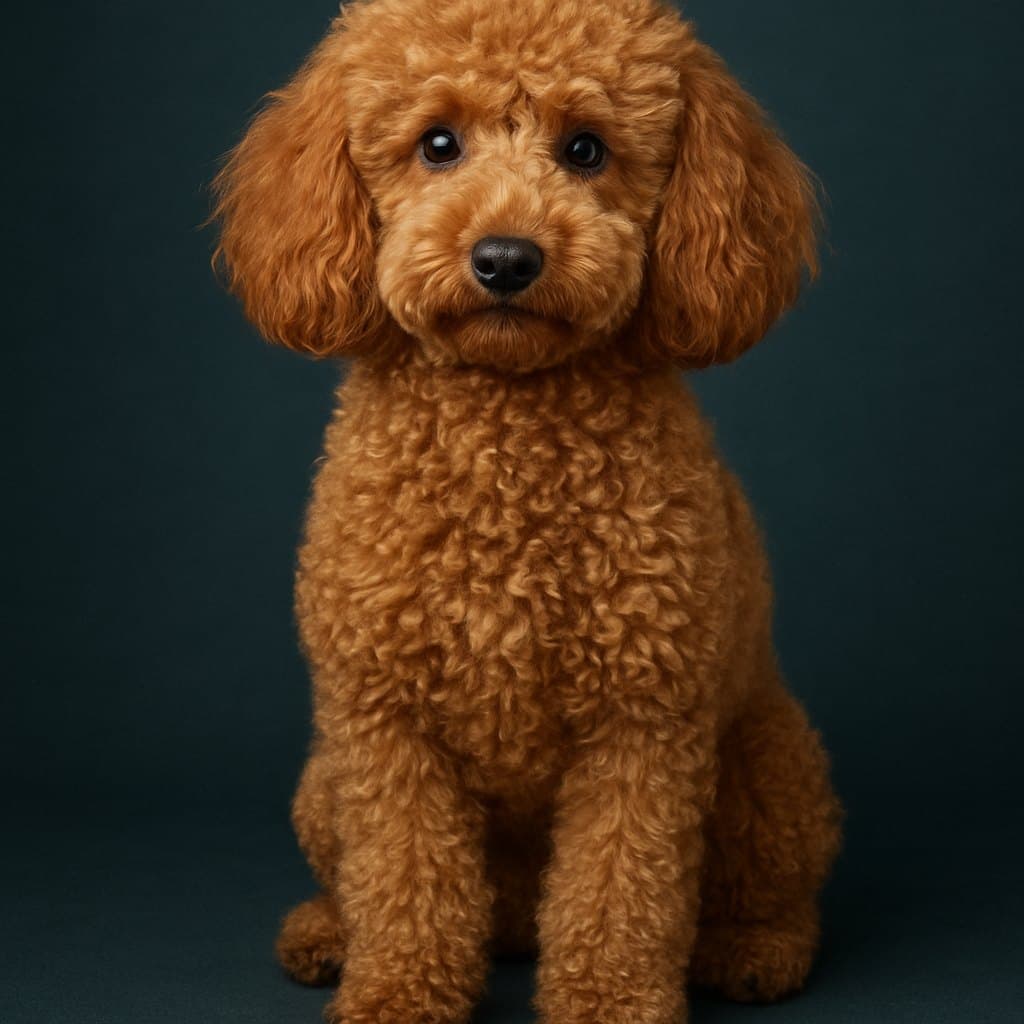
Curly, continuously growing single-layer hair
- Shedding1 / 5
Is a Poodle good with children and other pets?
Standard Poodles interact well with children when play is supervised. Miniature and Toy varieties adapt well to apartments if exercised regularly, while Standard Poodles need regular outdoor space to run.
- With children4 / 5
- With other pets4 / 5
- In an apartment3 / 5
Is a Poodle easy to train?
Poodles learn commands rapidly with positive reinforcement and puzzle work. Harsh corrections cause distress and avoidance, while inconsistent rules allow them to learn unauthorized habits quickly.
- Ease of training5 / 5
What does a Poodle eat at each life stage?
- PuppyProvide balanced puppy nutrition tailored to your puppy's anticipated adult size, and consult your veterinarian to establish an optimal developmental schedule.
- AdultFeed an adult formulation balancing protein and moderate fat to match metabolic expenditure, and use slow-feeder bowls for Standard Poodles to prevent rapid gulping and aerophagia.
- SeniorConsult your veterinarian to tailor nutrient density and calorie balance to your older dog's activity level and metabolic health.
Where does the Poodle come from?
The breed developed in Germany as the Pudelhund, an aquatic duck retriever, sharing early ancestral roots with the Barbet. France later refined the breed into its modern form and serves as the official country of origin under FCI standards. Breeders later downsized Standard Poodles to create smaller varieties for truffle hunting, circus performance, and companionship.
Country of origin: France.
[S1][S2][S3][S4][S5][S6]Fun facts about the Poodle
- The traditional Poodle clip left hair over the chest and joints to protect organs from icy water while shaving the legs to decrease drag during swimming. [S3][S5][S30]
- Musher John Suter entered all-Poodle teams in Alaska's 1,150-mile Iditarod sled race from 1988 to 1991. [S3][S39]
- The Poodle held the top rank as the most popular breed registered by the American Kennel Club for 22 consecutive years between 1960 and 1982. [S40]
- FCI Standard No. 172 began recognizing multi-colored and phantom Poodles for international conformation rings in August 2024. [S41]
Tips by life stage and weather
- PuppyIntroduce line brushing with a slicker brush early so your puppy becomes comfortable with frequent coat maintenance.
- PuppyPractice impulse-control exercises and loose-leash habits during daily training sessions to curb jumping behaviors.
- AdultIncorporate structured cognitive tasks and retrieving games to meet your adult dog's daily mental and physical requirements.
- AdultSchedule professional clipping and ear hygiene checks every 4 to 6 weeks to avoid skin irritation and mats.
- SeniorVisit your veterinarian for regular examinations to monitor joint mobility and eye health as your dog ages.
- SeniorMaintain consistent, moderate exercise routines that keep your older dog active without overstressing aging joints.
- Hot seasonLimit physical exercise during peak mid-day heat hours and supply shaded areas and fresh drinking water.
- Hot seasonProtect shaved areas of the skin from direct solar radiation to avoid sunburn during hot sunny days.
- Cold seasonPut protective outerwear on Toy and Miniature Poodles during cold spells to prevent rapid body heat loss.
- Cold seasonKeep your dog dry and protected during freezing conditions because single-layer hair lacks a dense undercoat.
- Rainy seasonDry your Poodle's curly hair thoroughly after rainy outings to stop damp curls from compacting into severe mats.
- Rainy seasonInspect and dry your dog's ears after wet walks to preserve canal cleanliness and avoid skin moisture problems.
In the Kiba Vet app, your pet's breed profile shows a tip of the day based on its age and the weather where you live.
This is general guidance. Always ask your vet.
Checked against sources; veterinary review pending. Updated on September 29, 2026.
Written with the help of AI from the cited sources and checked fact by fact against them by a second model.
Sources
Every health fact and every number on this page comes from these sources. Identifiers from Wikidata (CC0).
- S1 Poodle - Wikipedia
- S2 Poodle Lifespan: How Long Do Poodles Live? - A-Z Animals
- S3 6 Fun Facts You Probably Didn't Know About Poodles
- S4 fci.be
- S5 Facts About the Standard Poodle That You May Not Know
- S6 10 Interesting Facts About Poodles | Lucy Pet
- S7 akc.org
- S8 akc.org
- S9 pawlicy.com
- S10 How Long Do Poodles Live? Tips For a Healthy Lifespan – Vetericyn
- S12 How Long Do Poodles Live? Average Lifespan and Care Tips – K9 Carts
- S13 Poodle Lifespan by Size: Toy, Miniature and Standard
- S14 rvc.ac.uk
- S15 Is the Poodle the Right Dog Breed for You?
- S16 Poodle Lifespan & Age Chart | How Long Do Poodles Live? | Clawmate
- S17 Poodle Dog Breed Guide: Care and Training | BorrowMyDoggy
- S18 12 Intriguing Poodle Facts for Kids – The Lollipop Book Club
- S19 Poodle Exercise Requirements | Toy, Mini, Standard
- S20 Poodle Exercise Guide: Keep Your Toy, Miniature & Standard Poodle Active and Healthy - Petdirect
- S21 How much exercise does my Poodle need? - PitPat
- S22 Poodle Winter Care
- S23 Grooming - Poodle Mojo
- S24 Poodle Summer Care
- S25 Poodles Don’t Shed! Well, sorta… The 411 on Poodle Coats. — Galavanting Poodles
- S26 Standard Poodle Puppy Checklist – Wooffy
- S27 Why Is My Poodle Shedding? Causes & Coat Fixes – La Petite Labs
- S30 Poodle Dog Breed -Temperament, Personality and Characteristics Traits | Hill's Pet US
- S31 vin.com
- S32 Health Concerns - The Poodle Club of America
- S33 Standard Poodle Genetic Health: What Every Owner Needs to Know - GeneticPaws
- S34 Addisons Disease | standardpoodleclub
- S35 zubairkhalid.com
- S36 Standard Poodle | The Poodle Council
- S37 Poodle Information Online - The Poodle Club of America
- S38 Poodle Health | United Poodle Association
- S39 10 Facts About Poodles
- S40 Six Fun Facts About Poodles You Should Know! — Mobility Service Dog - West Coast Project
- S41 CANICHE