
This is general guidance. Always ask your vet.
How big does a Siberian Husky get?
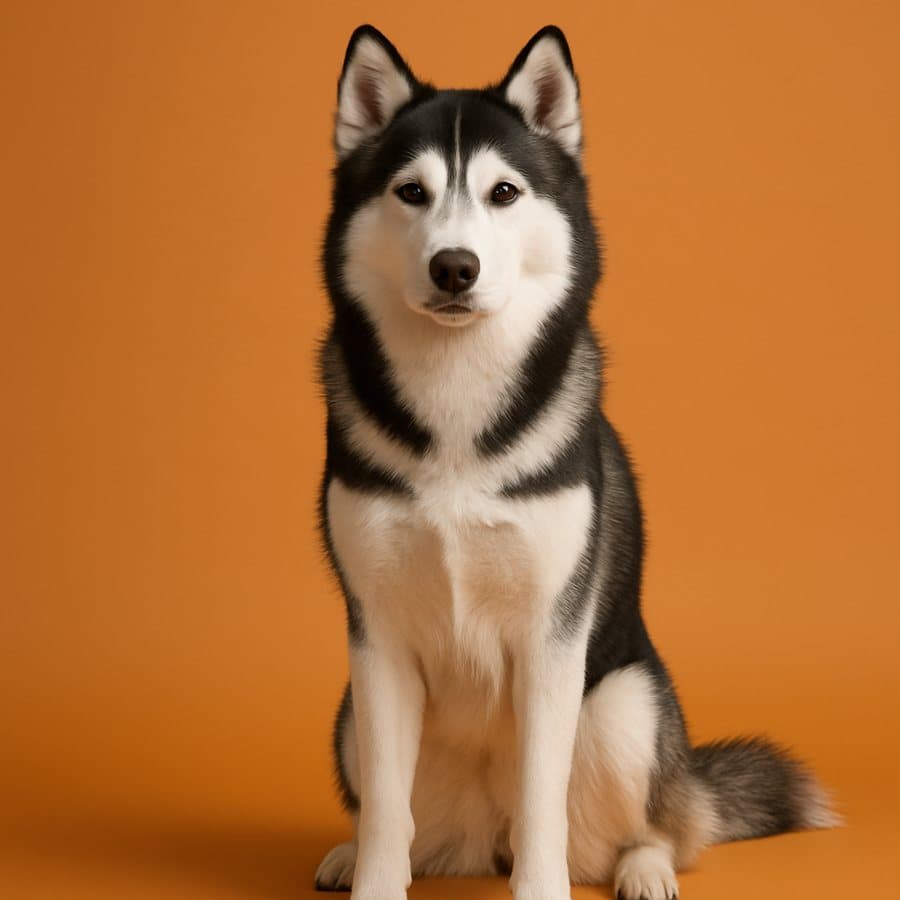
An adult Siberian Husky weighs 15.5 to 28 kg and stands 50.5 to 60 cm at the withers.
FCI standard 270 establishes a height at withers of 53.5 to 60 cm and a weight of 20.5 to 28 kg for males, and 50.5 to 56 cm with 15.5 to 23 kg for females. The Kennel Club and UKC list similar measurements from 53 cm and 20 kg for males. FCI and UKC standards disqualify dogs exceeding 60 cm for males or 56 cm for females.
[S3][S4][S5]How long does a Siberian Husky live?
A Siberian Husky lives 11 to 13 years.
VCA Animal Hospitals documents a life expectancy range of 11 to 13 years. The 2024 UK study by McMillan reports a median of 11.9 years, and the 2022 VetCompass study by Teng estimates 10.24 years at birth.
[S1][S6][S7]What health problems are common in the Siberian Husky?
The most common in the Siberian Husky are: Zinc-responsive dermatosis (type 1), Corneal stromal dystrophy, Inherited cataracts, Primary angle-closure glaucoma, Hip dysplasia, Alopecia X (follicular dysplasia), Chronic superficial keratitis (pannus).
Zinc-responsive dermatosis (type 1) [S8]
A defective intestinal zinc absorption that causes skin lesions during times of stress or estrus.
Ask your vet about:
- skin biopsy
- skin cytology
Corneal stromal dystrophy [S9][S10]
Ask your vet about:
- slit-lamp biomicroscopy ophthalmic examination
Inherited cataracts [S11][S12]
A progressive loss of transparency in the lens that clouds the dog's vision.
Ask your vet about:
- annual eye certification exam by a veterinary ophthalmologist
Primary angle-closure glaucoma [S13]
An increase in intraocular pressure caused by the collapse of the eye drainage angle.
Ask your vet about:
- tonometry to evaluate intraocular pressure
- gonioscopy to examine drainage angles
Hip dysplasia [S14]
An abnormal joint laxity in the hip originating during the rapid growth phase of puppyhood.
Ask your vet about:
- pelvic radiographs under sedation
- OFA or PennHIP screening
Alopecia X (follicular dysplasia) [S15]
A symmetrical coat loss caused by abnormal follicular development without skin inflammation.
Ask your vet about:
- thyroid testing
- skin biopsy
Chronic superficial keratitis (pannus) [S9]
A progressive immune-mediated corneal disease causing abnormal surface pigmentation and vascularization.
Ask your vet about:
- veterinary ophthalmic examination
What is a Siberian Husky's temperament like?
The Siberian Husky is friendly, gentle, alert, and outgoing with people. It is an affectionate family companion with an independent and stubborn nature. Mature dogs display dignity and reserve.
[S1][S3][S4][S5]How much exercise does a Siberian Husky need?
Requires long daily walks and jogging sessions to satisfy its working sled endurance. A lack of exercise produces overactive and destructive behavior. Demands a securely fenced yard to prevent roaming over long distances.
- Energy4 / 5
How does a Siberian Husky handle heat and cold?
Tolerates severe cold with ease and enjoys outdoor time in low temperatures. Its heat tolerance is minimal, and it overheats easily.
- Handles heat1 / 5
- Handles cold5 / 5
How much does a Siberian Husky shed, and how do you groom it?
Brush the coat once or twice weekly during normal periods and more frequently during active shedding cycles. Breed standards forbid coat trimming on the body, permitting trimming only for whiskers and fur between toes and pads.
Medium-length double coat with soft, dense undercoat
- Shedding4 / 5
Is a Siberian Husky good with children and other pets?
Interacts well with children and participates playfully in family life. Coexists with household dogs and familiar pets, but shows aggression toward strange dogs and unfamiliar small animals. Adapts to apartments only with extensive daily exercise to prevent destructive behavior.
- With children4 / 5
- With other pets3 / 5
- In an apartment2 / 5
Is a Siberian Husky easy to train?
Displays low training ease due to its independent and stubborn nature. Its recall reliability is poor, requiring leash walks and secure containment. Responds best to firm guidance, positive reinforcement, and consistent mental stimulation.
- Ease of training1 / 5
What does a Siberian Husky eat at each life stage?
- PuppyFeed your puppy a balanced commercial diet supporting steady, moderate growth until 10 to 12 months of age to avoid skeletal deformities.
- AdultFeed a complete and balanced adult diet with balanced proteins, fats, and carbohydrates. Palpate body condition through the thick coat with your hands and adjust calories with your veterinarian to prevent excess weight. Avoid foods with excessive plant phytates or extra calcium that hinder zinc absorption.
- SeniorSchedule a veterinary evaluation with blood chemistry and urinalysis between 8 and 9 years of age before transitioning to a senior diet.
Where does the Siberian Husky come from?
The nomadic Chukchi people of northeastern Asia developed the ancestors of the Siberian Husky from spitz stock to pull sleds. These dogs competed in Alaskan races in 1909 and delivered diphtheria antitoxin to Nome during 1925. The American Kennel Club recognized the breed in 1930, and the FCI designated the United States as its country of origin in 1966.
Country of origin: United States.
[S1][S2]Fun facts about the Siberian Husky
- Genetic analysis places the Siberian Husky among the 14 most ancient dog breeds recognized by the American Kennel Club. [S1]
- A bronze statue honoring lead dog Balto has stood in New York City's Central Park since 1925 following the serum run. [S1]
- The Iditarod sled dog race was founded to commemorate the historic 1925 diphtheria antitoxin run to Nome. [S1]
- Official breed standards permit a temporary seasonal loss of nose pigmentation during winter months, known as snow nose. [S3][S4]
- Breed standards permit blue eyes, brown eyes, parti-colored eyes, and complete heterochromia with one eye of each color. [S3][S4]
Tips by life stage and weather
- PuppyInstall secure fences and check gates, as husky puppies dig skillfully and seek to wander long distances.
- PuppyAccustom your puppy to weekly brushing and paw handling to simplify routine preventive veterinary care.
- AdultSchedule long daily walks and jogging sessions with a harness and leash to channel its working stamina.
- AdultProvide interactive puzzle toys and scent games at home to engage its mind and prevent destructive habits.
- SeniorSchedule regular veterinary checkups focused on intraocular pressure and joint mobility.
- SeniorPlace non-slip runners on smooth floors to provide traction and support its joints when standing up.
- Hot seasonWalk your dog early at dawn to protect its paw pads from hot asphalt and prevent heatstroke.
- Hot seasonKeep fresh water readily accessible and keep the coat intact to let the undercoat provide natural thermal insulation.
- Cold seasonTake advantage of cool mornings for extended outdoor walks, a climate where its double coat thrives with energy.
- Cold seasonCheck paw pads after hikes in woods or tall grass to remove burs and dry the skin between toes.
- Rainy seasonTowel-dry the dense undercoat thoroughly after walks in the rain to prevent trapped moisture and skin issues.
- Rainy seasonClean and dry paw pads upon returning home to prevent mud and wet conditions from softening the skin between toes.
In the Kiba Vet app, your pet's breed profile shows a tip of the day based on its age and the weather where you live.
This is general guidance. Always ask your vet.
Checked against sources; veterinary review pending. Updated on September 29, 2026.
Written with the help of AI from the cited sources and checked fact by fact against them by a second model.
Sources
Every health fact and every number on this page comes from these sources. Identifiers from Wikidata (CC0).
- S1 Siberian Husky | VCA Animal Hospitals
- S2 SIBERIAN HUSKY
- S3 fci.be
- S4 Siberian Husky | Breed Standards | The Kennel Club
- S5 Breed Standards : Siberian Husky | United Kennel Club (UKC)
- S6 Longevity of companion dog breeds: those at risk from early death - PMC
- S7 Life tables of annual life expectancy and mortality for companion dogs in the United Kingdom - PMC
- S8 Zinc-Responsive Dermatosis in Dogs | VCA Animal Hospitals
- S9 The Cornea in Animals - Eye Diseases and Disorders - Merck Veterinary Manual
- S10 Corneal Dystrophy in Dogs | VCA Animal Hospitals
- S11 The Lens in Animals - Eye Diseases and Disorders - Merck Veterinary Manual
- S12 Cataracts in Dogs | VCA Animal Hospitals
- S13 Glaucoma in Dogs | VCA Animal Hospitals
- S14 Hip Dysplasia in Dogs | VCA Animal Hospitals
- S15 Alopecia X in Dogs | VCA Animal Hospitals
- S16 Feeding Growing Puppies | VCA Animal Hospitals
- S17 Nutrition - General Feeding Guidelines for Dogs | VCA Animal Hospitals
- S18 Feeding Mature and Senior Dogs | VCA Animal Hospitals