
This is general guidance. Always ask your vet.
How big does a Sphynx get?
An adult Sphynx weighs 2.7 to 6.4 kg and stands 20 to 25 cm at the withers.
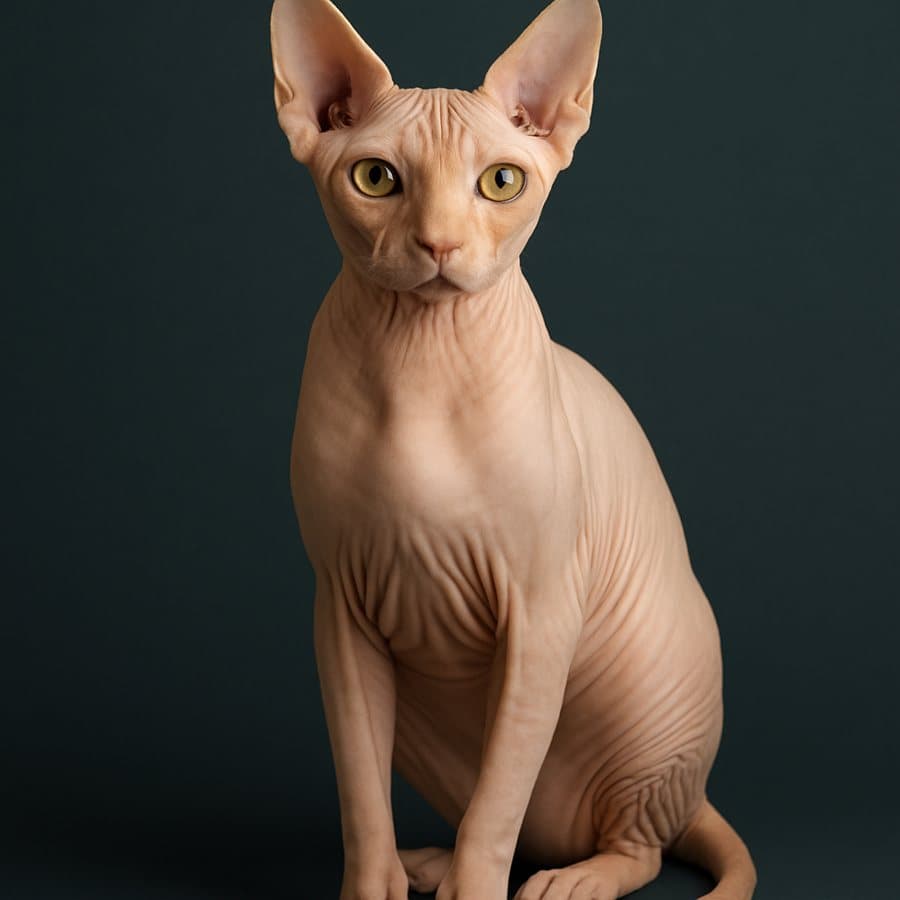
The Sphynx is a medium-sized cat with a surprisingly heavy, muscular build. Females are noticeably smaller than males.
[S7][S8][S9][S10]How long does a Sphynx live?
A Sphynx lives 6.7 to 15 years.
General guides estimate a lifespan between 8 and 15 years, with recorded individuals reaching 14.67 years. A large veterinary study in the UK documented a lower average life expectancy at birth of 6.68 years.
[S10][S11][S12][S13]What health problems are common in the Sphynx?
The most common in the Sphynx are: Hypertrophic Cardiomyopathy (HCM), Congenital Myasthenic Syndrome (CMS), Malassezia Dermatitis and Bacterial Pyoderma, Corneal Ulcers and Ocular Sequestrum, Patellar Luxation.
Hypertrophic Cardiomyopathy (HCM) [S26][S27][S29]
A hereditary cardiac disease that thickens the muscular walls of the heart. It impairs the heart's ability to pump blood effectively.
Ask your vet about:
- Annual transthoracic echocardiogram
- ALMS1 gene mutation test
Congenital Myasthenic Syndrome (CMS) [S28]
An inherited neuromuscular condition that causes progressive muscle weakness. Affected kittens show fatigue and generalized motor difficulties.
Ask your vet about:
- COLQ gene DNA mutation test
Malassezia Dermatitis and Bacterial Pyoderma [S17][S21]
Skin infections caused by the overgrowth of yeast or bacteria on the skin surface. Skin oils, moisture, and body folds trigger these flare-ups.
Ask your vet about:
- Skin surface cytology
- Fungal culture
- Wood's lamp examination
Corneal Ulcers and Ocular Sequestrum [S17][S21]
Corneal damage and dark plaques that form on the surface of the eye. The lack of protective eyelashes leaves the eyes vulnerable to airborne dirt and trauma.
Ask your vet about:
- Fluorescein dye staining
- Slit-lamp biomicroscopy
- Complete ophthalmic examination
Patellar Luxation [S30]
A condition where the kneecap slips out of its normal anatomical groove. This can cause intermittent limping or abnormal gait.
Ask your vet about:
- Orthopedic physical evaluation
- OFA patellar luxation screening
What is a Sphynx's temperament like?
The Sphynx is an outgoing, sweet-tempered cat that forms intense attachments to humans. It behaves in a lively, inquisitive manner and frequently greets visitors at the door or perches on your shoulders.
[S1][S7][S8][S14][S15]How much exercise does a Sphynx need?
This cat has high energy levels and strong hindquarters suited for jumping. Provide vertical cat trees, interactive wand toys, and puzzle feeders to keep it engaged.
- Energy4 / 5
How does a Sphynx handle heat and cold?
Without an insulating coat, the Sphynx loses body heat rapidly and easily suffers from cold drafts. Direct sunlight causes sunburn and solar dermatitis, so you must keep this cat inside a temperature-controlled home.
- Handles heat2 / 5
- Handles cold1 / 5
How much does a Sphynx shed, and how do you groom it?
Bathe the cat every 1 to 3 weeks using a gentle, fragrance-free, cat-safe shampoo to remove natural skin oils. Wipe the ear canals and around the eyes weekly to clear wax and dirt. Clean the nail beds regularly to eliminate grease build-up.
Hairless with fine down
- Shedding1 / 5
Is a Sphynx good with children and other pets?
The Sphynx thrives in apartments when given climbing furniture and warmth. It enjoys interacting with respectful children and often cuddles with other pets for body heat, but it can suffer separation distress when left alone.
- With children5 / 5
- With other pets5 / 5
- In an apartment5 / 5
Is a Sphynx easy to train?
Its intelligence and curiosity allow it to learn commands and solve food puzzles through positive reinforcement. Early training helps the cat tolerate baths, ear cleaning, and harness walking.
- Ease of training4 / 5
What does a Sphynx eat at each life stage?
- KittenOffer multiple frequent meals rich in bioavailable animal proteins, amino acids like taurine, and fats to sustain rapid physical growth and meet high thermoregulatory demands. Supply canned wet food and fresh water daily to support hydration.
- AdultFeed a complete maintenance diet with adequate calories to offset body heat loss while avoiding excess visceral fat. Include omega fatty acids to nourish the skin barrier, alongside wet food options for urinary tract health.
- SeniorTransition to a mature formula featuring easily digestible proteins and controlled phosphorus levels to support kidney and cardiac health. Use moisture-rich wet foods to maintain hydration and protect aging joints.
Where does the Sphynx come from?
In 1966, a domestic shorthair cat in Toronto, Canada, gave birth to a hairless kitten named Prune, starting early breeding lines that died out in the 1970s. The modern pedigree traces back to hairless barn kittens found in Minnesota in 1975 and rescued kittens in Toronto in 1978. Breeders outcrossed these cats with Devon Rex and American Shorthair lines to establish the breed, leading to official championship recognition by the CFA and FIFe in 2002.
Country of origin: Canada.
[S1][S2][S5][S6][S7]Fun facts about the Sphynx
- Early media reports in the 1960s referred to the Sphynx as the Canadian Hairless Cat and the Mooncat. [S34][S35]
- Sphynx paw pads are exceptionally thick and cushioned, making the cat look like it walks on tiny air pillows. [S7]
- A Sphynx displays all classic coat patterns and pigments, such as calico, tabby, and tuxedo, directly on its bare skin. [S18][S36]
- Because you touch bare skin without an insulating layer of fur, the Sphynx feels noticeably hot to the touch despite having normal feline body temperature. [S8][S18]
- A Sphynx named Ted Nude-Gent starred as Mr. Bigglesworth in the 1997 comedy film Austin Powers: International Man of Mystery. [S1]
Tips by life stage and weather
- KittenAcclimate your kitten to warm baths, nail clipping, and gentle ear cleanings using food treats to build positive associations.
- KittenSchedule early veterinary appointments to discuss genetic screenings for hereditary muscle weakness and cardiac health.
- AdultWipe down ear canals and around the eyes every week to remove dark wax and debris caused by the absence of eyelashes and ear hair.
- AdultMaintain daily play sessions with wand toys and multi-tiered cat trees to channel your cat's jumping ability and energy.
- SeniorProvide heated pet pads or warm fleece blankets in cozy resting spots to help your senior cat conserve body heat.
- SeniorConsult your vet regularly for cardiac checks and skin evaluations to manage age-related changes and skin fold health.
- Hot seasonKeep your cat indoors away from direct, unfiltered window sun to prevent severe sunburns and solar dermatitis during hot Mexican summers.
- Hot seasonBathe your cat on schedule to stop sweat and natural body oils from mixing into heavy grease on the skin during hot weather.
- Cold seasonDress your cat in comfortable pet sweaters or provide warm fleece bedding to shield it from chilly indoor drafts.
- Cold seasonCheck that indoor ambient temperatures stay comfortable, as this breed loses body heat quickly and cannot tolerate cold rooms.
- Rainy seasonInspect and dry body folds and toes thoroughly after damp days to prevent yeast overgrowth and bacterial infections.
- Rainy seasonProvide interactive indoor puzzles and climbing posts to keep your cat physically active when outdoor light and humidity drop.
In the Kiba Vet app, your pet's breed profile shows a tip of the day based on its age and the weather where you live.
This is general guidance. Always ask your vet.
Checked against sources; veterinary review pending. Updated on September 29, 2026.
Written with the help of AI from the cited sources and checked fact by fact against them by a second model.
Sources
Every health fact and every number on this page comes from these sources. Identifiers from Wikidata (CC0).
- S1 All About Sphynx Cats | ASPCA® Pet Health Insurance
- S2 History & Origins « The Sphynx Cat Club
- S5 History - Sphynx Breed Council
- S6 What You Don’t Know About...Sphynx - The Cat Fanciers' Association
- S7 fifeweb.org
- S8 Sphynx Cat Breed Profile | Litter-Robot
- S9 Sphynx: characteristics, health, nutrition | Royal Canin Singapore
- S10 Sphynx Cat Dimensions & Drawings | Dimensions.com
- S11 Sphynx Cat Lifespan: How Long Do They Live?
- S12 Life tables of annual life expectancy and risk factors for mortality in cats in the UK - PMC
- S13 How Long Do Sphynx Cats Live? Average Lifespan, Data & Care Guide | Hepper Pet Resources
- S14 The Sphynx: Temperament, Care & Personality Guide - The Pet Concierge
- S15 sphynxwillow.com
- S16 All about Sphynx cat breed
- S17 Sphynx Cats: Traits, Colours & Care Guide
- S18 Sphynx cat - Wikipedia
- S19 Sphynx Cat Life Expectancy – Do They Live a Long Life? - ZezeLife
- S20 br-choku.com
- S21 Sphynx - International Cat Care
- S22 Sphynx Cat Care 101: Essential Tips for New Owners - Gomine Official
- S23 The Vet’s Guide to Sphynx Cats: Facts, Care, and Training Tips | Vets Love Pets
- S24 Sphynx Cat: Traits, Temperament, & Trivia | Four Paws
- S25 Grey Sphynx Cat: Info, Pictures, Care & Traits — Catster
- S26 Take It to Heart The Ins and Outs of Hypertrophic Cardiomyopathy HCM in Cats
- S27 Health Testing Before Breeding Dogs & Cats | PairMyPet
- S28 LABOKLIN (UK)| Genetic Diseases | Cats| Sphynx DNA bundle (HCM4 + Hypokalemia + CMS + Blood groups)
- S29 Advanced Search | OFA
- S30 Disease Statistics by Breed | OFA
- S31 Discover Sphynx Cat Size and Growth Stages Today!
- S32 Sphynx Cat Breed Health and Care | PetMD
- S33 How Long Do Sphynx Cats Live? Lifespan & Senior Care – La Petite Labs
- S34 Sphynx History
- S35 Sphynx Cat Breed: Size, Appearance & Personality
- S36 Calico Sphynx Cat: Info, Pictures, Care & Facts — Catster