
This is general guidance. Always ask your vet.
How big does a Xoloitzcuintli get?
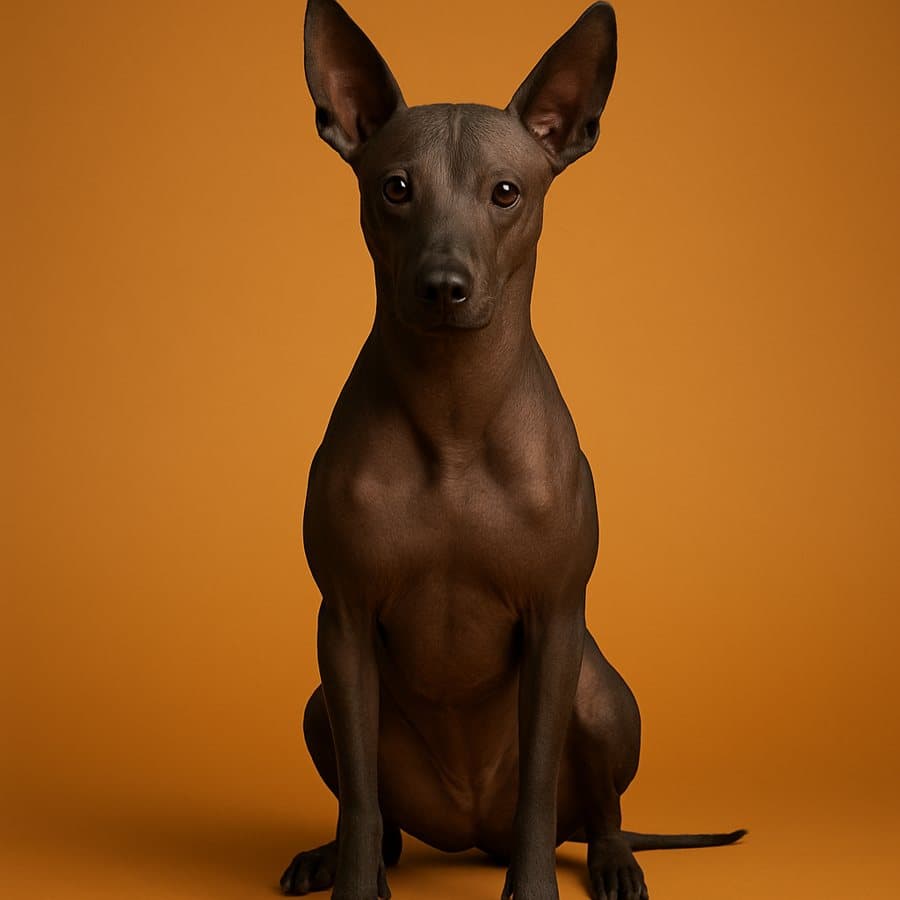
An adult Xoloitzcuintli weighs 4.5 to 25 kg and stands 25 to 62 cm at the withers.
FCI recognizes Miniature (25 to 35 cm), Intermediate (36 to 45 cm), and Standard (46 to 60 cm, with a 2 cm tolerance) varieties. Official standards evaluate varieties by height rather than strict weight boundaries.
[S6][S7][S10][S11][S12]How long does a Xoloitzcuintli live?
A Xoloitzcuintli lives 10 to 20 years.
General kennel baselines cite 13 to 18 years, though reported averages span from 10 to 20 years across veterinary and population studies.
[S11][S13][S14][S15][S16]What health problems are common in the Xoloitzcuintli?
The most common in the Xoloitzcuintli are: FOXI3-Associated Canine Ectodermal Dysplasia, Dermatologic Disorders (Acne, Folliculitis, Sunburn), Patellar Luxation, Hip Dysplasia, Heritable Eye Conditions, Cardiac Disease.
FOXI3-Associated Canine Ectodermal Dysplasia [S24][S25]
A genetic condition in hairless dogs causing missing teeth alongside the absence of fur.
Ask your vet about:
- Oral dental examination
- FOXI3 commercial DNA genetic screening
Dermatologic Disorders (Acne, Folliculitis, Sunburn) [S3][S22]
Skin inflammation, clogged pores, and solar damage affecting exposed hairless skin.
Ask your vet about:
- Skin cytology
- Skin scrapings
- Dermatohistopathology
Patellar Luxation [S14][S22][S26]
A developmental misalignment where the kneecap slips out of its normal groove.
Ask your vet about:
- Orthopedic stifle palpation
- OFA patella evaluation
Hip Dysplasia [S22][S26]
An abnormal joint conformation of the hip socket leading to joint wear and stiffness.
Ask your vet about:
- Pelvic radiography
- OFA hip evaluation
- PennHIP distraction testing
What is a Xoloitzcuintli's temperament like?
The breed is calm, intelligent, and naturally watchful. They form intense bonds with their owners while showing an aloof and reserved demeanor around unfamiliar people.
[S3][S10][S17][S18][S19]How much exercise does a Xoloitzcuintli need?
A Xoloitzcuintli needs 30 to 60 minutes of exercise a day.
Adult dogs maintain moderate activity needs fulfilled through daily walks, mental challenges, and structured play sessions.
- Energy3 / 5
How does a Xoloitzcuintli handle heat and cold?
Hairless skin transfers heat quickly but risks sunburn and dehydration in intense sunlight. The absence of insulating fur makes the breed vulnerable to cold temperatures and windchill.
- Handles heat3 / 5
- Handles cold1 / 5
How much does a Xoloitzcuintli shed, and how do you groom it?
Bathe hairless varieties with mild canine shampoo to clear pores and sebum. Brush coated varieties weekly using a soft-bristle brush to remove loose hair.
Hairless with smooth skin or short sleek coated
- Shedding1 / 5
Is a Xoloitzcuintli good with children and other pets?
The breed lives well with respectful children and adapts to apartments because they rarely bark indoors. Primitive hunting instincts mean they may pursue unfamiliar small animals without early habituation.
- With children4 / 5
- With other pets3 / 5
- In an apartment4 / 5
Is a Xoloitzcuintli easy to train?
Xolos learn quickly but maintain independent primitive thinking. They respond best to positive reinforcement and shut down under punitive handling.
- Ease of training3 / 5
What does a Xoloitzcuintli eat at each life stage?
- PuppyOffer kibble softened with warm water or wet food textures if your puppy has missing premolars to ensure comfortable chewing.
- AdultSelect balanced adult rations matched to your dog's size and energy output to protect the skin barrier and preserve lean body condition.
- SeniorConsult your veterinarian to adjust food texture and calorie density as older dogs experience dentition changes and altered metabolic rates.
Where does the Xoloitzcuintli come from?
Archaeological ceramics date ancestors of the breed back over 3,000 years to indigenous Mesoamerican cultures including the Maya, Colima, Toltec, and Aztec civilizations. Named after the Aztec god Xolotl and the Nahuatl term for dog, the dogs were believed to guide souls safely through the underworld Mictlan. The breed gained official Mexican recognition in 1956 and definitive international FCI recognition in 1961.
Country of origin: Mexico.
[S1][S2][S3][S4][S5][S6][S7][S8][S9]Fun facts about the Xoloitzcuintli
- Hairlessness comes from a semi-dominant FOXI3 gene mutation, meaning every living hairless Xolo is genetically heterozygous. [S24]
- The FOXI3 mutation also affects dental growth, so hairless Xolos naturally miss premolars while coated littermates retain complete dentition. [S6][S24]
- Ancient peoples used hairless Xolos as warm compresses against joints, believing their skin warmth eased rheumatism. [S1][S4][S6]
- Mexican painters Frida Kahlo and Diego Rivera kept Xolos and featured them across multiple works of art. [S6]
- A single Xoloitzcuintli litter routinely produces both hairless and fully coated puppies. [S7]
Tips by life stage and weather
- PuppyIntroduce your puppy to unfamiliar people, sounds, and animals between 8 and 16 weeks to prevent aloofness from turning into timidity.
- PuppyUse positive reinforcement with high-value food rewards during house training and basic cues.
- AdultProvide 30 to 60 minutes of daily physical exercise paired with interactive scent games.
- AdultInspect hairless skin weekly for blackheads or acne and cleanse with mild dog shampoo.
- SeniorProvide soft resting beds indoors to cushion joints and protect bare skin from hard surfaces.
- SeniorSchedule regular veterinary oral examinations to evaluate chewing comfort and tooth health.
- Hot seasonApply dog-safe sunscreen or put sun-protective clothing on bare skin before taking walks during peak daylight hours.
- Hot seasonWalk during the early morning or evening and provide shady resting spots to prevent dehydration and overheating.
- Cold seasonDress your hairless dog in warm sweaters or insulated coats before leaving the house.
- Cold seasonKeep indoor sleeping quarters free of drafts and supply warm thermal bedding.
- Rainy seasonDry your dog thoroughly with a clean towel immediately after walks to clear wet debris from pores.
- Rainy seasonUse a lightweight waterproof canine raincoat during outings to shield bare skin from moisture and cold rain.
In the Kiba Vet app, your pet's breed profile shows a tip of the day based on its age and the weather where you live.
This is general guidance. Always ask your vet.
Checked against sources; veterinary review pending. Updated on September 29, 2026.
Written with the help of AI from the cited sources and checked fact by fact against them by a second model.
Sources
Every health fact and every number on this page comes from these sources. Identifiers from Wikidata (CC0).
- S1 About Xolos — Xoloitzcuintli Club of America
- S2 akc.org
- S3 Xoloitzcuintli - Care-A-Lot Pet Supply
- S4 Standard Xoloitzcuintli Dog Breed Information - Continental Kennel Club
- S5 Xoloitzcuintle - Wikipedia
- S6 Xoloitzcuintli - All About Dogs | Orvis
- S7 Xoloitzcuintle-STANDARD – Jelena Dogshows
- S8 Mexicansk hårløs hund - Wikipedia, den frie encyklopædi
- S9 XOLOITZCUINTLE
- S10 Breed Priorities – Xoloitzcuintli | Canine Chronicle
- S11 Xoloitzcuintli Breed: Characteristics, Care & Photos | Chewy
- S12 Xoloitzcuintli: temperament, care and growth · Kintail
- S13 Xoloitzcuintli Dog Breed -Temperament, Personality and Characteristics Traits | Hill's Pet US
- S14 Xoloitzcuintli Dogs: What You Should Know
- S15 Xoloitzcuintli | VCA Animal Hospitals
- S16 Longest-Living Dog Breeds, Ranked by Lifespan | Tailyears
- S17 dogsglobal.com
- S18 Xoloitzcuintli Breed Profile: Things to Know Before Adopting a Xoloitzcuintli
- S19 Xoloitzcuintli Dog - Facts, History & Breed Information
- S20 Argentine Pila Dog: Breed Facts, Prices & Breeders | Creatures
- S21 Xoloitzcuintli Breed Information & Insights | Basepaws
- S22 Xoloitzcuintli Breed Guide | PupPilot
- S23 Breed Standards - Xoloitzcuintli Dog Breed
- S24 Ectodermal Dysplasia (Hairlessness) | Laboratoire de génétique vétérinaire
- S25 OMIA:000323-9615: Ectodermal dysplasia in Canis lupus familiaris (dog) - OMIA - Online Mendelian Inheritance in Animals
- S26 FAQ
- S27 Dog Breed Disease Predispositions, Inherited Disorders and Congenital Conditions | Dr. Bob's Pet Health Information
- S28 Xoloitzcuintle Standard – puppies and breeders | Look4dog