
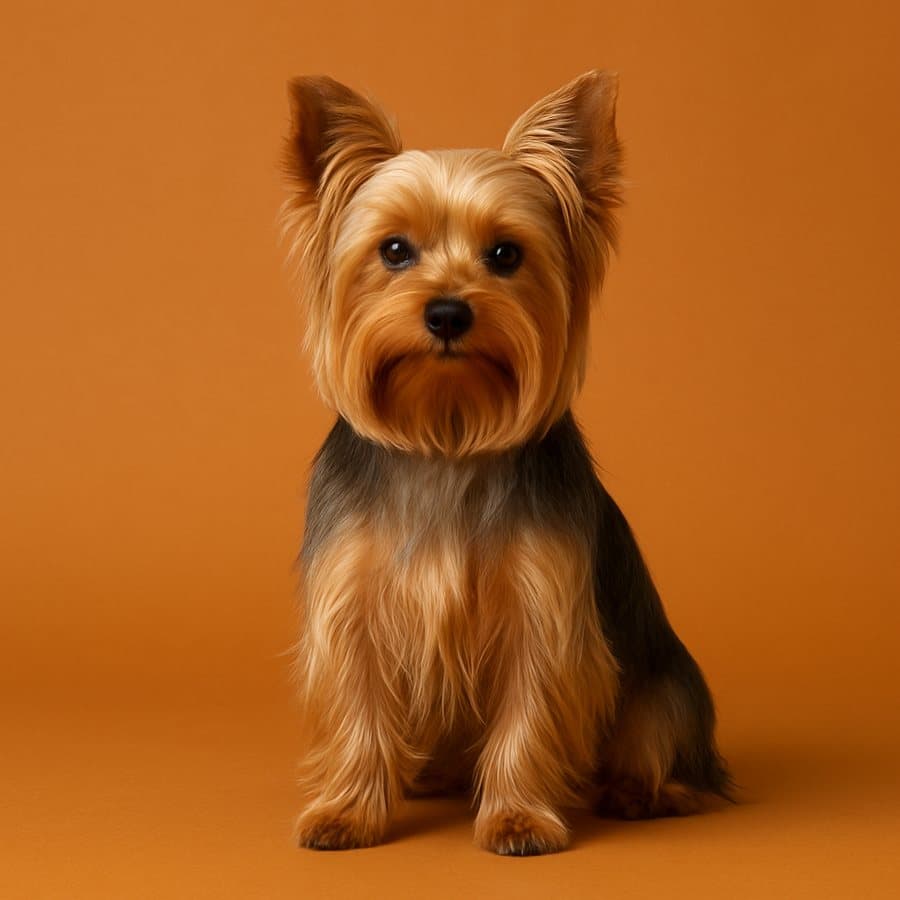
This is general guidance. Always ask your vet.
How long does a Yorkshire Terrier live?
A Yorkshire Terrier lives 11 to 15 years.
General kennel club ranges place life expectancy between 11 and 15 years, while UK veterinary cohort studies record median survival spans between 12.5 and 13.56 years.
[S12][S15][S16][S17][S18][S19][S20][S21]What health problems are common in the Yorkshire Terrier?
The most common in the Yorkshire Terrier are: Periodontal Disease, Patellar Luxation, Collapsing Trachea, Portosystemic Shunt (PSS), Legg-Calvé-Perthes Disease, Hereditary Eye Disorders, Transient Juvenile Hypoglycemia.
Periodontal Disease [S17][S37]
A bacterial infection and inflammation of the gums and supporting tooth structures caused by plaque accumulation.
Ask your vet about:
- Oral examination
- Dental probing under anesthesia
- Full-mouth dental radiographs
- Check for retained milk teeth
Patellar Luxation [S37][S38]
A condition where the kneecap slips out of its normal femoral groove during movement.
Ask your vet about:
- Orthopedic physical palpation
- OFA patella grading evaluation
Collapsing Trachea [S15][S37]
A progressive weakening and flattening of the cartilaginous rings that keep the airway open.
Ask your vet about:
- Cervical and thoracic radiographs
- Fluoroscopy airway evaluation
- Tracheobronchoscopy
Portosystemic Shunt (PSS) [S15][S39]
An abnormal blood vessel that diverts portal blood flow around the liver, preventing proper filtering of toxins.
Ask your vet about:
- Pre- and post-prandial serum bile acid assays
- Fasting blood ammonia test
- Abdominal ultrasound
- CT angiography
Legg-Calvé-Perthes Disease [S15][S37][S40]
Avascular necrosis causing degeneration, bone lysis, and collapse of the femoral head in the hip joint.
Ask your vet about:
- Pelvic and hip radiographs
- OFA hip evaluation
Hereditary Eye Disorders [S37][S38][S39][S41]
Genetic ocular diseases including juvenile cataracts and progressive retinal atrophy that compromise vision.
Ask your vet about:
- Annual CAER eye examination by a veterinary ophthalmologist
- DNA panel test for PRCD alleles
Transient Juvenile Hypoglycemia [S37]
A sudden, dangerous drop in blood glucose levels provoked by fasting, cold, or stress in young toy puppies.
Ask your vet about:
- Blood glucose evaluation
- Serum glucose curve monitoring
What is a Yorkshire Terrier's temperament like?
Yorkshire Terriers are alert, spirited, and affectionate dogs with confident terrier personalities. They bond deeply with their owners, show high curiosity, and can be vocal guardians of their home.
[S1][S3][S14][S22][S23]How much exercise does a Yorkshire Terrier need?
A Yorkshire Terrier needs 20 to 30 minutes of exercise a day.
Daily physical needs are moderate and satisfied with brisk short walks paired with play sessions. Mental enrichment such as puzzle toys or scent games helps engage their working heritage.
- Energy3 / 5
How does a Yorkshire Terrier handle heat and cold?
Lacking an insulating undercoat and possessing a tiny body mass, this breed loses heat rapidly in cold weather. Their small frame also offers little buffering against high temperatures and humidity.
- Handles heat2 / 5
- Handles cold1 / 5
How much does a Yorkshire Terrier shed, and how do you groom it?
Show coats demand daily brushing, weekly baths, and wrapping. Companion pets trimmed in a short utility cut require brushing two to three times per week and professional grooming every 6 to 8 weeks.
Fine, straight, single coat of continuous-growing human-like hair
- Shedding1 / 5
Is a Yorkshire Terrier good with children and other pets?
Their small size fits apartment living well, though their tendency to bark at hallway noises requires early guidance. Their delicate bone structure suits homes with respectful older children, and their ratter instincts urge them to chase small rodents and birds.
- With children2 / 5
- With other pets2 / 5
- In an apartment5 / 5
Is a Yorkshire Terrier easy to train?
Yorkies learn tasks quickly due to their high intelligence, but they can show independent or stubborn streaks. They respond best to positive reinforcement with food rewards, while housebreaking often demands extra consistency.
- Ease of training3 / 5
What does a Yorkshire Terrier eat at each life stage?
- PuppyPuppies require energy-dense food with high-quality protein divided into 3 to 4 daily meals of miniature toy-breed kibble to maintain steady glucose levels and accommodate small jaws.
- AdultAdults thrive on balanced meals with lean proteins and controlled fat levels to support digestive health, served in controlled portions alongside specialized dental-textured kibble to protect teeth.
- SeniorOlder dogs benefit from diets with adjusted caloric content and omega-3 fatty acids, often transitioning to softened kibble or wet food to accommodate missing teeth or gum sensitivity.
Where does the Yorkshire Terrier come from?
During the mid-19th century, Scottish weavers brought ancestral terriers into Yorkshire and Lancashire, crossbreeding them with local English Black-and-Tan Terriers. Workers originally used these dogs to control rats in textile mills and coal mines before the breed gained official recognition and transitioned into companion life.
Country of origin: United Kingdom.
[S1][S2][S3][S4][S5][S6][S8]Fun facts about the Yorkshire Terrier
- Smoky, a four-pound Yorkie found in a New Guinea foxhole during World War II, ran communications wire through a 70-foot pipe and is recognized as the first therapy dog. [S7][S34][S43]
- The recognized founding sire of the breed, Huddersfield Ben, weighed about 5 kg, nearly double the weight of the modern show standard. [S5][S44]
- Yorkies are born with black and tan hair, and their characteristic steel-blue and golden coat colors take up to two years to fully develop. [S9][S23]
- The breed often exhibits harmless snorting spasms known as reverse sneezing when excited or when their soft palate becomes irritated. [S33][S45]
- In less than 30 years, the Yorkie shifted from hunting rats in industrial English factories to living as a pampered companion in Victorian high society. [S3][S23][S42]
Tips by life stage and weather
- PuppyFeed small meals multiple times a day to maintain stable energy and consult your vet on puppy progress.
- PuppyProvide gentle, early socialization to household sounds to curb nuisance barking habits.
- AdultMaintain daily brushing sessions to stop fine single-layer hair from tangling into mats.
- AdultSchedule regular veterinary dental exams to stay ahead of plaque buildup and retained teeth.
- SeniorMoisten meals with warm water if your older dog shows sensitivity around the gums.
- SeniorDiscuss modified exercise routines and orthopedic checks with your vet to support aging joints.
- Hot seasonWalk your dog during early mornings or late evenings to protect delicate paw pads from hot pavement.
- Hot seasonKeep outdoor excursions short and ask your vet about signs of heat stress during warm periods.
- Cold seasonDress your dog in a protective sweater during winter walks because their single coat lacks an insulating underlayer.
- Cold seasonKeep indoor sleeping areas away from cold floor drafts to help your small dog retain body heat.
- Rainy seasonDry your dog thoroughly with a towel immediately after walks to prevent chills from damp hair.
- Rainy seasonSet up indoor puzzle games to exercise your dog inside when wet weather disrupts outdoor walks.
In the Kiba Vet app, your pet's breed profile shows a tip of the day based on its age and the weather where you live.
This is general guidance. Always ask your vet.
Checked against sources; veterinary review pending. Updated on September 29, 2026.
Written with the help of AI from the cited sources and checked fact by fact against them by a second model.
Sources
Every health fact and every number on this page comes from these sources. Identifiers from Wikidata (CC0).
- S1 fci.be
- S2 Yorkshire Terrier - Wikipedia
- S3 Yorkshire Terrier | VCA Animal Hospitals
- S4 What to Know About Yorkshire Terriers
- S5 Origin & History of the Yorkshire Terrier
- S6 10 Facts About Yorkshire Terriers
- S7 The Yorkshire Terrier | Inspiration in Huddersfield
- S8 YORKSHIRE TERRIER
- S9 akc.org
- S10 Yorkshire Terrier | Breed Standards | The Kennel Club
- S11 Yorkshire Terriers: The AKC Breed Standard | dummies
- S12 rvc.ac.uk
- S13 rvc.ac.uk
- S14 Yorkshire Terrier | VCA Animal Hospitals
- S15 Yorkshire Terrier Lifespan: How Long Do They Live?
- S16 Average Life Expectancy of a Yorkshire Terrier: What to Expect
- S17 Checking your browser - reCAPTCHA
- S18 20 Longest Living Dog Breeds (Plus the Shortest-Lived)
- S19 Dog Life Expectancy Calculator by Breed & Age
- S20 Dog Breed Lifespan Research: A UK Study from 2024
- S21 Aging in dogs - Wikipedia
- S22 dogsqueensland.org.au
- S23 Breed Profile: Yorkshire Terrier
- S24 How Much Should a Yorkie Weigh? Weight Chart by Age | PawScale
- S25 Yorkshire Terrier Grooming And Coat Care | | Royal Canin UK
- S26 Yorkie Summer Care: Heat Safety in South Africa
- S27 Yorkshire Terrier Summer Care
- S28 Do Yorkshire Terriers shed? | Purely Pets
- S30 Complete Guide to Yorkie Coat Care: Grooming Tips for a Healthy Silky Coat
- S31 Yorkshire Terrier Dogs Breed - Information, Temperament, Size & Price | Lancaster Puppies
- S32 Learning More About The Yorkie Haircut - DaySmart Pet
- S33 Common Health Issues in Yorkshire Terriers: What US Owners Should Know | Lancaster Puppies
- S34 Yorkshire Terrier Animal Facts - Canis lupus familiaris - A-Z Animals
- S35 yorkshire terrier Facts For Kids | DIY.org
- S36 Yorkie Weight Chart in kg & lb by Age
- S37 A Yorkshire Terrier Health Guide: Common Diseases and Veterinary Care | Hospital Veterinario en Barcelona, Urgencias 24h
- S38 Crystal Divine Yorkies | AKC Yorkie Puppies Available PA & GA | Champion Line Yorkshire Terrier Breeder
- S39 Breed Health — The Yorkshire Terrier Club of America
- S40 Yorkshire Terrier Dog Breed Guide | Paction
- S41 Health Testing for Yorkshire Terriers | Essence of Grace Yorkies — Essence of Grace Yorkies – AKC Champion Yorkie Breeder
- S42 Yorkshire Terrier Lifespan and End-of-Life Care: How to Support Your Senior Yorkie | CodaPet
- S43 Two Legendary Yorkies - Yorkies & Cross-Breeds
- S44 Yorkshire Terrier History: Where the Breed Originated
- S45 How Long Do Yorkies Live? Lifespan & Senior Care – La Petite Labs