Recognizing critical symptoms quickly allows you to protect your pet's life during sudden illness or trauma. First aid stabilizes your pet safely while you travel to the emergency veterinary clinic.
This is general guidance. Always ask your vet.
What should I do right now in a pet emergency?
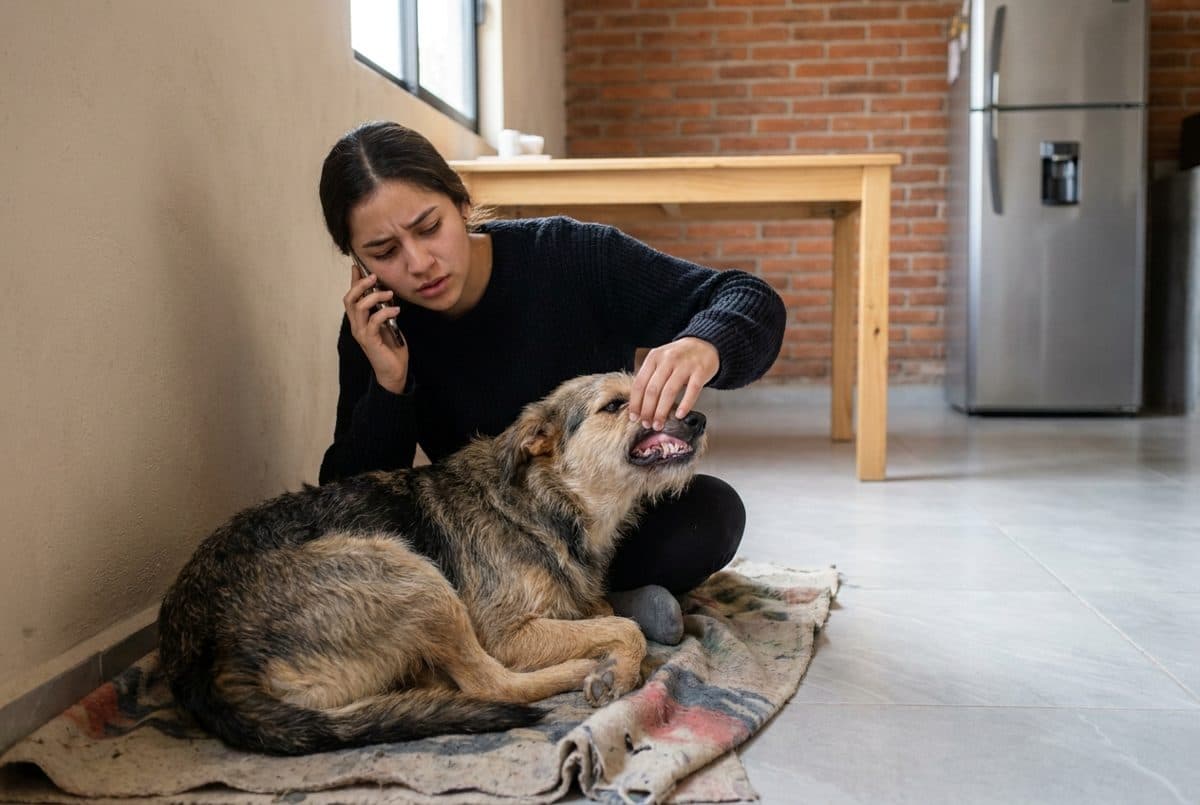
Call your nearest emergency veterinary hospital immediately and transport your pet for professional care while using first aid to keep them safe on the way.
First aid preserves life, reduces pain, and stabilizes your pet for transportation to a veterinary hospital. Professional veterinary care provides essential medical treatment, so you must bring your pet to a veterinarian immediately.
Phone the emergency veterinary hospital ahead of time so the clinical team can prepare necessary equipment before you arrive. Keep the telephone number and address of a local 24-hour clinic accessible at all times.
- Protect yourself before handling your pet, because injured animals bite or scratch in pain.
- Phone your nearest emergency veterinary hospital so the staff prepares for your arrival.
- Transport your pet to the veterinary hospital immediately.
How do I recognize respiratory distress in my pet?
Recognize respiratory distress by watching for noisy breathing, an extended neck, rapid shallow breaths, exaggerated abdominal effort, or open-mouth breathing in cats.
Signs of breathing trouble include noisy inhalation, stretching the neck forward to pull in air, rapid shallow breathing, and heavy abdominal movement. Open-mouth breathing or panting in cats indicates a critical medical emergency that requires immediate veterinary care.
Dogs with chest trauma, breathing difficulty, or short-nosed anatomy must never wear a muzzle, because a muzzle restricts their airway.
[S1][S5][S6][S8][S13]How do I check my pet's gums for an emergency?
Check your pet's gums by inspecting their color and moisture, as pale, blue, or dry gums indicate poor circulation, oxygen deprivation, or dehydration.
Pale or white gums indicate reduced blood circulation, severe blood loss, or systemic shock. Blue, purple, or grey gums reveal severe oxygen deprivation in the bloodstream and require urgent oxygen therapy.
Dry or sticky gums indicate dehydration or heatstroke. Check blood flow by pressing your finger firmly against the gum tissue to blanch it white, then count how many seconds the pink color takes to return.
[S1][S3][S4][S5][S6][S8][S10][S13]How do I treat heatstroke in my pet?
Cool your pet by pouring cool water over their body and fanning them, then stop active cooling when their rectal temperature drops to 103.0°F (39.4°C).
A rectal temperature exceeding 103.0°F (39.4°C) indicates hyperthermia, while normal adult dog and cat temperatures range from 101.5°F to 102.0°F (38.6°C to 38.9°C). Body temperatures between 107.0°F and 109.0°F (41.2°C to 42.7°C) in dogs trigger multiple organ failure and death.
Pour cool water over the pet and fan them to lower their temperature. Avoid ice or ice water because rapid chilling triggers dangerous complications. Stop active cooling when rectal temperature drops to 103.0°F (39.4°C) to prevent severe hypothermia, and transport your pet to the clinic immediately.
- Pour cool water over your pet's body.
- Direct a fan toward your pet to increase airflow.
- Check your pet's rectal temperature frequently.
- Stop active cooling once the temperature reaches 103.0°F (39.4°C).
- Transport your pet to the emergency clinic immediately.
How do I handle bleeding and trauma in an injured pet?
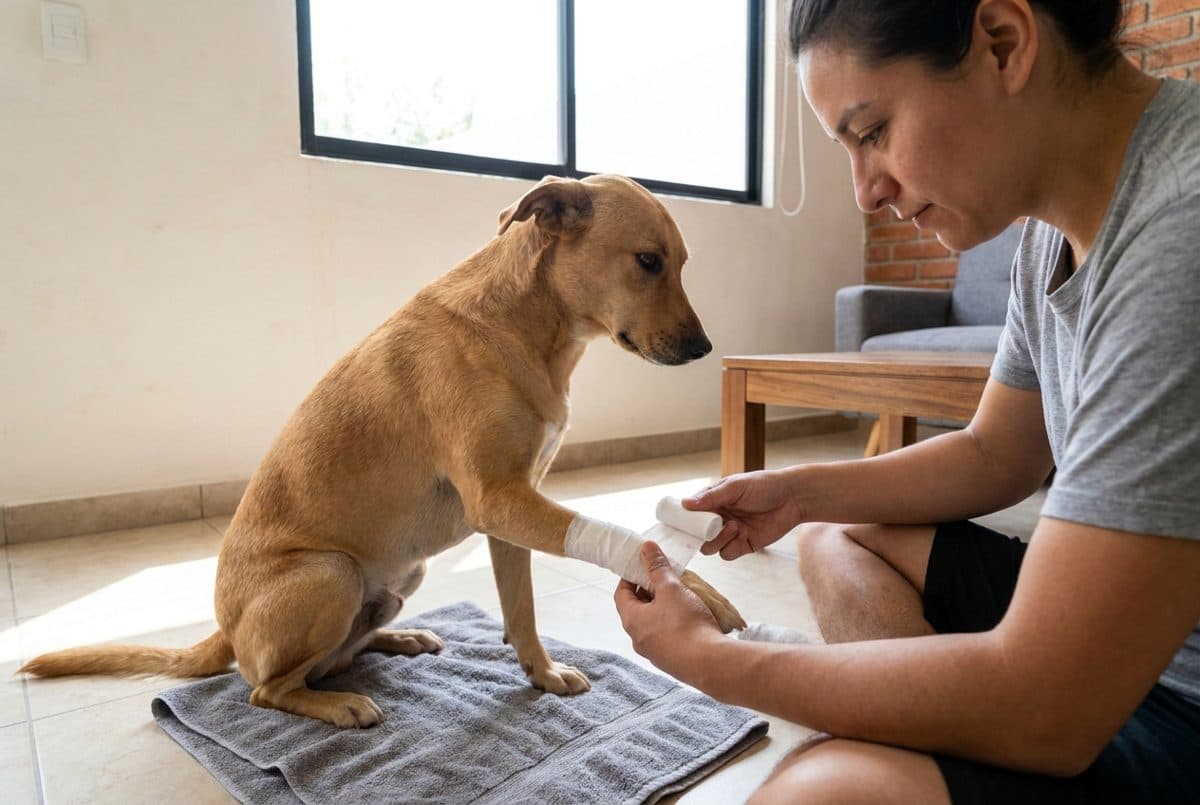
Apply firm direct pressure to bleeding wounds with clean cloth, move pets with head or spinal injuries on a flat firm surface, and go to the veterinary clinic immediately.
Manage external bleeding by pressing a clean towel or gauze firmly against the wound without lifting the dressing. Blood that spurts in pulses, drips rapidly into a pool, or soaks through bandages within minutes signals an acute emergency.
Move pets with suspected spinal or head trauma on a flat, firm surface such as a board, sturdy cardboard, or taut blanket with minimal neck motion. Wrap an injured cat gently in a towel to restrict movement and place them in an open-topped carrier or ventilated box.
Leave penetrating objects lodged in the chest, skull, or abdomen in place during travel, because removing them triggers massive internal bleeding. If trauma displaces an eyeball from its socket, keep the eye moist with plain sterile saline and protect it from friction.
- Apply firm, continuous pressure to bleeding wounds using clean gauze or a towel.
- Keep the dressing in place without lifting it.
- Move a pet with suspected head or back trauma on a rigid, flat surface.
- Keep lodged penetrating objects in place without pulling them out.
- Go to the emergency veterinary hospital immediately.
What critical pet symptoms require immediate emergency care?
Seek immediate veterinary care if your pet collapses, suffers prolonged seizures, shows non-productive retching with a swollen abdomen, or strains painfully to urinate.
Sudden collapse or loss of consciousness indicates shock, acute heart failure, or internal bleeding. Gastric dilatation and volvulus occurs when a gas-filled stomach rotates on its axis, causing non-productive retching, rapid collapse, and an enlarged abdomen that resonates like a drum on the left side.
A cat that strains in the litter box, produces little or no urine, cries out, and licks the genitals faces a urethral blockage that causes acute kidney injury within 24 to 48 hours without treatment. Male and neutered male cats face the highest risk because of their narrow, long urethra.
Urgent veterinary care is required if a seizure lasts over 2 minutes or occurs multiple times in 24 hours. A continuous seizure lasting over 5 minutes is status epilepticus, which causes irreversible brain damage and hyperthermia; keep hands away from the mouth because pets cannot swallow their tongues and can bite.
Continuous vomiting lasting beyond 6 to 12 hours, vomiting blood, eye injuries, and suspected poisoning require urgent veterinary care. For suspected poisoning, bring packaging, containers, or plant samples to the clinic, and never induce vomiting at home.
[S1][S2][S5][S6][S7][S9][S10][S11][S13][S14]When should you go to the vet right away?
- Sudden collapse or loss of consciousness
- Pale, white, blue, purple, or grey gums
- Open-mouth breathing or panting in cats
- Noisy breathing, extended neck posture, or exaggerated abdominal breathing
- Blood spurting in pulses, dripping rapidly, or soaking through bandages within minutes
- Non-productive retching with an enlarged, drum-like abdomen
- Frequent straining in the litter box with little or no urine output
- Seizures lasting over 2 minutes, lasting continuously over 5 minutes, or repeating within 24 hours
- Rectal body temperature exceeding 103.0°F (39.4°C)
- Continuous vomiting persisting beyond 6 to 12 hours, or vomiting blood
This is general guidance. Always ask your vet.
Checked against sources; veterinary review pending. Information checked on September 28, 2026. Updated on September 28, 2026.
Written with AI help from the cited sources. A second model checked every fact against them.
Sources
- S1 What to Do in a Dog or Cat Emergency - Special Pet Topics - Merck Veterinary Manual
- S2 Feline Lower Urinary Tract Disease | Cornell University College of Veterinary Medicine
- S3 First Aid for Dogs | VCA Animal Hospitals
- S4 First Aid for Cats | VCA Animal Hospitals
- S5 Emergencies in Dogs | VCA Animal Hospitals
- S6 Emergencies in Cats | VCA Animal Hospitals
- S7 Bloat: Gastric Dilatation and Volvulus in Dogs | VCA Animal Hospitals
- S8 Heat Stroke in Dogs | VCA Animal Hospitals
- S9 Seizures in Dogs | VCA Animal Hospitals
- S10 Emergency Care for Your Pet | ASPCA
- S11 Dog Poisoning - Common Dog Poisons - RSPCA - rspca.org.uk
- S12 First Aid For Your Dog - RSPCA - rspca.org.uk
- S13 First aid for pets struggling to breathe - PDSA
- S14 What to do if your pet has a seizure - PDSA
- S15 First aid for bleeding wounds - PDSA