
Dogs and cats dissipate heat primarily through panting, which can fail rapidly during exercise, warm weather, or confinement. Recognizing heatstroke signs and starting first aid keeps your pet safe while you travel to the veterinary clinic.
This is general guidance. Always ask your vet.
What should you do right now if your pet has heatstroke?
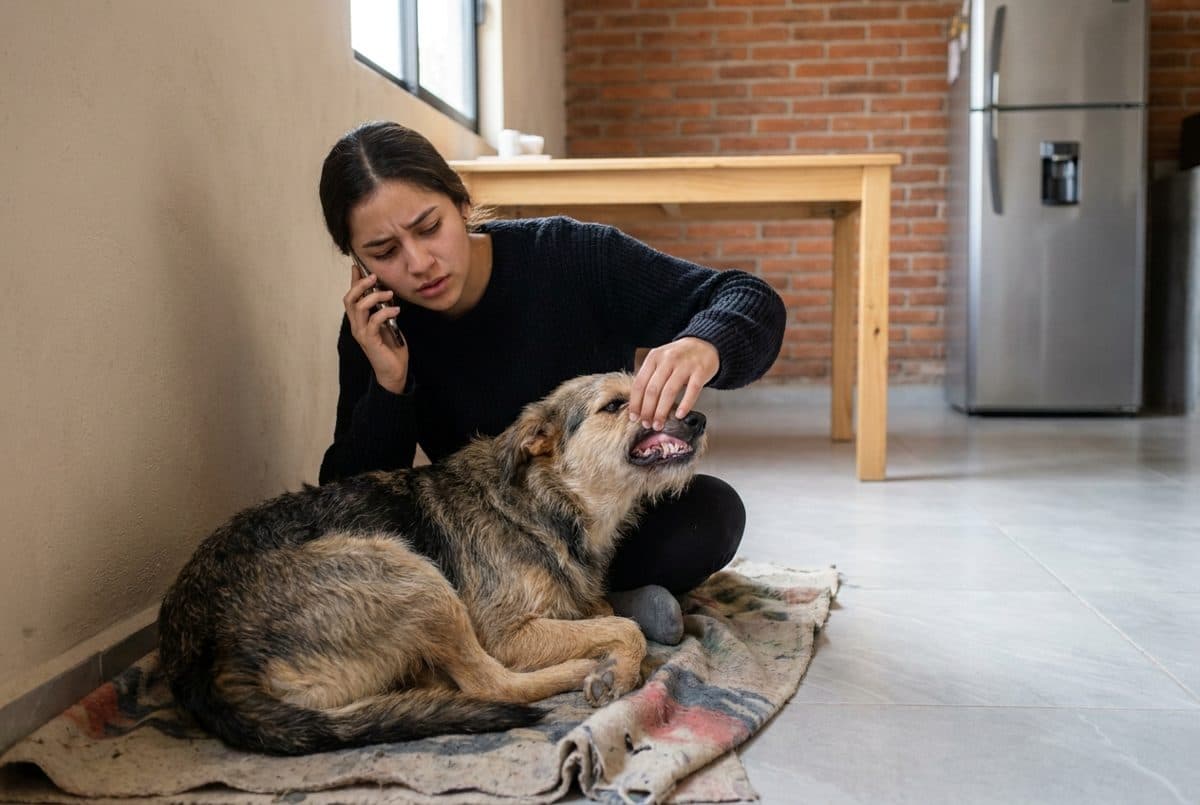
Call your veterinarian immediately and start cooling your pet with cool tap water on the way to the clinic.
Heatstroke is a medical emergency that requires immediate veterinary care. First aid only keeps your pet safe on the way to the clinic.
Call the veterinary clinic while traveling so staff prepare emergency cooling equipment and intravenous fluid therapy before your arrival.
- Call your veterinary clinic immediately so medical staff prepare cooling equipment and intravenous fluids.
- Move your pet into an air-conditioned room or air-conditioned vehicle.
- Pour continuous cool tap water over your pet's neck, abdomen, and inner thighs.
- Keep running water away from your pet's nose and mouth to prevent fluid inhalation.
- Direct airflow from electric fans or vehicle air conditioning across your pet's wet body to drive evaporative cooling.
- Place wet towels underneath your pet, rewetting the fabric frequently.
- Offer cool water for a conscious pet to drink voluntarily, avoiding forced drinking.
- Stop active cooling when your pet's rectal temperature reaches 103°F (39.4°C) or panting slows.
What are the signs of heatstroke in dogs and cats?
Overheating pets exhibit heavy panting, thick drooling, abnormal gum colors, weakness, vomiting, and collapse.
Initial signs in dogs include persistent heavy panting, rapid breathing, and thick drooling or foaming around the mouth. Overheating cats show open-mouth panting, drooling, restlessness, pacing, and stumbling.
Mucous membranes change color during an episode. You will observe bright red, dark purple, sticky, or pale gums.
Severe heatstroke causes vomiting, diarrhea, weakness, lack of coordination, muscle tremors, seizures, and sudden collapse.
[S1][S6][S7][S8][S9]What body temperature indicates heatstroke in dogs and cats?
Heatstroke risk begins when body temperature exceeds 104°F (40°C), with temperatures above 106°F (41.1°C) creating severe medical danger.
Normal feline body temperature ranges between 100.5°F and 102.5°F (38.1°C to 39.2°C). Dog hyperthermia begins above 103°F (39.4°C), and canine heatstroke occurs above 106°F (41.1°C).
Body temperatures reaching 107°F to 109°F (41.2°C to 42.7°C) trigger widespread cell destruction and multi-organ failure. Active cooling must stop once rectal temperature drops to 103°F (39.4°C) to prevent rebound hypothermia.
[S1][S7][S8]Which pets face the highest risk of heatstroke?
Flat-faced breeds, pets with double coats, overweight animals, senior pets, and animals with heart conditions face elevated heatstroke risk.
Dogs and cats sweat through their paw pads and rely on panting to release body heat. Flat-faced breeds such as Bulldogs, French Bulldogs, Pugs, and Persian cats have compressed upper airways that restrict panting airflow.
VetCompass epidemiological data shows Chow Chows have 17 times and Bulldogs have 14 times the odds of heat-related illness recorded in Labrador Retrievers. Brachycephalic skull shape and an age over ten years independently predict fatal heat illness.
Thick double coats and excess body fat trap metabolic heat. Brushing out loose undercoat supports airflow, while keeping the outer coat intact protects skin from radiant solar heat and sunburn. Restrictive muzzles prevent dogs from opening their jaws to pant, precipitating hyperthermia.
[S1][S4][S5][S7][S8][S9]What causes heatstroke in pets?
Physical exercise triggers the majority of heatstroke cases, alongside environmental heat, hot parked cars, and unventilated rooms.
VetCompass research across 905,543 dogs showed physical exercise triggered 74.2% of heat illness cases, environmental heat caused 12.9%, and vehicle confinement caused 5.2%. Canine heatstroke frequently strikes in mild weather during exercise, with a median Wet Bulb Globe Temperature of 16.9°C (62.4°F).
Parked vehicles climb to lethal temperatures within minutes, even with cracked windows. Confinement in unventilated spaces like sheds, garages, conservatories, and greenhouses is the most frequent trigger of feline heatstroke.
[S1][S2][S5][S6][S7][S8]Why does your pet need a veterinary exam after cooling down?
A veterinarian must examine your pet because secondary organ failure and internal bleeding can manifest hours or days after the incident.
The 2016 VetCompass primary care dog study recorded a 14.18% fatality rate for heat-related illness events. Internal complications frequently develop after body temperature returns to normal.
Hyperthermia damages cells within the hypothalamic thermoregulatory center, creating heightened susceptibility to future heat injury. A full veterinary evaluation detects delayed organ damage early.
[S1][S4][S7][S8]When should you go to the vet right away?
- Persistent heavy panting or rapid breathing
- Excessive thick drooling or foaming at the mouth
- Bright red, dark purple, sticky, or pale gums
- Weakness, stumbling, or lack of coordination
- Muscle tremors or seizures
- Sudden collapse or unconsciousness
- Vomiting or diarrhea
- Open-mouth panting, restlessness, or pacing in cats
This is general guidance. Always ask your vet.
Checked against sources; veterinary review pending. Information checked on September 26, 2026. Updated on September 26, 2026.
Written with AI help from the cited sources. A second model checked every fact against them.
Sources
- S1 Heat Stroke in Dogs | VCA Animal Hospitals
- S2 Dogs Don’t Die Just in Hot Cars—Exertional Heat-Related Illness (Heatstroke) Is a Greater Threat to UK Dogs - PMC
- S3 Cooling Methods Used to Manage Heat-Related Illness in Dogs Presented to Primary Care Veterinary Practices during 2016–2018 in the UK - PMC
- S4 Incidence and risk factors for heat-related illness (heatstroke) in UK dogs under primary veterinary care in 2016 - PMC
- S5 Risk Factors for Severe and Fatal Heat-Related Illness in UK Dogs—A VetCompass Study - PMC
- S6 How to Recognise & Treat Heatstroke in Dogs - RSPCA - rspca.org.uk
- S7 Heatstroke in dogs - PDSA
- S8 Heatstroke in cats - PDSA
- S9 Hot Weather Safety Tips | ASPCA