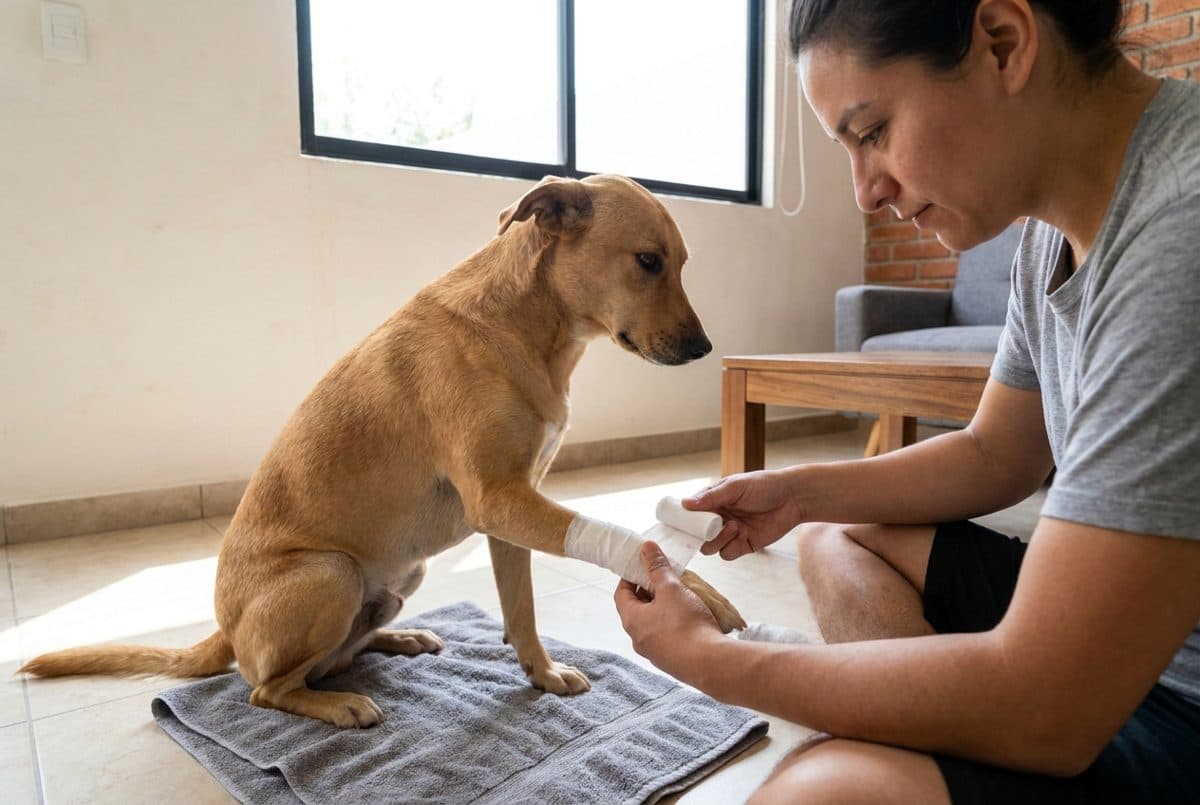
First aid stabilizes your injured pet so you can reach emergency medical care safely. Prompt action controls blood loss while the veterinary team prepares for your arrival.
This is general guidance. Always ask your vet.
What should you do right now if your pet is bleeding?
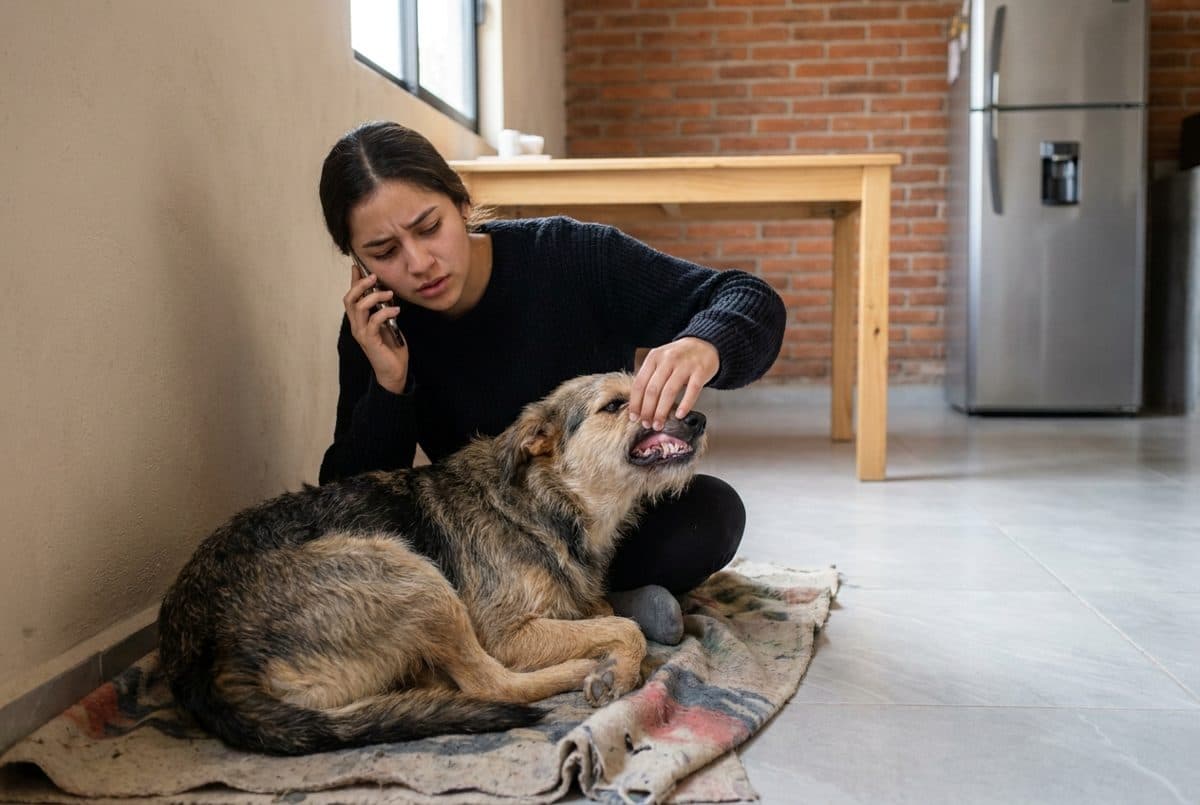
Call your emergency veterinary clinic immediately and apply continuous direct pressure to the wound with a clean cloth while you travel.
Phone the veterinary clinic before departing. Calling ahead allows the medical staff to prepare treatment rooms and equipment before your arrival. First aid keeps your pet safe during transport so the veterinary team can provide definitive medical treatment.
- Call your emergency veterinary clinic to announce your arrival.
- Place a light towel over your pet's head to prevent defensive bites.
- Press a clean towel firmly against the wound.
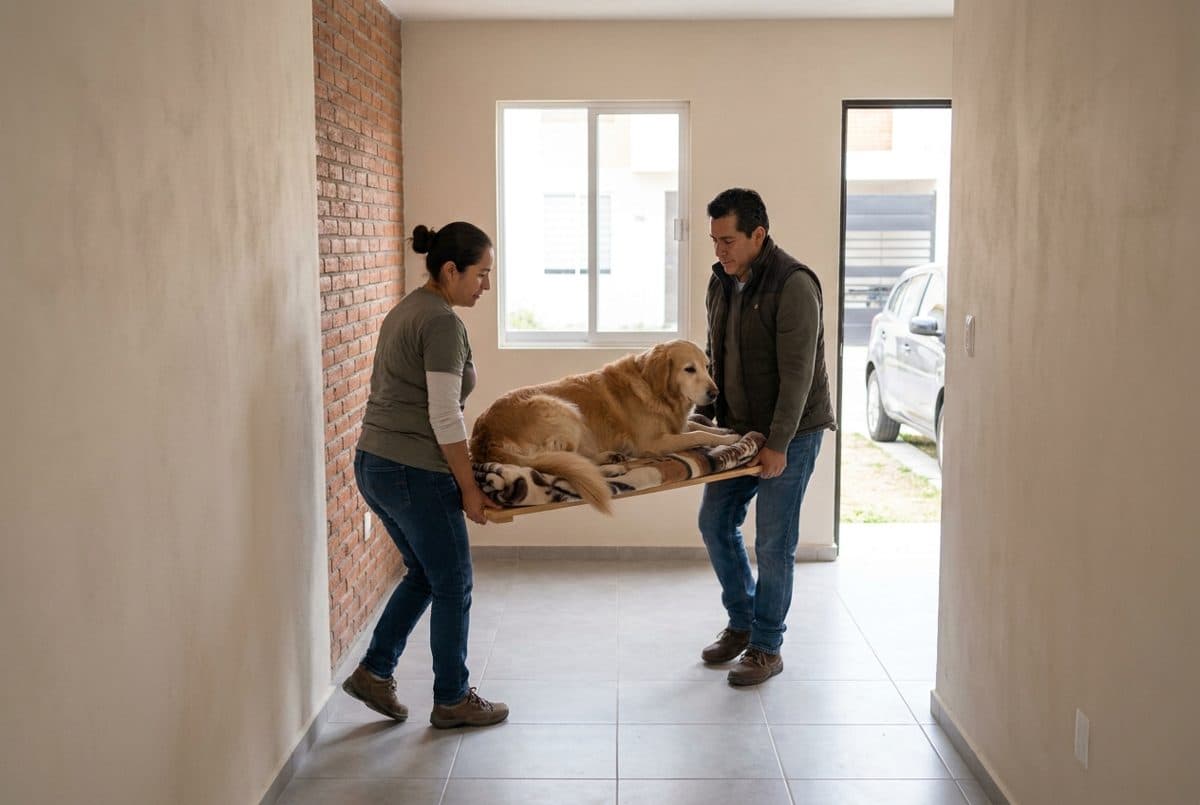
- Transport your pet to the clinic immediately.
How do you stop active bleeding on a dog or cat?
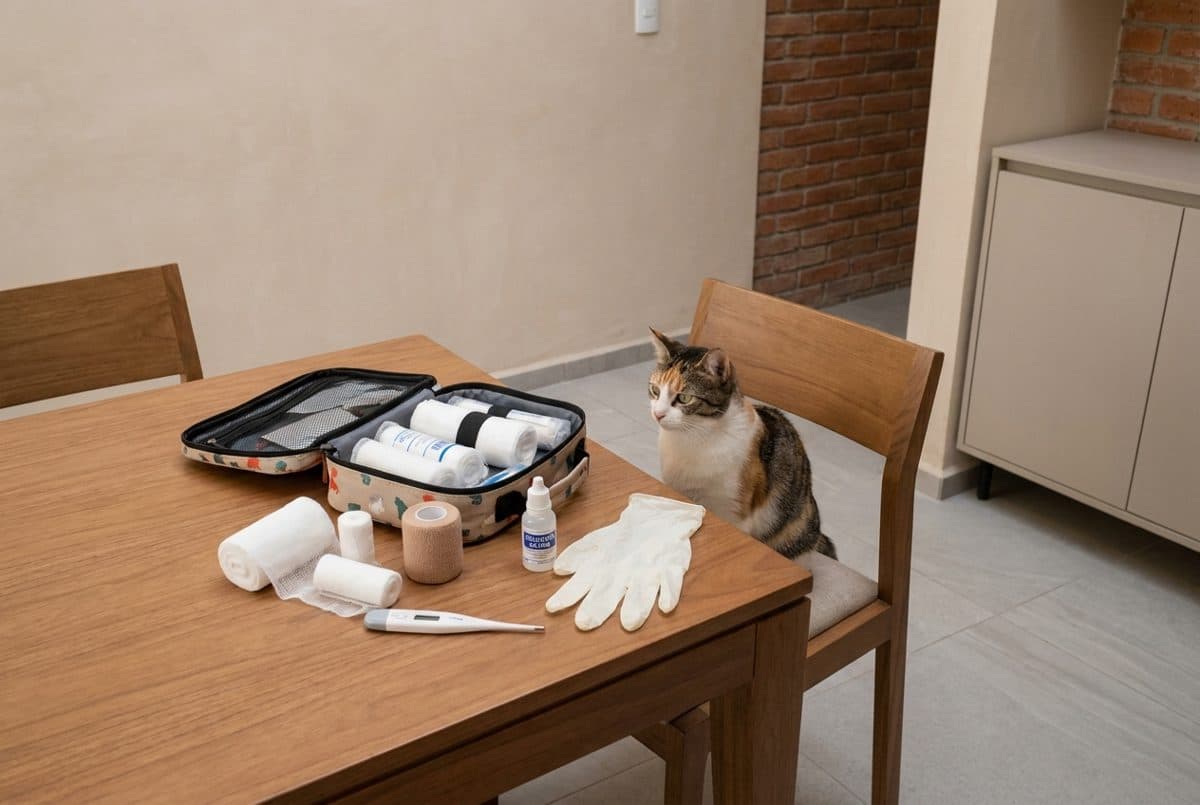
Press a clean towel or sterile gauze firmly against the wound without lifting the dressing.
Hold steady pressure on the bleeding site for at least 3 continuous minutes. Keep continuous pressure on deep wounds throughout the entire trip to the veterinary hospital. If blood seeps through your cloth, place fresh gauze directly on top of the soaked layers. Keeping the original dressing intact protects the forming blood clot.
Elevate an injured leg above heart level to decrease blood flow to the limb. When wrapping bandages around the neck or chest, leave space for two fingers underneath the wrap to protect normal breathing and blood circulation.
- Place clean gauze or a towel directly over the bleeding injury.
- Apply firm, uninterrupted pressure with your hands.
- Add new cloth layers over the top if blood seeps through.
- Elevate injured limbs above heart level.
How do you control bleeding from a pet's ear or paw?
Cover the injured ear or paw with absorbent gauze and maintain firm, constant pressure.
Wrap an injured paw in clean gauze and press firmly for 5 to 10 minutes. A foot pad that continues bleeding after 10 to 15 minutes of constant pressure requires immediate veterinary care.
For bleeding ear flaps, place gauze pads on both sides of the flap. Fold the ear flat across the top of your pet's head and hold it firmly in place with your hand or a wrap.
- Place absorbent gauze on both sides of a bleeding ear flap.
- Fold the ear flat over the head and hold it firmly in place.
- Wrap a bleeding paw in gauze and maintain pressure for 5 to 10 minutes.
- Transport your pet to an emergency clinic if paw bleeding continues past 15 minutes.
What should you do if an object is stuck in your pet's wound?
Leave the embedded object in place and support its base with bulky bandages during travel to the clinic.
Deeply embedded items like glass shards, sticks, or wire seal damaged blood vessels. Extracting an embedded object triggers severe internal hemorrhage and worsens tissue trauma. Pack bulky towels around the base of the object to keep it completely stable during travel.
Cover open chest wounds that make sucking sounds with a clean towel immediately. Sucking chest wounds collapse lung capacity and demand immediate emergency transport.
- Leave the embedded object in the wound.
- Pack thick towels around the base of the object to prevent movement.
- Seal sucking chest wounds firmly with a clean cloth.
- Transport your pet to emergency veterinary care immediately.
Why do animal bite wounds need immediate veterinary attention?
Animal bites introduce dangerous bacteria into deep tissues and inflict extensive crushing under the skin.
Canine puncture wounds frequently close within hours, trapping oral bacteria inside subcutaneous layers where abscesses develop. Beneath the skin surface, bite injuries cause extensive muscle tearing and dead space. Bites to the neck carry high mortality risks because they damage the trachea, carotid vessels, and vital nerves.
Veterinary treatment within 6 hours of injury offers the highest recovery rate. Contaminated wounds require professional surgical debridement and cleaning by a veterinarian.
[S4][S5]How do you clean minor scrapes on a pet?
Flush minor scrapes gently with clean lukewarm tap water or sterile saline solution.
Keep antibiotic ointments off fresh wounds because they trap contaminants and hinder veterinary examination. Place an Elizabethan collar or a clean t-shirt on your pet to prevent licking.
- Flush the scrape gently with lukewarm tap water or sterile saline.
- Keep chemical cleansers, alcohol, and ointments off the injury.
- Fit an Elizabethan collar on your pet to stop licking.
- Have a veterinarian examine the injury for proper healing.
When should you go to the vet right away?
- Pale or white gums
- Rapid, shallow breathing
- Abnormally cold paws or ears
- Distended abdomen
- Extreme weakness or collapse
- Paw pad bleeding that continues after 10 to 15 minutes of constant pressure
- Sucking sound coming from a chest wound
- Bite wounds, especially to the neck
- Foreign objects embedded in a wound
- Heavy bleeding that soaks through dressings during transport
This is general guidance. Always ask your vet.
Checked against sources; veterinary review pending. Information checked on September 28, 2026. Updated on September 28, 2026.
Written with AI help from the cited sources. A second model checked every fact against them.
Sources
- S1 First Aid and Transport of Small Animals - Emergency Medicine and Critical Care - Merck Veterinary Manual
- S2 Initial Wound Management in Small Animals - Emergency Medicine and Critical Care - Merck Veterinary Manual
- S3 First Aid for Bleeding in Dogs | VCA Animal Hospitals
- S4 Care of Open Wounds in Dogs | VCA Animal Hospitals
- S5 Bite Wounds in Dogs | VCA Animal Hospitals
- S6 First aid for bleeding wounds - PDSA
- S7 First aid for cuts and grazes - PDSA
- S8 First Aid For Your Dog - RSPCA - rspca.org.uk
- S9 Emergency Care for Your Pet | ASPCA
- S10 Pet First Aid - Veterinary Medicine & Biomedical Sciences