Moving an injured pet requires gentle handling to protect the animal from further pain and prevent bites. Proper transport keeps your pet stable until a veterinarian provides medical care.
This is general guidance. Always ask your vet.
What should you do immediately when your pet is injured?
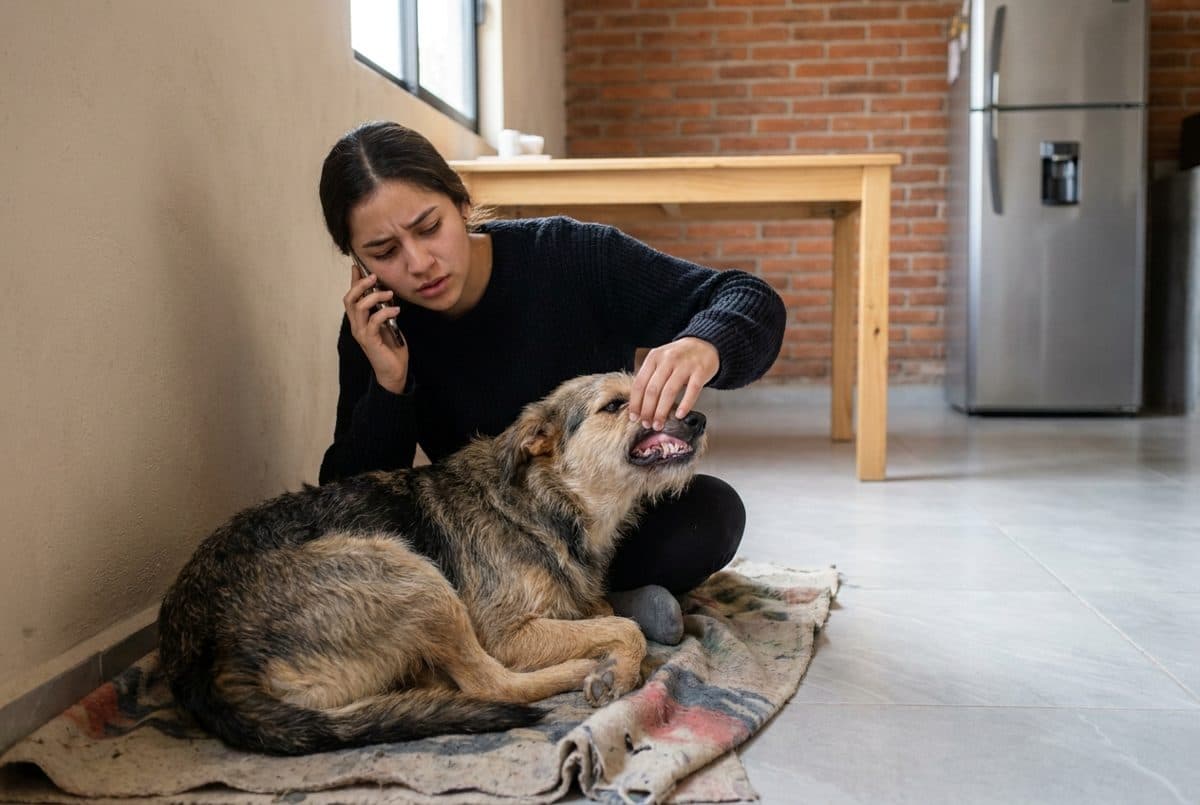
Call your emergency veterinary clinic right away, protect yourself from defensive bites, and transport the animal to the hospital immediately.
Pet first aid stabilizes your animal during transit to the clinic. Major physical trauma requires immediate veterinary examination even when the animal shows no visible symptoms.
Telephone the emergency veterinary clinic while traveling. This call allows veterinary staff to prepare equipment and give you specific instructions for the trip.
- Telephone the nearest emergency veterinary clinic so the staff prepares medical equipment.
- Approach your pet slowly while speaking in a quiet voice.
- Protect yourself with a towel wrap or temporary muzzle before touching the animal.
- Place your pet on a flat surface and drive to the veterinary clinic immediately.
How do you safely restrain an injured pet before moving them?
Drape a lightweight towel over your pet's head or apply a temporary muzzle to prevent defensive bites caused by pain.
Severe pain drives gentle pets to bite defensively. Shielding the pet's eyes with a light cloth lowers visual stimulation and calms the animal.
Do not muzzle pets with breathing distress, chest trauma, facial injuries, vomiting, or short snouts. Stay beside a muzzled dog at all times to prevent choking if the dog vomits.
Wrap injured cats snugly in a towel with an open airway to secure their limbs safely.
- Kneel at a safe distance and speak softly.
- Drape a clean towel gently over your pet's eyes.
- Loop a strip of fabric, leash, or tie around a dog's muzzle to close the jaws.
- Watch the animal continuously throughout transit.
How do you make a stretcher for an injured pet?
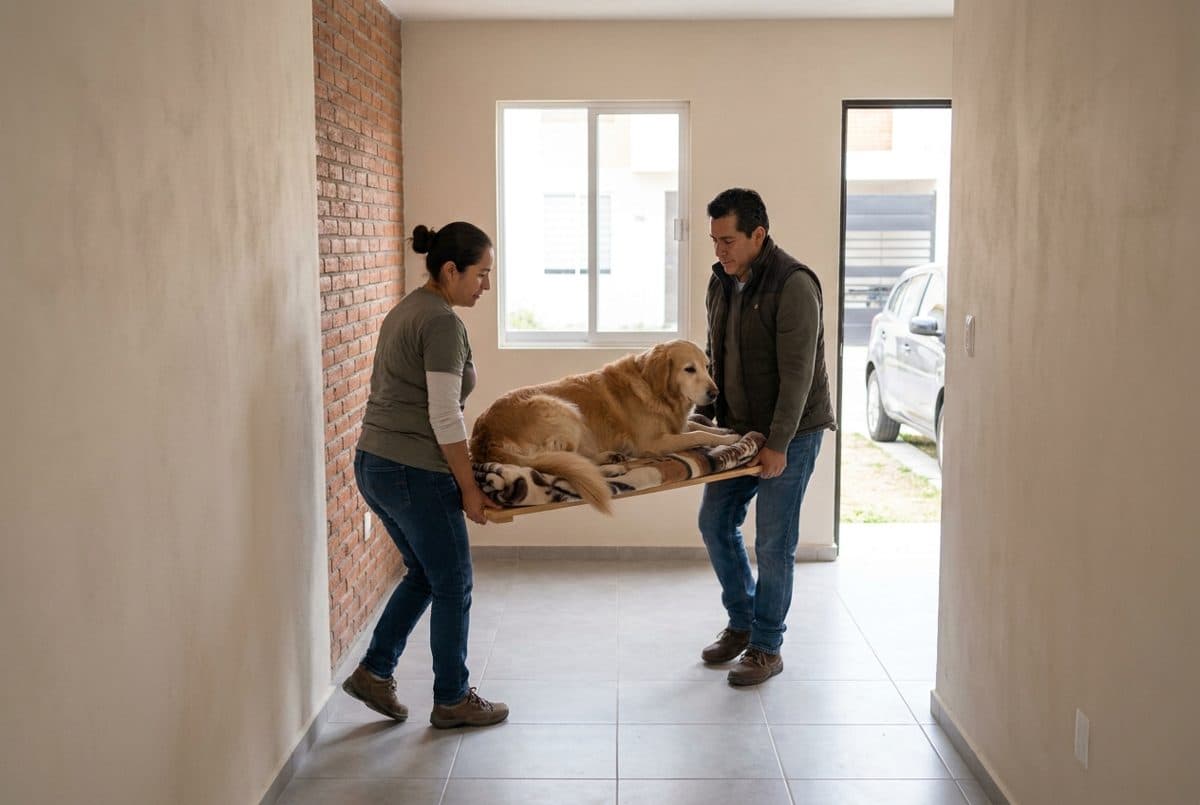
Slide your pet onto a firm wooden board, cardboard sheet, or thick blanket to move them without bending their spine.
Rigid surfaces such as wooden boards or thick cardboard support suspected bone fractures and spinal trauma. Veterinary teams can take initial X-rays straight through wood or cardboard upon arrival.
Two people can carry an injured animal using the four corners of a heavy blanket or jacket.
- Slide your pet gently onto a blanket on the floor.
- Move the blanketed animal onto a rigid board.
- Keep the board completely flat as you carry the pet to the vehicle.
How do you transport an injured cat or small dog in a vehicle?
Place your injured cat inside a top-loading pet carrier or ventilated cardboard box and secure it in the vehicle footwell.
Remove the top cover of the carrier so you can lower your pet into the base without twisting their limbs.
Wedge the carrier firmly into the footwell behind the front seats or secure it with a seatbelt over a level towel.
- Remove the top half of the carrier.
- Lower your cat gently into the bottom compartment.
- Fasten the carrier top back in place.
- Place the carrier in the car footwell to prevent shifting.
How should you position an injured pet during car transport?
Keep your pet warm with blankets, elevate a head injury patient's head twenty degrees, and place chest trauma patients with the injured side down.
Trauma causes circulatory shock and rapid loss of body temperature, so wrap your pet in warm blankets during transit. Active cooling with cool water and fans applies only to heat stroke cases.
Elevate your pet's head 20 degrees during head trauma while keeping the neck completely free of pressure.
Place animals with rib injuries on the damaged side to give the healthy lung room to expand.
Leave penetrating objects embedded in the body. If an embedded shaft blocks the car door, stabilize the shaft and trim it so at least 5 cm (2 inches) remains outside the body wall.
[S1][S2][S3][S4][S5][S6]When should you go to the vet right away?
- Vehicle collision or fall from a height
- Unresponsiveness or absence of breathing
- Open-mouth breathing or panting in cats
- Continuous active bleeding from wounds
- Disorientation, confusion, or head trauma
- Suspected broken bones or inability to stand
- Objects embedded in the skull, chest, or abdomen
- Severe hypothermia or systemic shock
- Heat stroke symptoms
This is general guidance. Always ask your vet.
Checked against sources; veterinary review pending. Information checked on September 28, 2026. Updated on September 28, 2026.
Written with AI help from the cited sources. A second model checked every fact against them.
Sources
- S1 What to Do in a Dog or Cat Emergency - Special Pet Topics - Merck Veterinary Manual
- S2 First Aid and Transport of Small Animals - Emergency Medicine and Critical Care - Merck Veterinary Manual
- S3 First Aid for Dogs | VCA Animal Hospitals
- S4 First Aid for Cats | VCA Animal Hospitals
- S5 First Aid for Falls in Dogs | VCA Animal Hospitals
- S6 First Aid for Falls in Cats | VCA Animal Hospitals
- S7 How to safely move an injured pet - PDSA
- S8 Emergency Care for Your Pet | ASPCA
- S9 What To Do in a Pet Emergency: 5 Key Steps for Pet Emergencies | PetMD
- S10 Broken Bones in Dogs: Diagnosis and Recovery | PetMD
- S11 Taking your cat to the vet - International Cat Care