
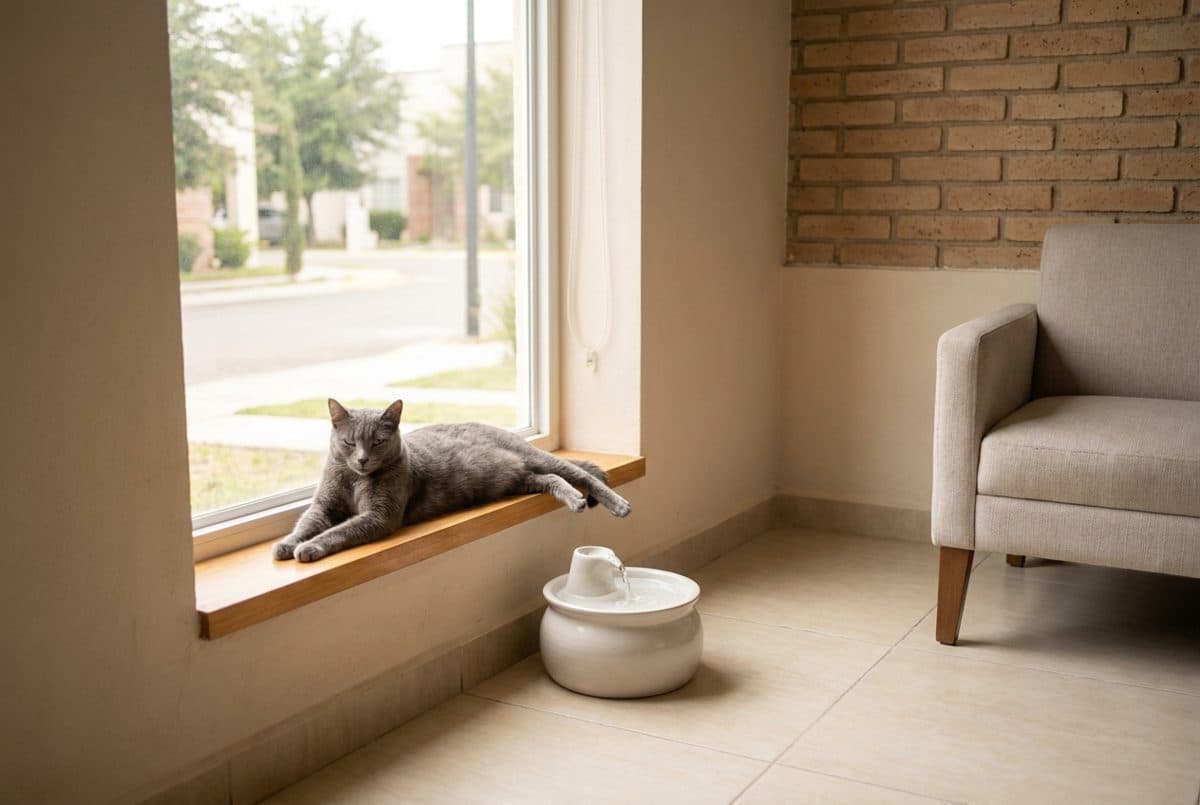
Cats enter adulthood at one year of age and need structured preventive care to thrive. Your veterinarian guides medical choices, while your daily home routine keeps your cat active and comfortable.
This is general guidance. Always ask your vet.
How often should an adult cat visit the vet?
Adult cats need a comprehensive veterinary wellness examination at least once per year.
Cats reach the young adult life stage at one year of age and transition to mature adulthood around seven to eight years of age.
Cats conceal early signs of illness as an evolutionary survival habit, which allows underlying diseases to advance before you see clear symptoms.
Veterinary wellness visits include four standard diagnostic screenings: a complete blood count, a biochemistry profile, a urinalysis, and thyroid hormone testing. Your veterinarian also evaluates a fresh fecal sample under a microscope to detect intestinal parasite eggs.
[S2][S8]Which vaccines and parasite treatments do adult cats need?
Your veterinarian sets a specific preventive schedule based on core vaccines and routine parasite protection.
Core vaccines protect cats against rabies, feline panleukopenia, feline viral rhinotracheitis, and feline calicivirus. Low-risk adult cats receive core booster vaccines every three years under professional veterinary guidelines. The feline leukemia virus vaccine serves as an optional non-core injection for cats with outdoor access or high exposure risks. Mild post-vaccine reactions such as temporary lethargy or lower appetite resolve within 24 to 48 hours.
Parasites pose continuous risks to adult cats. Hookworms measure one to two centimeters in length, latch onto the small intestinal wall, consume blood, and cause severe anemia. Fleas transmit tapeworms when cats ingest them during grooming. Outdoor hunting of rodents or rabbits exposes cats to distinct tapeworm species. Mosquitoes transmit heartworms, which lead to severe airway inflammation, rapid breathing, coughing, and right-sided heart failure.
Adult cats with outdoor access or hunting habits benefit from periodic deworming prescribed by a veterinarian.
[S3][S4]How should you set up and clean a cat litter box?
Provide one litter box per cat plus one extra box in a quiet location away from feeding areas.
Position litter boxes far from feeding bowls and water stations. Cats prefer large, open pans filled with deep, fine-textured, unscented clumping clay litter.
- Scoop solid waste and wet clumps daily to keep the box clean and stop Toxoplasma oocysts from becoming infectious within one to five days.
- Empty and wash the entire litter box on a regular schedule to stop persistent odors.
- Take your cat to the veterinarian immediately if they urinate outside the pan to evaluate urinary stones, infections, or cystitis.
How do you keep an indoor adult cat active?
Provide private resting areas, climbing scratchers, puzzle feeders, and daily predatory play sessions.
Veterinary guidelines establish five environmental pillars to support physical and emotional health indoors. Provide private, enclosed spaces where your cat rests safely without disturbance.
Distribute daily meals through puzzle toys and hidden dishes to stimulate natural foraging instincts and mental focus.
Install vertical scratching posts so your cat can deposit scent pheromones from their paw pads and mark their territory.
Schedule interactive play sessions with wand toys right before your cat's natural active periods. Move toys to mimic natural hunting patterns, allowing your cat to stalk, chase, and pounce.
[S1][S5]How do you care for an adult cat's teeth and coat?
Brush your cat's teeth daily with pet toothpaste and comb their coat weekly to prevent dental disease and hairballs.
Dental disease affects over 50% of cats past three years of age. Tooth resorption causes painful structural destruction of tooth crowns and roots, often requiring surgical extraction. Comprehensive dental cleaning, subgingival scaling, polishing, and oral x-rays require general anesthesia.
Brushing your cat's coat once or twice weekly removes loose fur, dander, and dirt while stimulating blood circulation. Removing loose hair stops your cat from swallowing fur during grooming, which reduces hairball formation. Long-haired cats require daily combing to prevent painful mats in friction zones like armpits.
- Brush teeth daily with pet-formulated toothpaste to clear soft plaque before it hardens into tartar.
- Comb the coat weekly, or daily for long-haired cats, to eliminate dead hair.
- Examine the ears weekly to confirm the ear canal is pale pink and clean, with minimal earwax and no odor or discharge.
When should you go to the vet right away?
- Sudden urination outside the litter box
- Coughing, rapid breathing, or severe airway distress
- Post-vaccination lethargy or appetite loss lasting beyond 48 hours
- Foul odor, discharge, or inflammation in the ear canal
This is general guidance. Always ask your vet.
Checked against sources; veterinary review pending. Information checked on September 26, 2026. Updated on September 26, 2026.
Written with AI help from the cited sources. A second model checked every fact against them.
Sources
- S1 2013 AAFP/ISFM Environmental Needs Guidelines - catvets.com
- S2 Wellness Examination in Cats | VCA Animal Hospitals
- S3 Vaccines for Cats | VCA Animal Hospitals
- S4 Internal Parasites in Cats | VCA Animal Hospitals
- S5 Cat Behavior and Training - Enrichment for Indoor Cats | VCA Animal Hospitals
- S6 Feline Idiopathic Cystitis | VCA Animal Hospitals
- S7 Cat Behavior Problems - House Soiling | VCA Animal Hospitals
- S8 Feeding Your Young Adult Cat | VCA Animal Hospitals
- S9 Dental Disease in Cats | VCA Animal Hospitals
- S10 Cat Grooming Tips | ASPCA
- S12 Preventing Toxoplasmosis | Parasites - Toxoplasmosis (Toxoplasma infection) | CDC