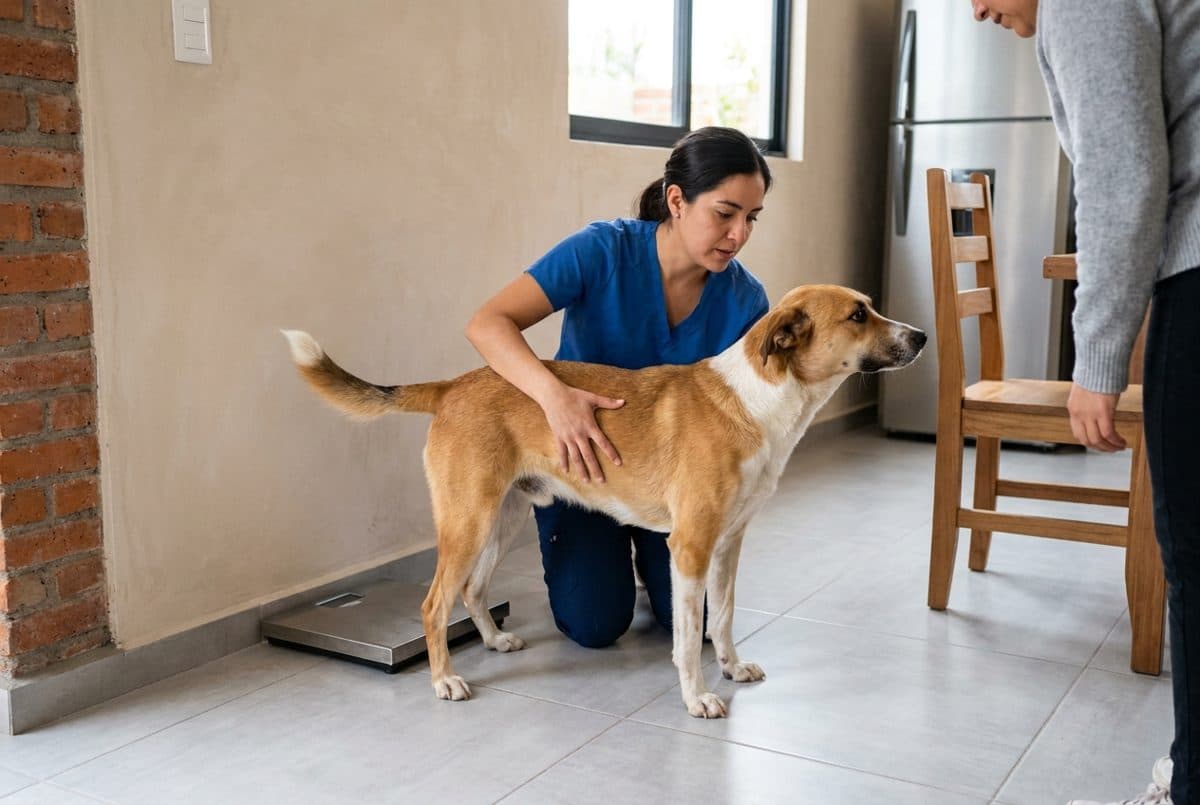

Caring for an adult dog between 1 and 7 years of age requires consistent daily routines and professional medical oversight. Your veterinarian designs personalized vaccination, parasite control, and nutrition plans tailored to your dog's lifestyle.
This is general guidance. Always ask your vet.
How often should an adult dog visit the veterinarian?
Adult dogs need a complete veterinary wellness examination at least once per year.
Your veterinarian evaluates your dog's gait, skin, coat, lymph nodes, and abdominal organs during the annual wellness visit. The clinician also listens to heart and lung sounds using a stethoscope to detect early physical abnormalities.
Annual screenings routinely include complete blood counts, biochemistry profiles, urinalysis, and thyroid hormone measurements to evaluate internal organ function.
Adult dogs receive fecal examinations at least annually to detect intestinal parasite eggs under microscopy. Annual blood tests screen for heartworm disease alongside continuous, year-round preventive medications.
Your veterinarian administers core vaccines against distemper, parvovirus, and adenovirus on a three-year cycle after the first-year booster, while bacterial vaccines and non-core boosters require annual administration based on individual exposure.
[S1][S2][S3]How do you care for an adult dog's teeth at home?
You protect your dog's oral health by brushing their teeth daily using toothpaste formulated specifically for dogs.
Periodontal disease affects over two-thirds of dogs older than three years of age. Gingivitis marks the first stage of this condition and represents the single reversible phase with proper intervention.
Dog toothpaste contains safe ingredients for swallowing, while human formulas cause digestive distress and toxicity in canines.
Thorough dental treatment requires professional scaling, polishing, and examination under general anesthesia to clean beneath the gumline. Awake cosmetic cleanings leave disease under the gumline unaddressed.
Safe chew toys bend under thumb pressure. Rigid items like animal bones, deer antlers, hard nylon toys, and ice cubes break tooth enamel.
- Select a soft-bristled toothbrush and enzymatic dog-safe toothpaste.
- Lift your dog's upper lip gently to expose the outer tooth surfaces.
- Brush the teeth along the gumline using small circular motions.
- Focus on the outer enamel where plaque gathers most heavily.
How much daily exercise does an adult dog need?
Most adult dogs require between one and two hours of daily physical exercise divided across one or two outdoor walks.
High-energy working breeds require extended activity sessions to satisfy their athletic needs.
Effective walks combine brisk walking segments to support cardiovascular fitness with slow sniffing intervals that fulfill exploratory drives. Daily walks expose your dog to varied sights and scents in the neighborhood.
Warm weather walks belong in the cool temperatures of early mornings and late evenings. Hot asphalt surfaces burn canine paw pads during sunny hours.
Use fabric toys or rubber balls for fetching games. Wooden sticks cause throat puncture injuries and splinter damage inside the canine mouth.
[S6]How do you provide mental enrichment for an adult dog?
You provide mental enrichment by offering problem-solving feeding puzzles, rotating play items weekly, and encouraging natural foraging behaviors.
Mental stimulation channels natural instincts to forage, sniff, and chew, which lowers daily canine stress levels.
Dispensing kibble through snuffle mats, slow feeders, and frozen lick mats lengthens feeding sessions and stimulates your dog's brain.
Store unused toys in a closed container and rotate access on a seven-day cycle to preserve novelty during playtime.
Subtract all food rewards and puzzle treats directly from your dog's daily meal allocation to prevent unnecessary weight gain.
[S6][S8]How do you evaluate an adult dog's body condition?
You evaluate your dog's body condition by palpating the ribs and observing the waistline against a standard nine-point scoring scale.
The standard canine Body Condition Score system rates body composition from 1 to 9 points.
A healthy adult dog scores at 4 or 5 out of 9. You can easily feel the ribs beneath a thin fat layer, observe a visible waist when looking from above, and see an upward abdominal tuck from the profile view.
A score of 7 or higher indicates excessive body fat. In this range, heavy fat deposits cover the ribs, spine, and base of the tail, obscuring the waistline entirely.
Veterinarians assess muscle mass alongside fat stores during exams because dogs can carry excess body weight while experiencing muscle loss.
[S5]How should you groom and bathe an adult dog?
You groom an adult dog by brushing their coat regularly and bathing them approximately once per month with canine-formulated shampoo.
Brushing removes dead hair, flakes, and debris from the coat while stopping tight mats that trap moisture and cause skin infections.
Adult dogs need baths once every four weeks or when they get visibly soiled.
Canine skin maintains a neutral pH between 6.2 and 7.5. Human shampoos have an acidic formulation between 5.2 and 6.2 that strips canine skin oils and triggers dermatological irritation.
[S2][S9]How do you trim an adult dog's nails safely?
You trim your dog's nails every three to four weeks by removing small tip sections while staying clear of the inner vascular quick.
Nails require trimming when they touch the ground during standing or click audibly against hard flooring surfaces. Frequent pavement walking naturally wears down claw tips.
Dewclaws sit on the inner surface of the paw and never touch walking surfaces. Untrimmed dewclaws grow in a circular direction and pierce the paw pad.
- Hold the paw firmly while keeping your dog in a calm position.
- Cut light-colored nails two to three millimeters ahead of the visible pink quick.
- Trim dark nails in tiny shavings of one to two millimeters at a time.
- Stop cutting dark nails as soon as the inner core appears near the center of the cut edge.
- Trim the inner dewclaws on the sides of the legs.
When should you go to the vet right away?
- Severe difficulty breathing or respiratory distress
- Sudden collapse or loss of consciousness
- Repeated unproductive attempts to vomit accompanied by a distended, swollen abdomen
- Active seizures lasting longer than 5 minutes
- Pumping or heavy arterial bleeding
- Diarrhea or loose stools lasting more than 1 to 2 days
- Persistent lack of appetite, coughing, limping, noticeable lethargy, or discharge from the eyes
This is general guidance. Always ask your vet.
Checked against sources; veterinary review pending. Information checked on September 26, 2026. Updated on September 26, 2026.
Written with AI help from the cited sources. A second model checked every fact against them.
Sources
- S1 Wellness Examination in Dogs | VCA Animal Hospitals
- S2 Routine Health Care of Dogs - Dog Owners - Merck Veterinary Manual
- S3 Vaccination Guidelines - WSAVA
- S4 Dental Disease in Dogs | VCA Animal Hospitals
- S5 Nutrition Guidelines - WSAVA
- S6 Exercise for dogs - PDSA
- S7 How to Trim a Dog's Nails | VCA Animal Hospitals
- S8 Easy Dog Recipes and Enrichment Ideas | Dogs Trust
- S9 Personal Care Products and Your Pet | VCA Animal Hospitals
- S10 Emergencies in Dogs | VCA Animal Hospitals