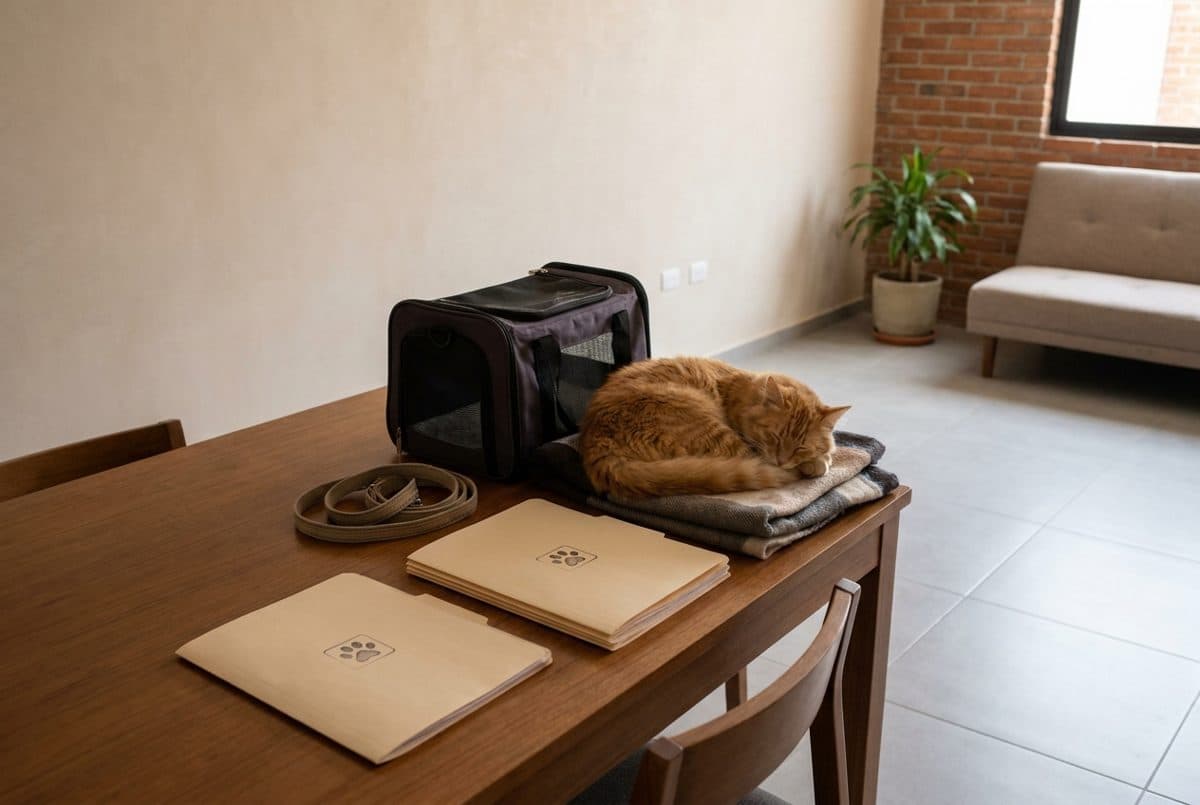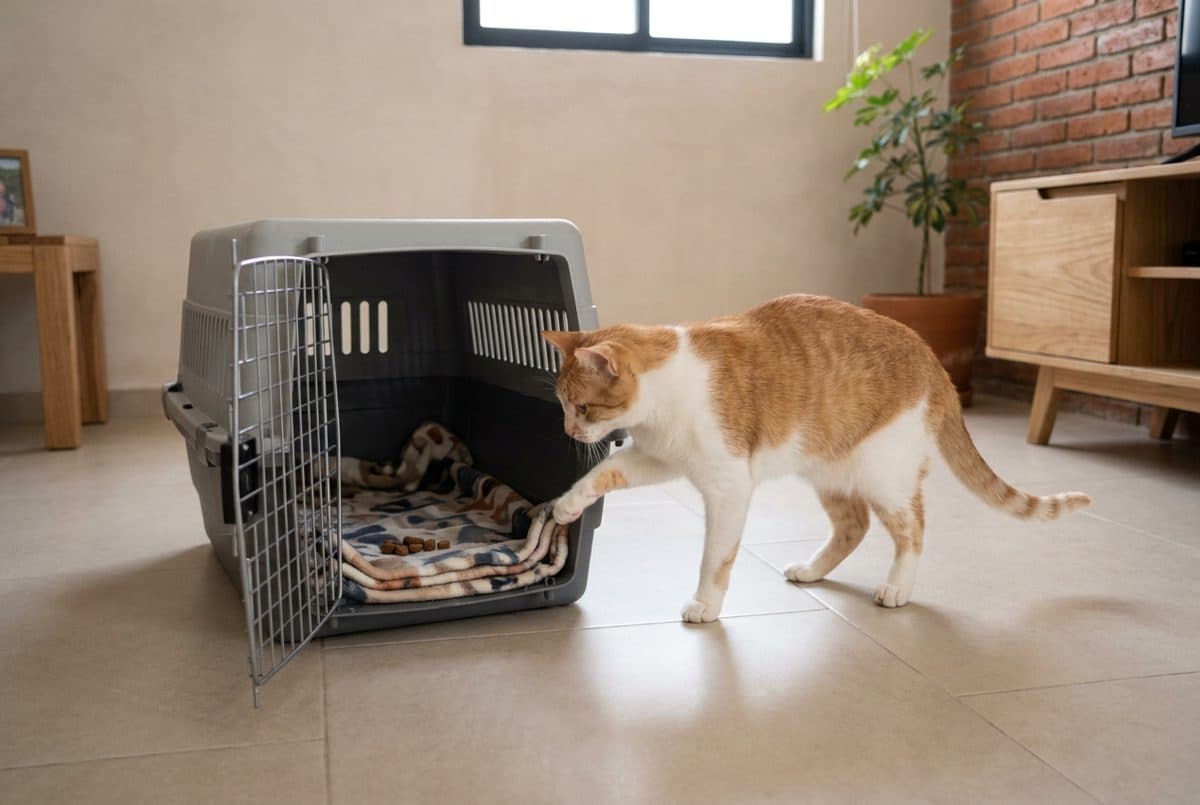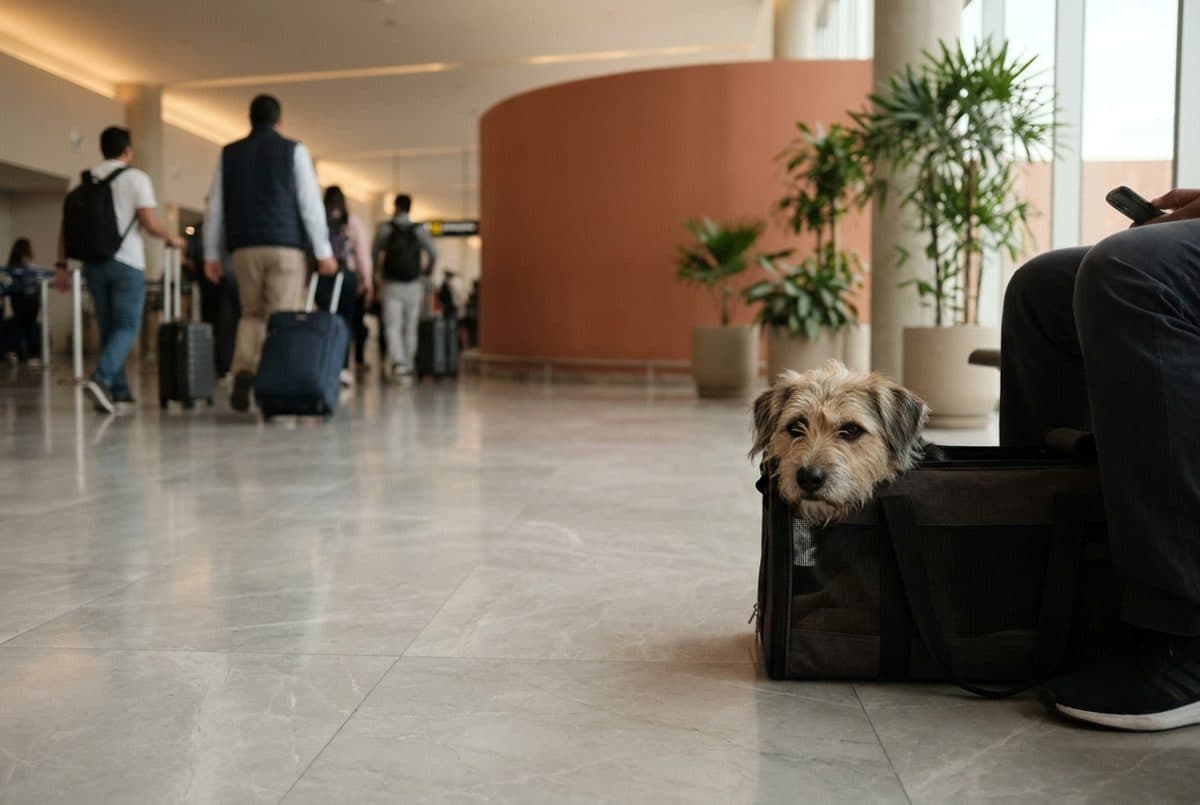
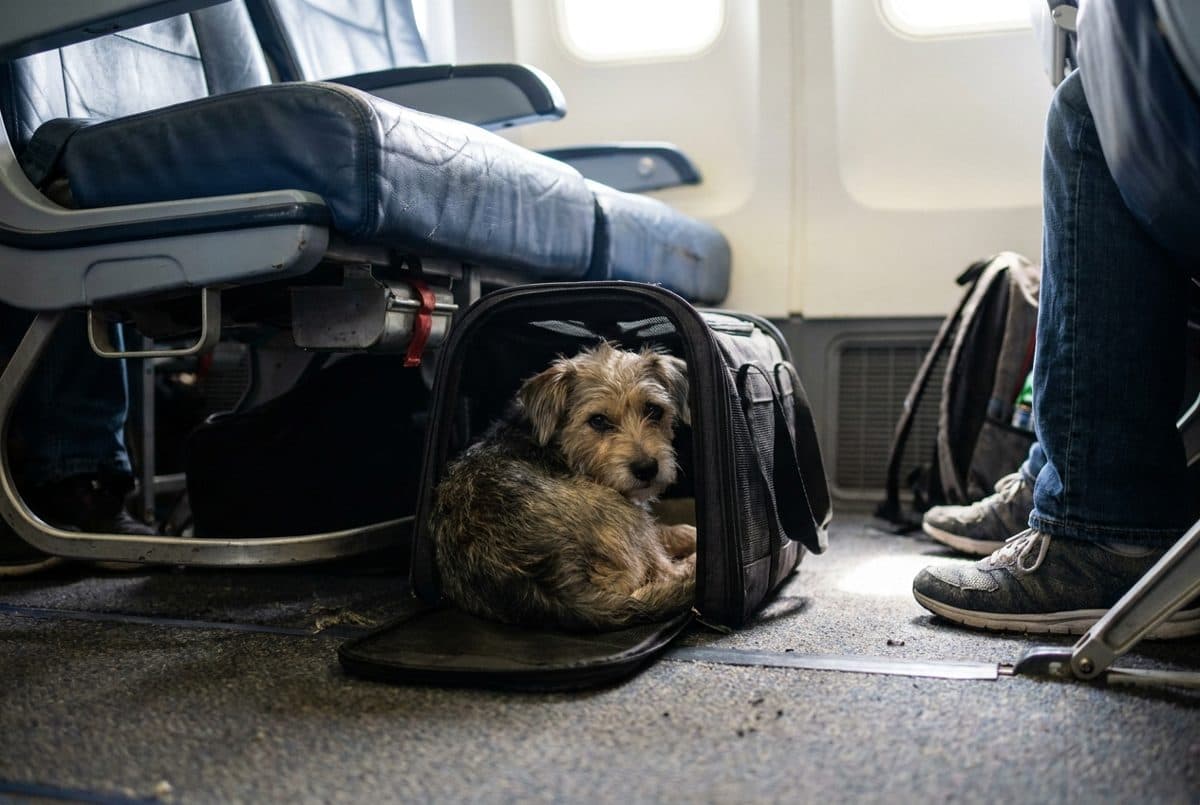
Airlines enforce strict requirements for flying with an animal in the cabin or the hold. You must follow carrier dimensions, weight ceilings, and health precautions established by aviation regulators and carriers.
This is general guidance. Always ask your vet.
What travel methods do airlines provide for flying with a pet?
Airlines transport pets through three methods: in-cabin travel under the passenger seat, checked baggage inside the aircraft cargo hold, and manifest cargo via dedicated freight divisions.
In-cabin travel accommodates small dogs and cats inside a carrier stowed under the seat directly in front of your seat.
Checked baggage transport places your crated pet in the pressurized, temperature-controlled cargo hold of the aircraft you board. American Airlines restricts checked hold transport exclusively to active-duty United States military personnel and United States Department of State employees traveling on official orders.
Manifest cargo moves animals as unaccompanied shipments booked through specialized airline cargo departments.
[S1][S4][S8][S9]What is the pet weight limit for the airplane cabin?
Airlines set combined weight limits for your pet and carrier between 9 kg and 12 kg, and some carriers determine acceptance directly by carrier fit.
Aeromexico establishes a maximum cabin weight limit of 9 kg for the combined weight of your pet and its carrier.
Viva Aerobus accepts pets in the passenger cabin up to a combined weight of 12 kg including the carrier. Air Canada sets a combined cabin limit of 10 kg (22 lbs).
Delta Air Lines bases cabin acceptance on whether your animal fits comfortably inside the under-seat carrier.
[S4][S6][S9][S10]How do you calculate the correct crate size for flying a pet?
The International Air Transport Association Live Animals Regulations require a crate size that allows your pet to stand, turn around, and lie down in a natural position.
The International Air Transport Association (IATA) sets the global standard for pet travel crates. IATA guidelines require a 10% larger container for snub-nosed breeds.
IATA permits two compatible adult pets of similar size up to 14 kg each to share a single cargo crate when they cohabit. Up to three weaned littermates under 6 months of age weighing up to 14 kg each may share one crate.
Air Canada mandates soft-sided, flexible carriers for all cabin pets as of June 1, 2025, and excludes hard-sided carriers from the passenger cabin.
- Measure your pet length from nose tip to tail root and add half the elbow-to-ground height to determine the minimum container length.
- Double your pet shoulder width to calculate the minimum container width for a single animal.
- Measure your pet standing height to the head or ear tip and add bedding thickness to determine the minimum container height.
Can flat-faced pets fly in the airplane cargo hold?
Airlines prohibit brachycephalic dogs and cats from flying in the cargo hold because upper airway resistance causes severe risks of respiratory distress, heat stroke, and death.
Upper airway resistance creates severe risks of respiratory distress, heat stroke, and death for short-nosed animals during air travel.
American Airlines permanently bans all brachycephalic dogs, cats, and mixed breeds from traveling as checked baggage in the cargo hold.
Delta enforces a permanent ban against transporting brachycephalic dogs and cats as cargo across all temperatures and ages.
Viva Aerobus prohibits brachycephalic breeds from the cargo hold, allowing them to fly in the passenger cabin with a signed liability waiver.
[S1][S2][S6][S8][S9]Why should you avoid sedating your pet before a flight?
The American Veterinary Medical Association advises against sedating pets for flights because sedatives depress respiratory and cardiovascular systems at high altitudes.
The American Veterinary Medical Association (AVMA) and IATA discourage sedatives and tranquilizers for traveling animals. Airlines hold the authority to refuse boarding to sedated animals.
Sedatives depress respiratory and cardiovascular systems at altitude, creating life-threatening risks. Sedatives also impair your pet balance and prevent the animal from bracing itself during flight turbulence.
Sedatives compromise the physiological ability of your pet to regulate its body temperature in changing cargo conditions. Consult your veterinarian for safe travel preparation.
[S1][S2]What rules govern service dogs and emotional support animals on flights?
The United States Department of Transportation recognizes trained service dogs as official service animals and allows airlines to treat emotional support animals as standard pets.
The United States Department of Transportation (US DOT) revised the Air Carrier Access Act rules in 2021. The US DOT defines a service animal exclusively as a dog individually trained to perform work or tasks for the benefit of a person with a disability.
Airlines operating under US DOT rules apply standard pet fees and carrier requirements to emotional support animals. The US DOT permits airlines to limit each passenger with a disability to two service animals.
Airlines can require handlers to submit the official US DOT Service Animal Air Transportation Form up to 48 hours prior to scheduled departure.
[S3]How do you secure an in-cabin pet space on an airplane?
You must reserve your pet space with the airline before travel because carriers cap total cabin animals between two and six per aircraft.
Airlines cap passenger cabin pet capacity between two and six animals per aircraft.
Cabin pet spaces require an advance reservation. Airlines exclude standby travel for live animals.
[S4][S10]When should you go to the vet right away?
- Respiratory distress
- Signs of heat stroke
- Loss of physical balance
- Depressed breathing or cardiovascular collapse
This is general guidance. Always ask your vet.
Checked against sources; veterinary review pending. Information checked on September 30, 2026. Updated on September 30, 2026.
Written with AI help from the cited sources. A second model checked every fact against them.