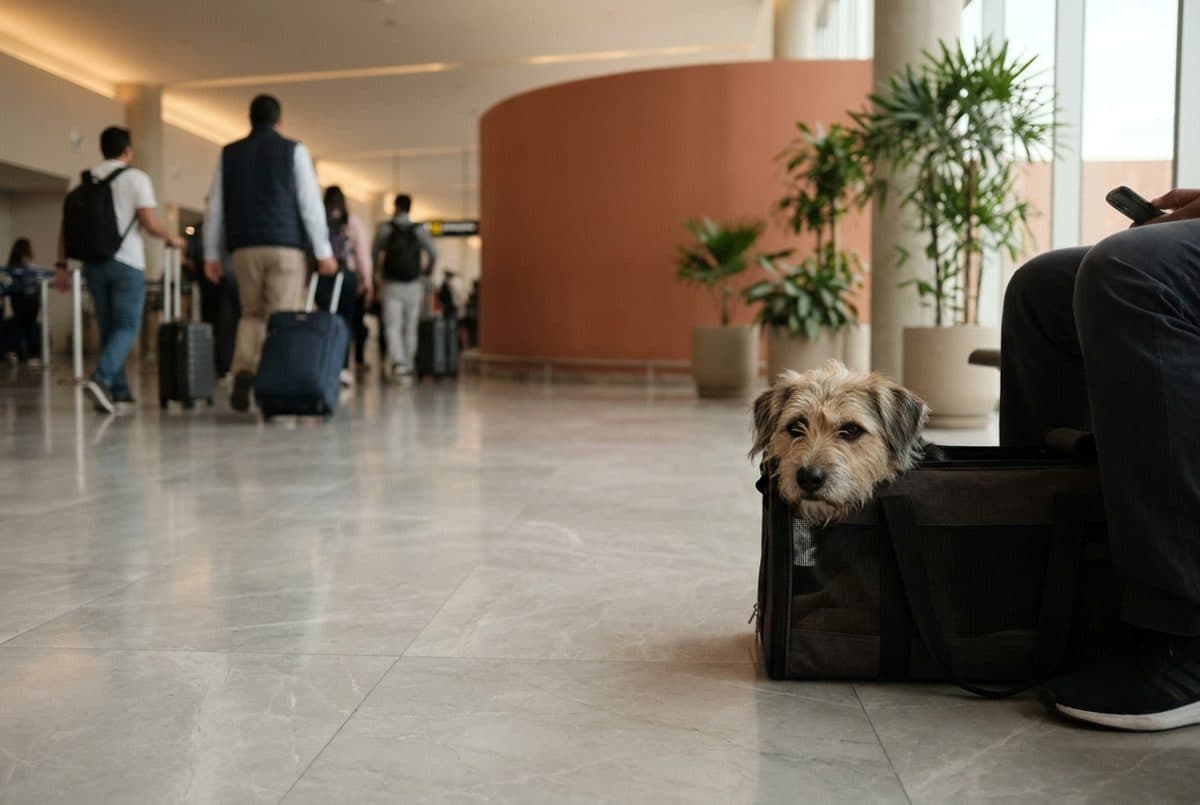
The Mexican agricultural authority SENASICA establishes health requirements for all dogs and cats entering the country. Preparing the required health records and carrier setup ensures an approved entry upon arrival.
This is general guidance. Always ask your vet.
What are the general entry requirements for pets entering Mexico?
SENASICA inspects every dog and cat at an Agricultural and Livestock Health Inspection Office upon arrival and issues a zoosanitary import certificate free of charge.
The Mexican sanitary authority SENASICA oversees all pet arrivals into Mexico. You must present your pet to SENASICA personnel at an Agricultural and Livestock Health Inspection Office (OISA) at your port of entry.
Official inspection personnel check that your pet shows zero signs of infectious or contagious diseases and no fresh or healing wounds. SENASICA issues the Certificado Zoosanitario para Importación (CZI) free of charge once your animal clears inspection.
- Take your pet to the official SENASICA inspection office upon arriving in Mexico.
- Present your pet for a physical health check by inspection officers.
- Collect your official Certificado Zoosanitario para Importación free of charge.
Do pets travelling from the United States or Canada need a health certificate?
SENASICA exempts dogs and cats arriving directly from the United States or Canada from presenting a general veterinary health certificate.
Dogs and cats entering Mexico directly from the United States or Canada enter under an official health certificate exemption. You do not need to purchase a general veterinary health certificate for travel from these two countries.
SENASICA personnel clear your pet based on their physical health inspection at the border station.
[S1][S2][S5]What health documentation do pets arriving from other countries need?
Dogs and cats arriving from countries outside the United States and Canada must present an original and a copy of a Certificate of Good Health issued within 15 calendar days before arrival.
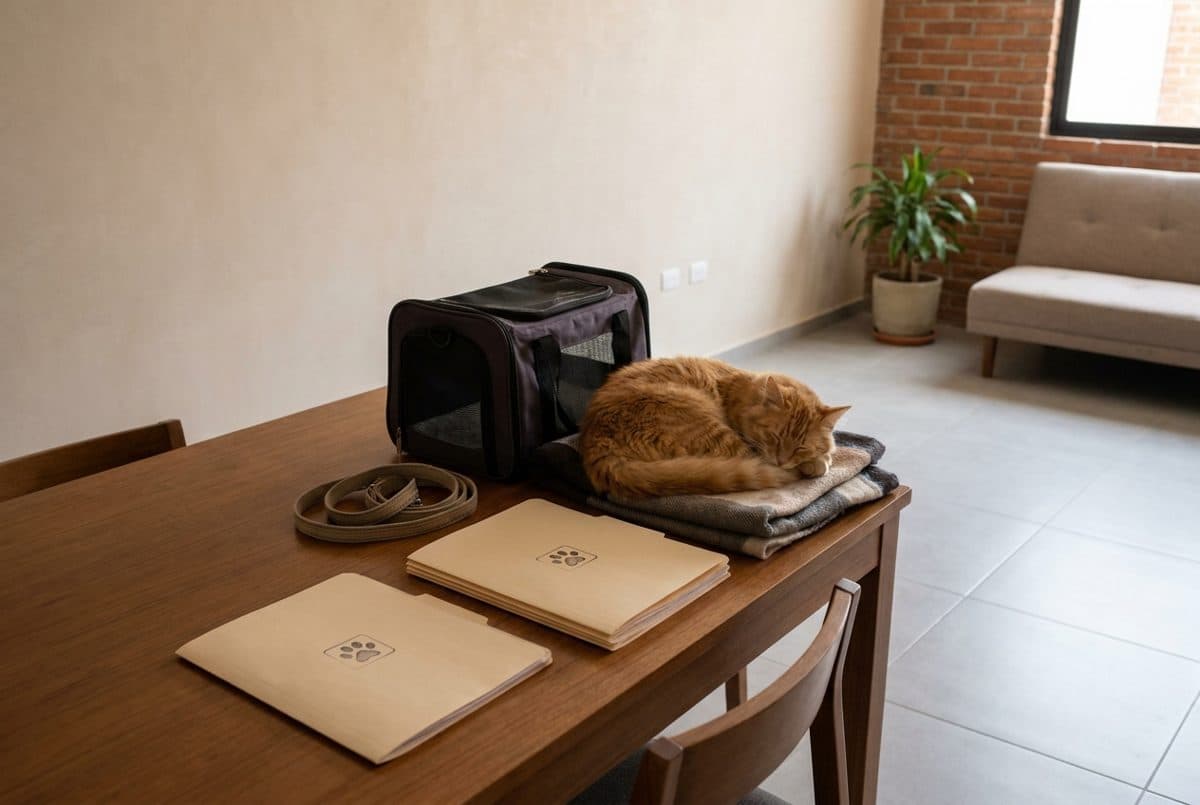
An official or private licensed veterinarian must issue the Certificado de Buena Salud on professional letterhead with their veterinary license number. The certificate must be issued within a maximum of 15 calendar days prior to your arrival date in Mexico.
The certificate must verify that your pet received preventative treatment against internal and external parasites. Your attending licensed veterinarian selects the specific antiparasitic products and administration schedule.
- Schedule an exam with a licensed veterinarian within 15 calendar days of arrival.
- Ensure your veterinarian administers preventive internal and external parasite treatments.
- Obtain an original Certificate of Good Health and one copy on letterhead with the veterinarian's license number.
What are the rabies vaccination requirements for entering Mexico?
SENASICA requires an active rabies vaccination for all dogs and cats aged 3 months and older.
Animals younger than 3 months of age are exempt from the rabies vaccination rule. If your pet's rabies certificate does not state an expiration period, SENASICA accepts the vaccination as valid for 1 year from the administration date.
Vaccination paperwork must explicitly state the product name, manufacturer, lot number, administration date, and expiration date. SENASICA permits entry without an implanted microchip and without a rabies antibody titer test.
[S1][S2]What screwworm inspection rules apply to dogs entering Mexico from the United States?
Dogs entering Mexico from the United States must carry an official New World Screwworm Inspection Certificate issued by a USDA-accredited veterinarian within 5 days before arrival.
Effective August 3, 2026, SENASICA requires an official New World Screwworm (NWS) Inspection Certificate for all dogs coming from the United States. A USDA-accredited veterinarian must inspect the dog and issue the certificate within 5 days prior to arrival in Mexico, with no USDA APHIS endorsement needed.
This rule applies exclusively to domestic dogs and pet birds. Domestic cats are exempt from screwworm inspection certification and general health certificates. Adding a cat to dog or bird screwworm forms invalidates the paperwork and results in denied entry.
- Visit a USDA-accredited veterinarian within 5 days of entering Mexico.
- Have the veterinarian inspect your dog exclusively for New World Screwworm.
- Receive the signed official inspection certificate on a form dedicated solely to your dog.
What rules apply to pet carriers, airline transport, and pet food?
Pet carriers must arrive clean and free of bedding, while pet food is limited to one day of dry rations free of ruminant ingredients.
SENASICA personnel apply disinfectant spray to pet carriers at the inspection office. Inspectors confiscate and incinerate bedding, puppy pads, newspapers, rags, sawdust, and toys.
Travelers may bring only 1 day of commercial balanced dry pet food for arrival day, strictly free of ruminant ingredients.
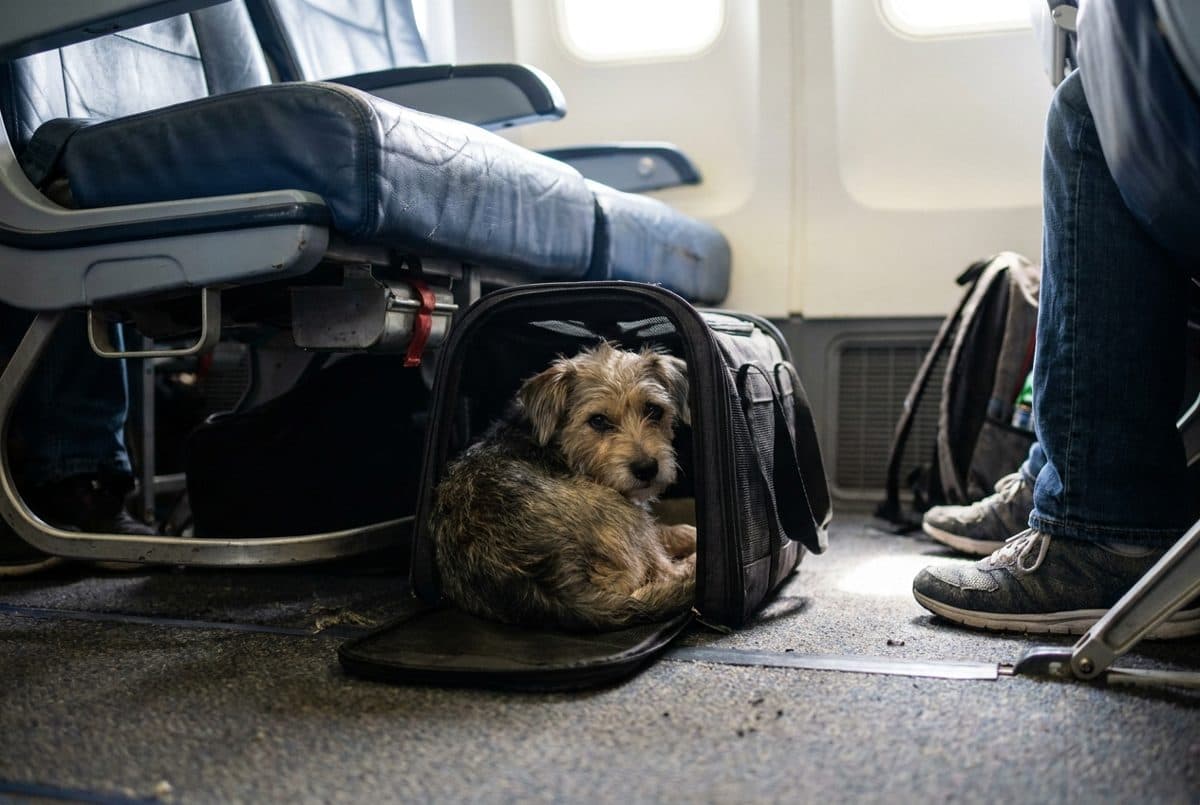
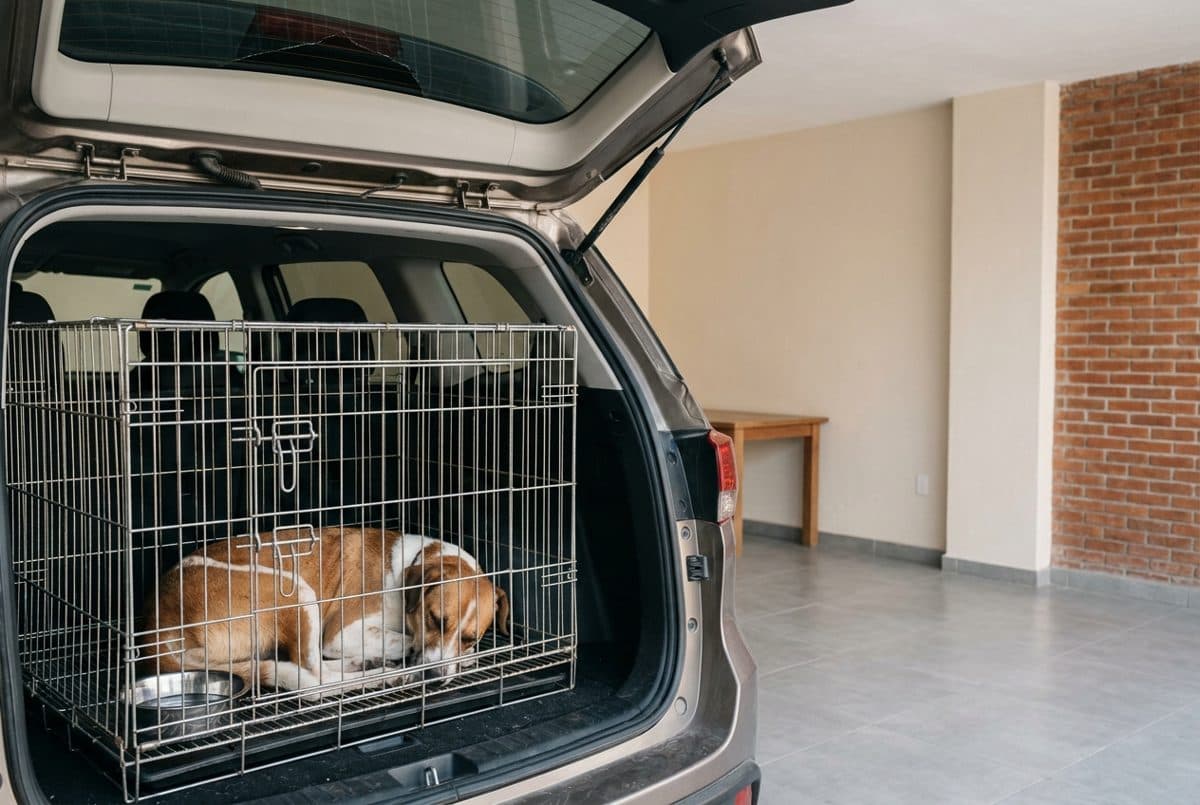
Airlines establish crate weight limits. Aeroméxico limits in-cabin pets to a maximum total weight of 9 kg including the container, and checked baggage in the cargo hold up to a maximum weight of 45 kg including the crate.
- Clean the pet carrier thoroughly and verify total weight complies with your airline's limits.
- Remove all toys, towels, rags, bedding, and puppy pads from the carrier.
- Pack a single day's portion of dry commercial pet food free of ruminant ingredients.
What happens if a pet lacks documents or has parasites at inspection?
Travelers arriving without required documents or with detected ectoparasites must hire a private Mexican veterinarian at their own expense to resolve the issue.
If you arrive without mandatory health paperwork, you must hire a licensed private veterinarian in Mexico at your own expense to examine your pet, administer required treatments, and issue a health certificate.
If inspection officers detect ectoparasites, you must pay a private veterinarian in Mexico to treat your pet. If ticks are detected, SENASICA collects specimens for laboratory identification and holds your animal at your expense until laboratory tests confirm a non-exotic status.
Pet owners who travel regularly between the United States and Mexico can register online for the Programa Mascota Viajero Frecuente (PMVF) to streamline border inspections. Under this program, parasite treatments remain valid for 6 months.
[S1][S2]What are the rules for dogs travelling from Mexico to the United States?
Dogs entering the United States from Mexico must be at least 6 months old, have an ISO-compatible microchip, carry an approved CDC Dog Import Form receipt, and have a screwworm certificate.
The United States CDC requires all dogs entering from Mexico to be at least 6 months of age upon entry. Your dog must have an ISO-compatible microchip implanted before travel that is detectable by a universal scanner.
You must complete the free online CDC Dog Import Form to obtain an approved receipt, which remains valid for 6 months and multiple entries. Dogs travelling from Mexico to the United States also require an inspection certificate signed within 5 days before shipment by a SENASICA-authorized veterinarian from the MVRA directory certifying freedom from screwworm.
- Confirm your dog is at least 6 months old and has an ISO-compatible microchip.
- Submit the online CDC Dog Import Form to secure your free receipt.
- Have a SENASICA-authorized veterinarian from the MVRA directory inspect your dog and issue a screwworm certificate within 5 days of departure.
When should you go to the vet right away?
- Open, fresh, or healing wounds on your pet's body
- Presence of ticks or external parasites on the skin or coat
- Signs of infectious or contagious disease
This is general guidance. Always ask your vet.
Checked against sources; veterinary review pending. Information checked on September 30, 2026. Updated on September 30, 2026.
Written with AI help from the cited sources. A second model checked every fact against them.
Sources
- S1 Requisitos y procedimientos para viajar a México con tu mascota | Servicio Nacional de Sanidad, Inocuidad y Calidad Agroalimentaria | Gobierno | gob.mx
- S2 Pet Travel From the United States to Mexico
- S3 Pet Dogs Import into the US | Animal and Plant Health Inspection Service
- S4 Entry Requirements for Dogs from Dog-Rabies Free or Low-Risk Countries | Importation | CDC
- S5 Export of dogs and cats to Mexico - inspection.canada.ca
- S7 Site Maintenance