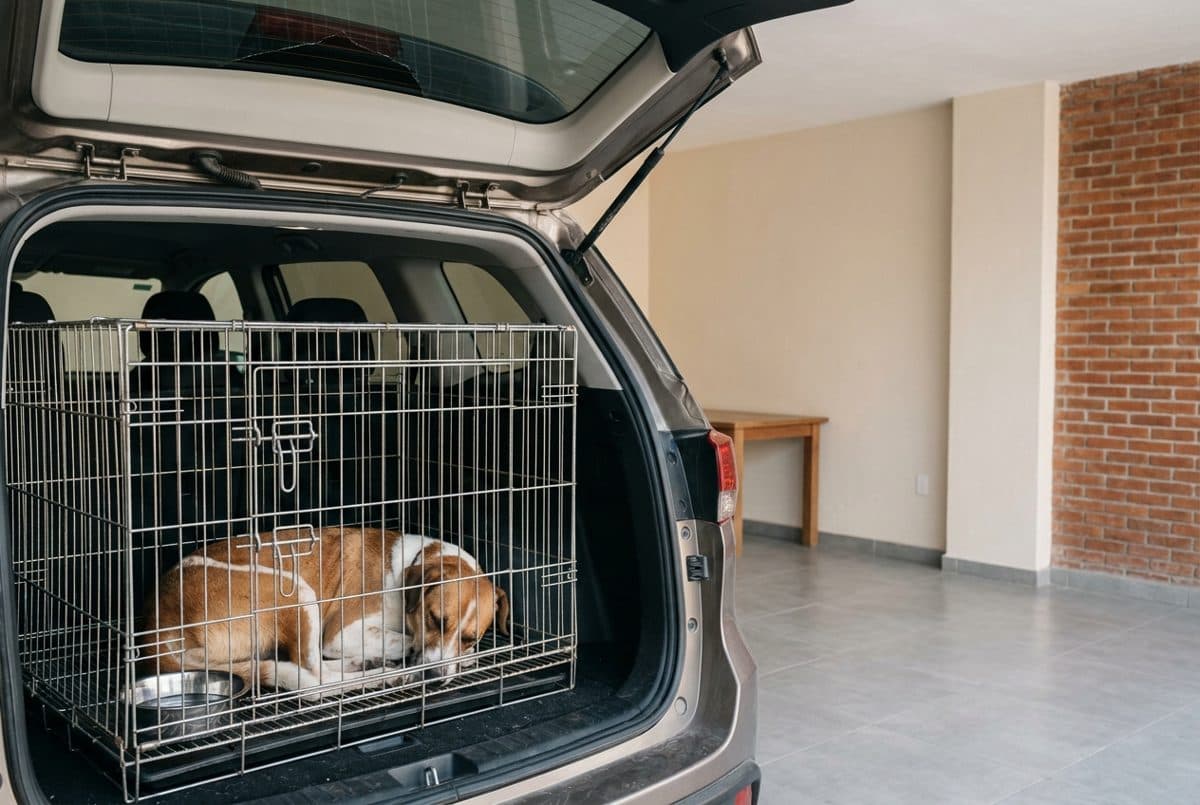
Car rides cause physical motion sickness and psychological distress in dogs and cats. Recognizing early symptoms allows you to build calm travel habits and protect your pet.
This is general guidance. Always ask your vet.
Why do pets get car sick?
Pets experience car sickness when vehicular movement stimulates the balance structures in the inner ear or when travel anxiety triggers nausea.
Motion stimulates inner ear balance structures that connect directly to the brainstem vomiting center. Puppies and young dogs experience motion sickness frequently because their inner ear balance structures are still developing. Many dogs outgrow this sensitivity around one year of age as their balance systems mature.
Travel sickness also stems from psychological stress and conditioned nausea. Pets that link car rides with previous nausea or frightening events experience distress in stationary vehicles. Cats that ride in cars once or twice a year lack habituation and experience high stress levels.
Medical conditions in the middle or inner ear, including ear infections and vestibular disease, increase a pet's vulnerability to motion sickness.
[S1][S2][S3][S4][S5][S6]What are the signs of car sickness in dogs?
Dogs with car sickness show physical nausea, behavioral distress, and digestive upset during travel.
Physical signs of nausea include heavy drooling, frequent lip licking, lip smacking, and repeated swallowing. Nauseous dogs also yawn, pant heavily, and retch during the drive.
Behavioral distress appears as restlessness, pacing, whining, whimpering, and barking.
Severe motion sickness leads to vomiting, lethargy, and involuntary urination or defecation. Mild symptoms resolve within one to two hours after travel stops, while severe episodes require several hours of recovery.
[S1][S3][S5][S6]What are the signs of car sickness in cats?
Cats with car sickness display excessive drooling, vocal distress, altered mobility, and vomiting.
Nausea in cats causes heavy drooling and repeated swallowing. Distress calls include loud howling, persistent meowing, and crying out.
Stressed cats pace inside the carrier or freeze in complete immobility. Severe sickness culminates in vomiting, regurgitation, and involuntary urination or defecation inside the carrier.
[S2][S4]How do you train a pet to tolerate car rides?
You train a pet to tolerate car rides through gradual exposure that pairs vehicle stages with positive rewards.
Practice each stage for two to three days before advancing. If your pet shows fear, pause the session and return to the previous stage on another day.
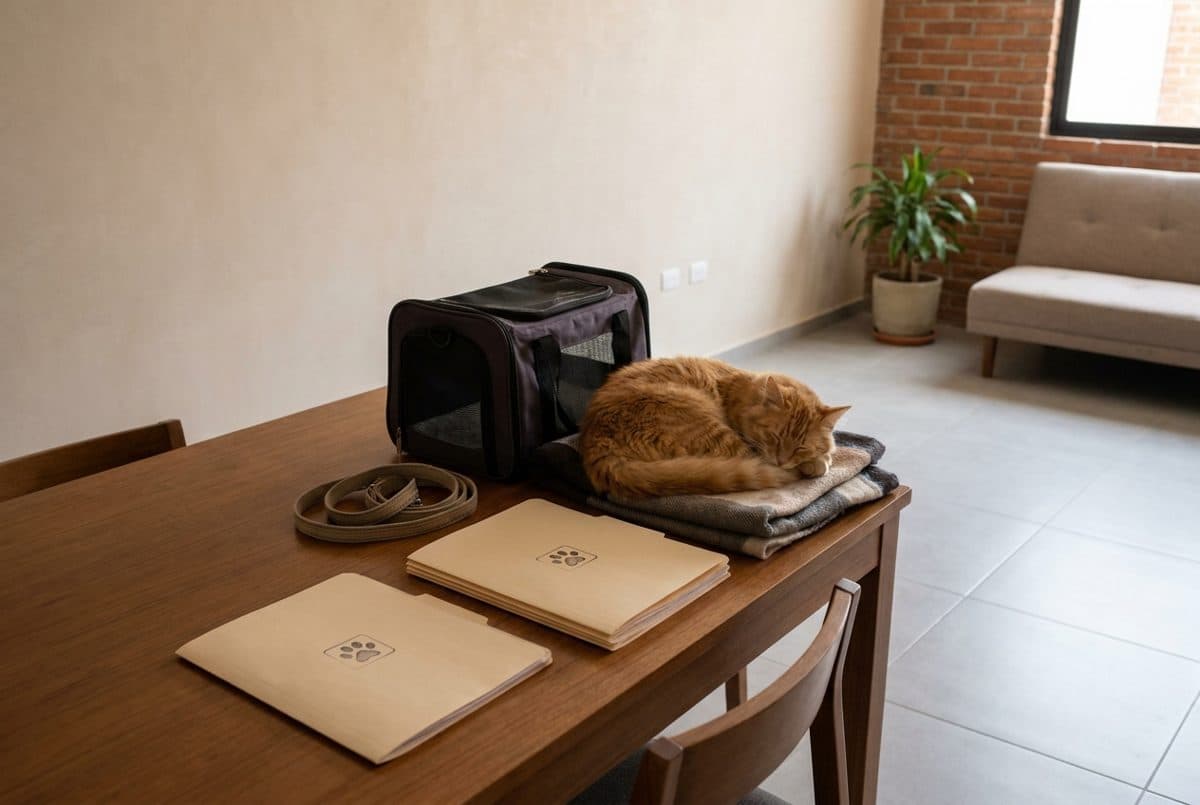
Keep cat carriers in familiar rooms with open doors and comfortable bedding. Offer food, treats, and toys inside the carrier to build a positive association with the space.
- Place your pet in a stationary car with the engine off, rewarding calm behavior with treats and praise.
- Sit with your pet inside the car while the engine idles for a few minutes.
- Take initial micro-trips lasting one to two minutes, such as backing out of the driveway, keeping the drive under five minutes.
- Lengthen travel time gradually across days or weeks, working toward twenty to thirty minutes of calm riding.
When should you feed a pet before a car trip?
You should schedule your pet's pre-trip meal several hours prior to departure according to veterinary guidelines.
Official animal welfare organizations specify feeding timelines to prevent an upset stomach. The PDSA recommends feeding dogs at least two to three hours before travel. The ASPCA advises offering a light meal three to four hours prior to departure and warns against feeding pets inside moving vehicles. VCA Animal Hospitals states that withholding food for up to eight hours before departure limits nausea and bathroom stops when the animal remains comfortable.
Provide access to fresh water or offer regular water stops during road trips to support hydration without overfilling the stomach.
[S1][S2][S6][S7][S9]How should you set up your car for a pet?
You should restrain your pet in the back seat with cool airflow and restricted visual motion.
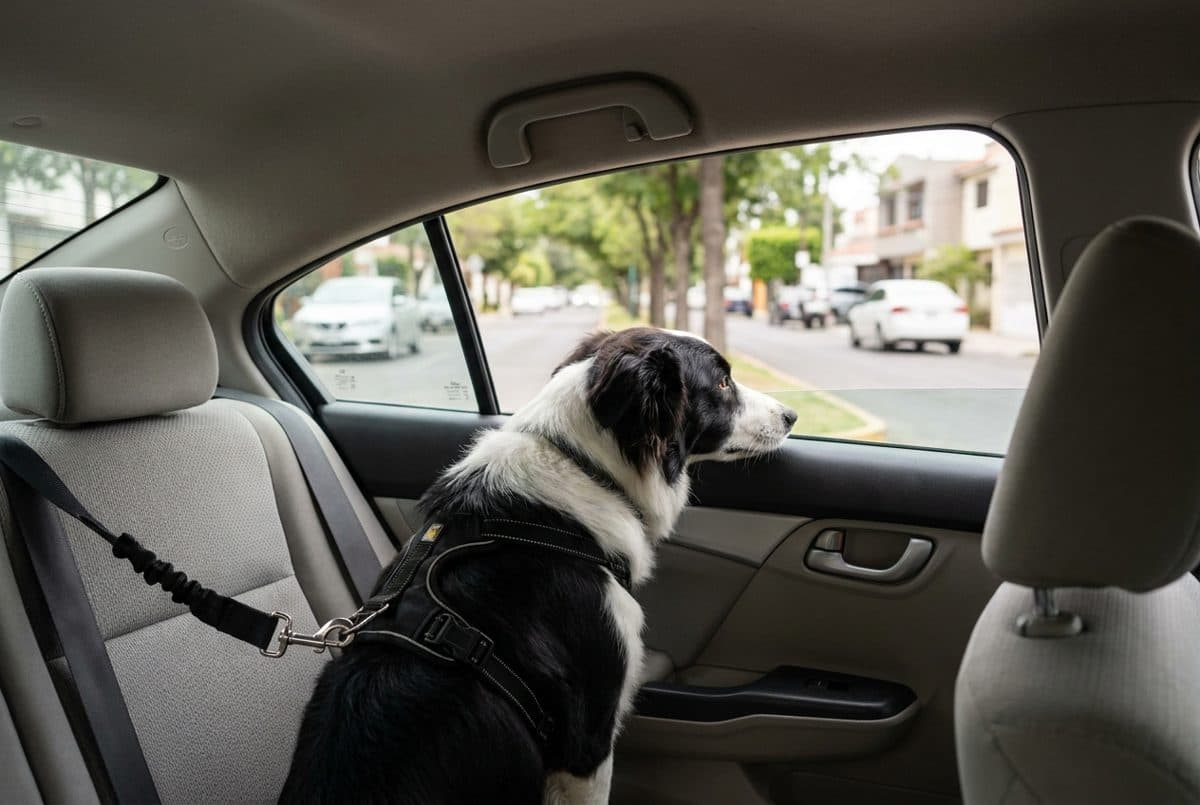
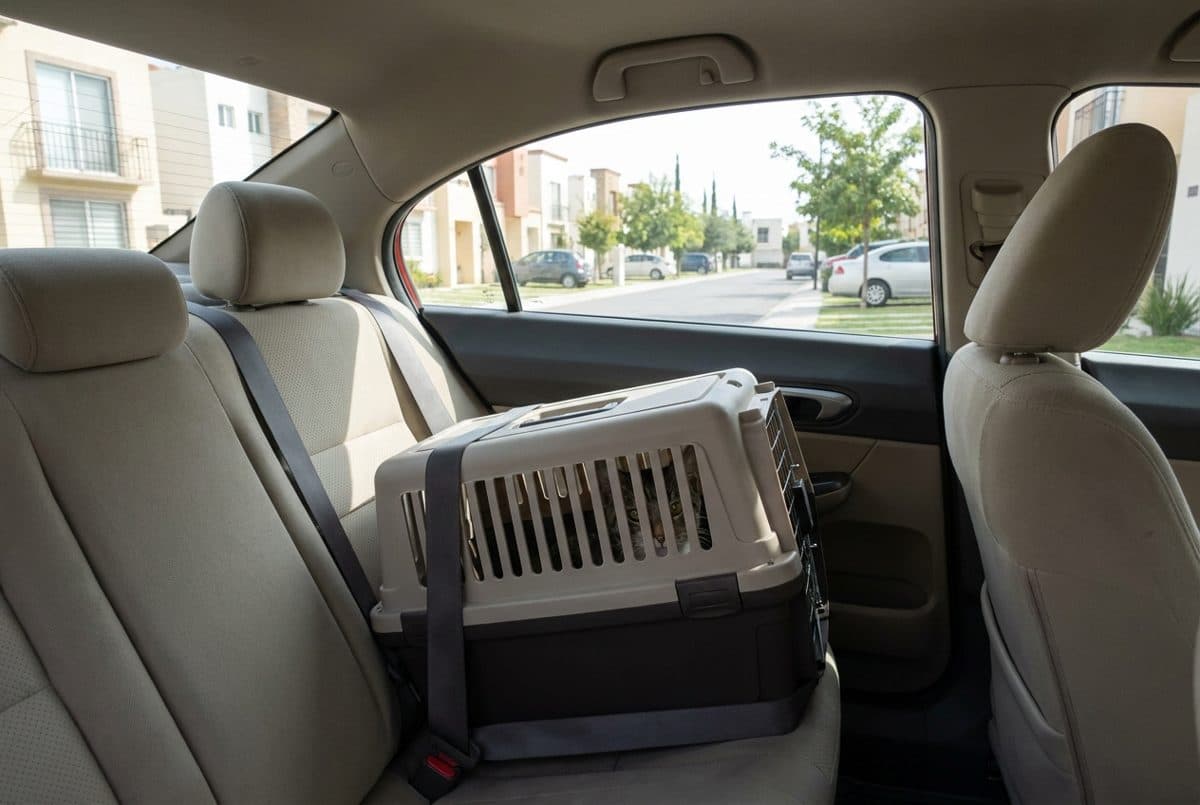
Secure your pet in the rear seat with a crate or seatbelt harness to avoid injuries from passenger airbags. Use a carrier that allows your pet to stand up, turn around, and lie down comfortably. Apply synthetic calming pheromones to bedding or car interiors to ease anxiety.
Position the carrier facing forward to match visual cues with inner ear balance signals. If window motion causes nausea, position the carrier forward and place a towel over the view to reduce visual stimulation.
Keep the vehicle cool and well-ventilated so airflow reaches rear passengers. Keep windows closed enough to stop pets from extending their heads outside, protecting eyes from flying debris and airways from cold air. Never leave pets unattended in a parked car, because interior temperatures reach 102 °F (38.9 °C) within ten minutes on an 85 °F (29.4 °C) day.
[S1][S2][S3][S6][S7][S9][S10]When should you see a veterinarian for car sickness?
You should see a veterinarian when travel sickness persists after training or before motion distress turns into an entrenched phobia.
Unmanaged travel sickness escalates over time as pets develop stronger fears of vehicles. A veterinarian checks for physical predisposing factors, including ear infections or vestibular balance disease.
Veterinarians prescribe veterinary antiemetic medications to prevent nausea and vomiting. Managing travel anxiety requires behavioral therapy or veterinary anxiolytic medications. Avoid administering human or over-the-counter motion sickness products without veterinary instructions, because they cause harmful side effects and lack efficacy in pets.
[S1][S2][S3][S4][S5][S6][S9]When should you go to the vet right away?
- Eye injuries caused by airborne road debris
- Severe lethargy and vomiting persisting several hours after travel stops
- Heat distress from confinement inside a parked vehicle
This is general guidance. Always ask your vet.
Checked against sources; veterinary review pending. Information checked on September 30, 2026. Updated on September 30, 2026.
Written with AI help from the cited sources. A second model checked every fact against them.
Sources
- S1 Motion Sickness in Dogs | VCA Animal Hospitals
- S2 Motion Sickness in Cats | VCA Animal Hospitals
- S3 Dog Motion Sickness: What It Is and How To Help Your Dog | PetMD
- S4 Cats and Motion Sickness | PetMD
- S5 Motion Sickness in Dogs - Dog Owners - Merck Veterinary Manual
- S6 Car sickness and motion sickness in dogs - PDSA
- S7 Travel Safety Tips | ASPCA
- S9 What do I need to know about taking my dog on a road trip with my family? - RSPCA Knowledgebase
- S10 How to Relieve Dog Travel Anxiety | PetMD