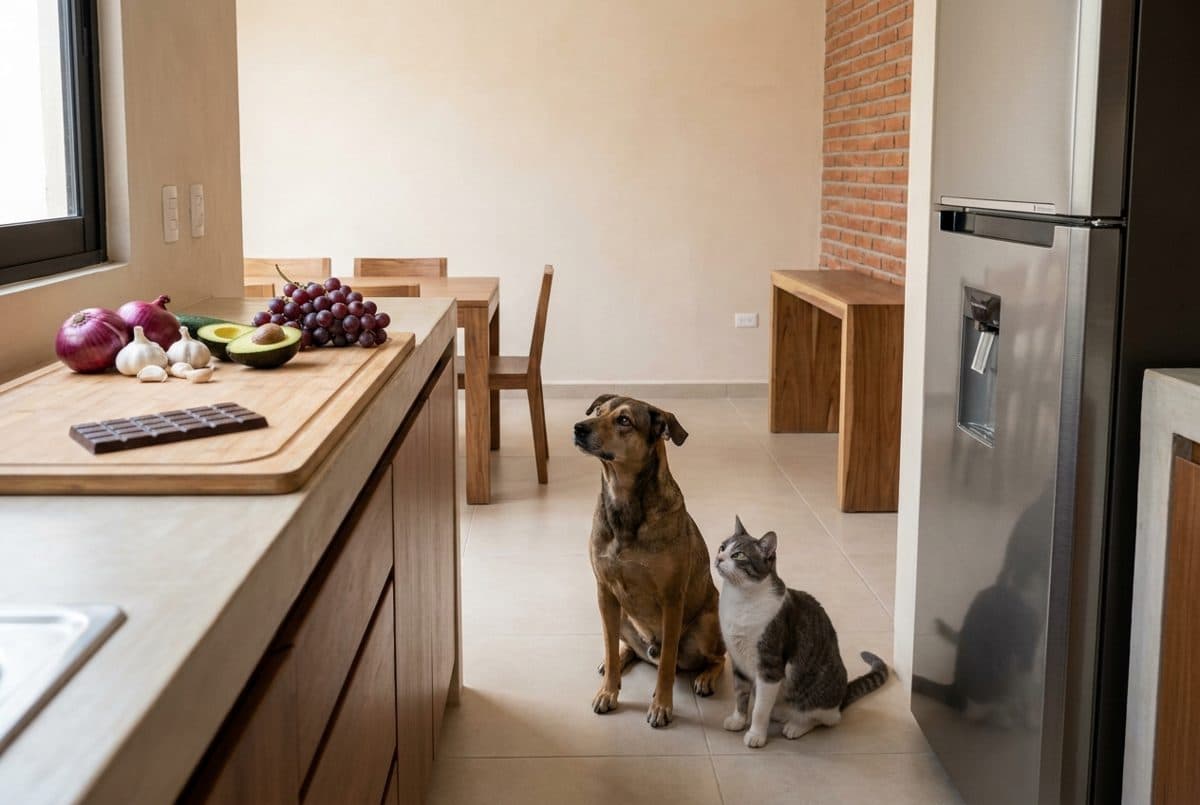
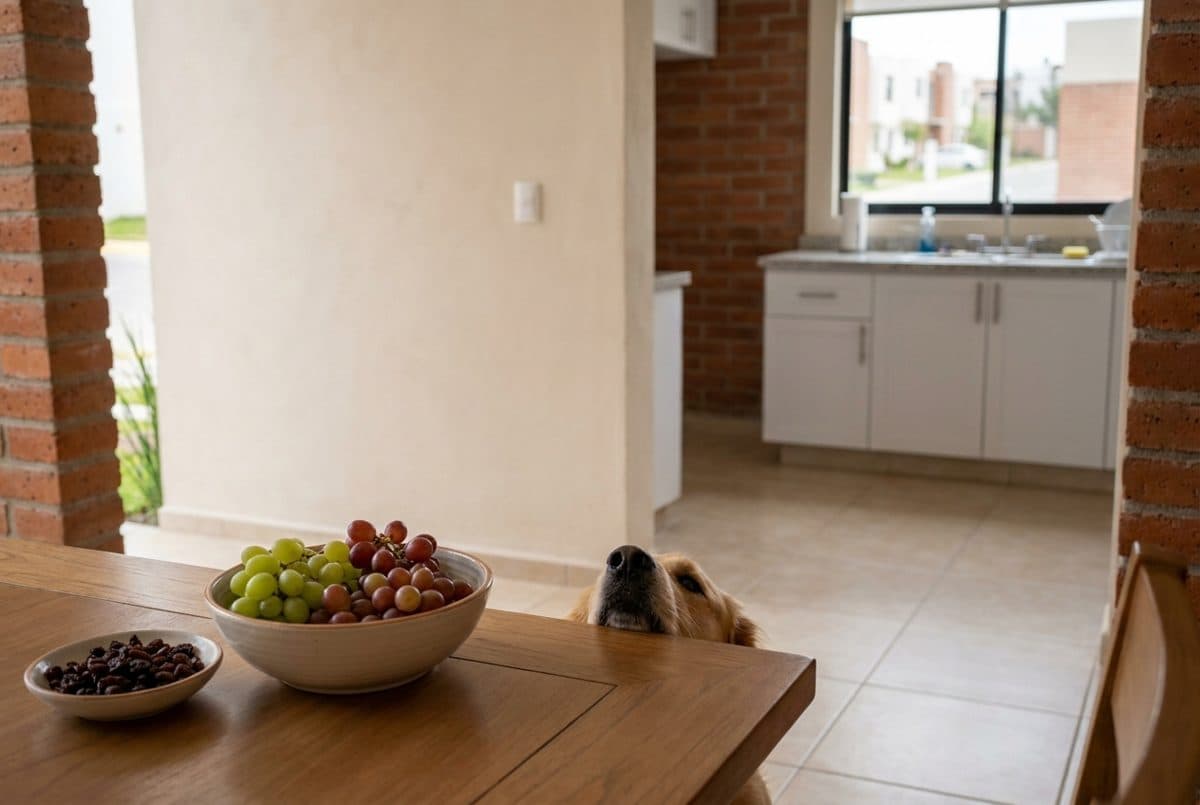
Dogs have a unique sensitivity to tartaric acid found in grapes and raisins. Eating these fruits can cause sudden kidney damage.
This is general guidance. Always ask your vet.
What should I do if my dog ate grapes or raisins?
Take your dog to an emergency veterinary clinic immediately and call the clinic while you travel.
Immediate veterinary care protects your dog from permanent kidney injury. First aid actions keep your dog stable during transport to the clinic.
Professional medical treatment is essential to evaluate the risk and start decontamination.
- Call your emergency veterinary clinic to alert the staff.
- Collect food packaging, estimated quantities eaten, and the exact time of exposure.
- Transport your dog directly to the veterinary clinic.
Why are grapes and raisins poisonous to dogs?
Grapes and raisins contain tartaric acid, a toxic compound that damages canine kidney cells.
Dogs lack the biological capacity to process and excrete tartaric acid efficiently. Ingested tartaric acid accumulates and causes acute kidney injury.
Tartaric acid concentration ranges from 0.35% to 2% across grape varieties, ripening stages, and growing conditions. These wide shifts make every grape exposure unpredictable.
[S2][S3][S4][S5]Can a dog eat a single grape or raisin?
A single grape or raisin can cause acute kidney failure in sensitive dogs.
Sensitivity to grape toxicosis varies widely among individual dogs. Predicting an individual dog's reaction to ingestion is impossible.
Any ingestion of grapes or raisins poses a serious threat to canine kidney health.
[S3][S4][S5][S7]Which grape and raisin products are toxic to dogs?
All fresh grape varieties, dried raisins, sultanas, Zante currants, and cooked foods containing them cause canine toxicity.
Cooking and baking processes preserve tartaric acid inside the food. High-heat preparation leaves the toxic threat active.
Common baked goods, sweet holiday breads like Rosca de Reyes, panettone, and fruitcakes contain dangerous amounts of raisins. Breakfast granolas, oatmeal blends, trail mixes, and snack bars also present severe poisoning hazards.
Chocolate-covered raisins combine grape toxicity with chocolate toxicity, creating dual health hazards.
[S3][S4][S5][S6][S7]What symptoms appear when a dog eats grapes or raisins?
Early symptoms include vomiting, diarrhea, and appetite loss within six to twenty-four hours after ingestion.
Dogs can appear symptom-free in the initial hours while kidney damage develops internally. Grape and raisin fragments can remain in the stomach and appear in vomit up to twelve hours after consumption.
Severe symptoms emerge between twenty-four and forty-eight hours as kidney damage advances. Progressive signs include severe lethargy, weakness, abdominal pain, dehydration, and increased thirst.
Advanced kidney injury causes ammonia breath odor, oral ulcers, and decreased urine production. Complete cessation of urine production indicates severe kidney failure.
[S3][S4][S5][S7]How do veterinarians treat grape toxicity in dogs?
Veterinarians perform early stomach decontamination and administer intravenous fluids for at least forty-eight hours.
Veterinary clinics provide intensive supportive care because grape toxicosis lacks a specific antidote. Medical teams monitor kidney blood parameters, electrolytes, and urine output over two to three days.
Early decontamination and fluid support protect kidney function before blood values rise. Delayed care increases the likelihood of permanent chronic kidney disease.
[S3][S4]When should you go to the vet right away?
- Ingestion of any grape, raisin, sultana, or Zante currant
- Vomiting or diarrhea, including fruit pieces in vomit
- Loss of appetite
- Severe lethargy and weakness
- Abdominal pain
- Dehydration and excessive thirst
- Ammonia-like breath odor and mouth ulcers
- Abnormally low urine output or complete cessation of urination
This is general guidance. Always ask your vet.
Checked against sources; veterinary review pending. Information checked on September 28, 2026. Updated on September 28, 2026.
Written with AI help from the cited sources. A second model checked every fact against them.
Sources
- S2 People Foods to Avoid Feeding Your Pets | ASPCA
- S3 Grape and raisin toxicity | Cornell University College of Veterinary Medicine
- S4 Can Dogs Eat Grapes? Grape Toxicity in Dogs
- S5 Grapes Is Toxic To Dogs | Pet Poison Helpline®
- S6 Household hazards | American Veterinary Medical Association
- S7 Common Dog Poisons & Poisoning Symptoms - RSPCA - rspca.org.uk
- S8 Dog Poisoning - Common Dog Poisons - RSPCA - rspca.org.uk
- S9 Potentially Dangerous Items for Your Pet | FDA