Winter cold fronts bring sudden freezing temperatures to northern Mexico and the central highlands. Simple adjustments to your daily care routine shield your dogs and cats from seasonal cold hazards.
This is general guidance. Always ask your vet.
Which pets need to wear a winter coat?
Short-haired dogs, sighthounds, hairless cats, puppies, and senior pets need a protective coat during cold weather.
Chihuahuas, Pitbulls, lean sighthounds, and hairless Sphynx cats lack dense fur to conserve body heat in low temperatures. Puppies and senior animals have weaker internal temperature control and need supplementary warmth. Frigid conditions also worsen chronic joint stiffness in older pets with arthritis.
Northern breeds with thick double coats, including Siberian Huskies and Saint Bernards, possess natural insulation and do not need coats. Select a coat that shields your pet's chest, neck, and abdomen back to the tail base. Choose a snug fit that prevents skin chafing, and remove dangling buttons or ornaments that an animal could swallow.
Damp clothing pulls heat away from the body quickly. Take off wet coats immediately and dress your pet in dry layers.
[S2][S3][S4][S5][S12]How should you arrange your pet's bed during cold weather?
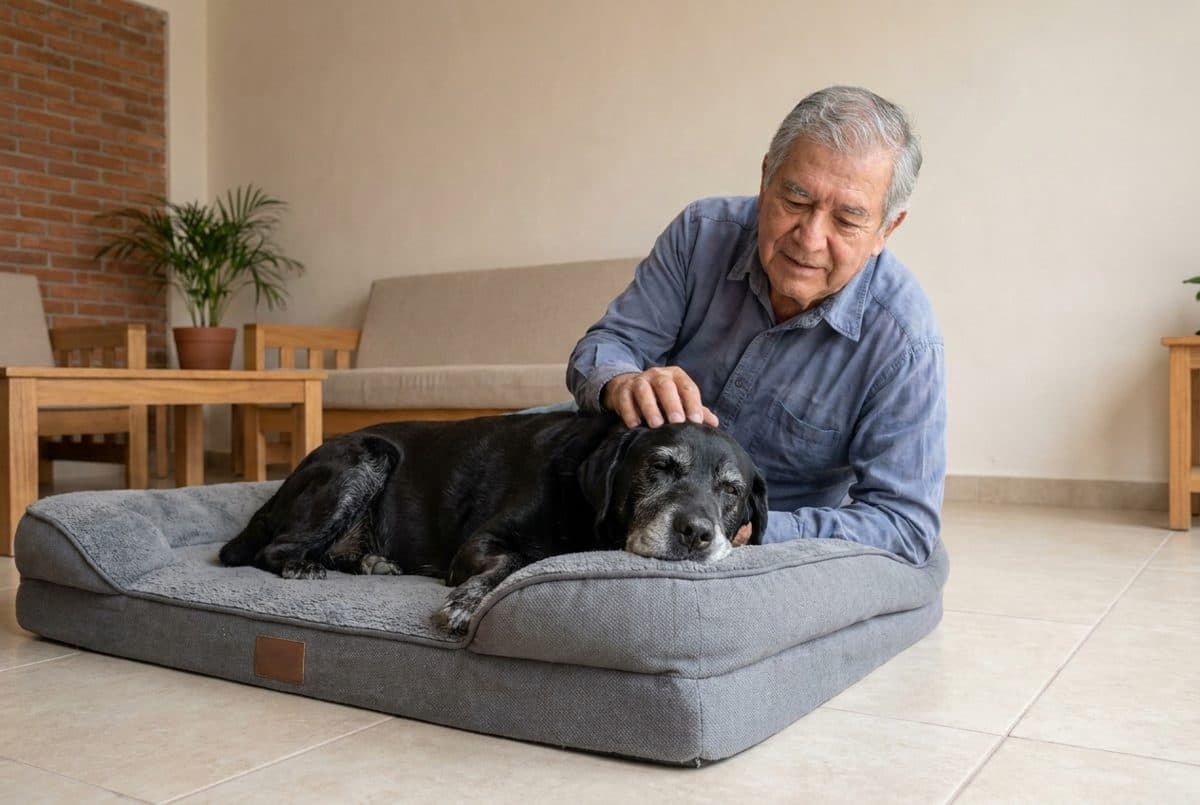
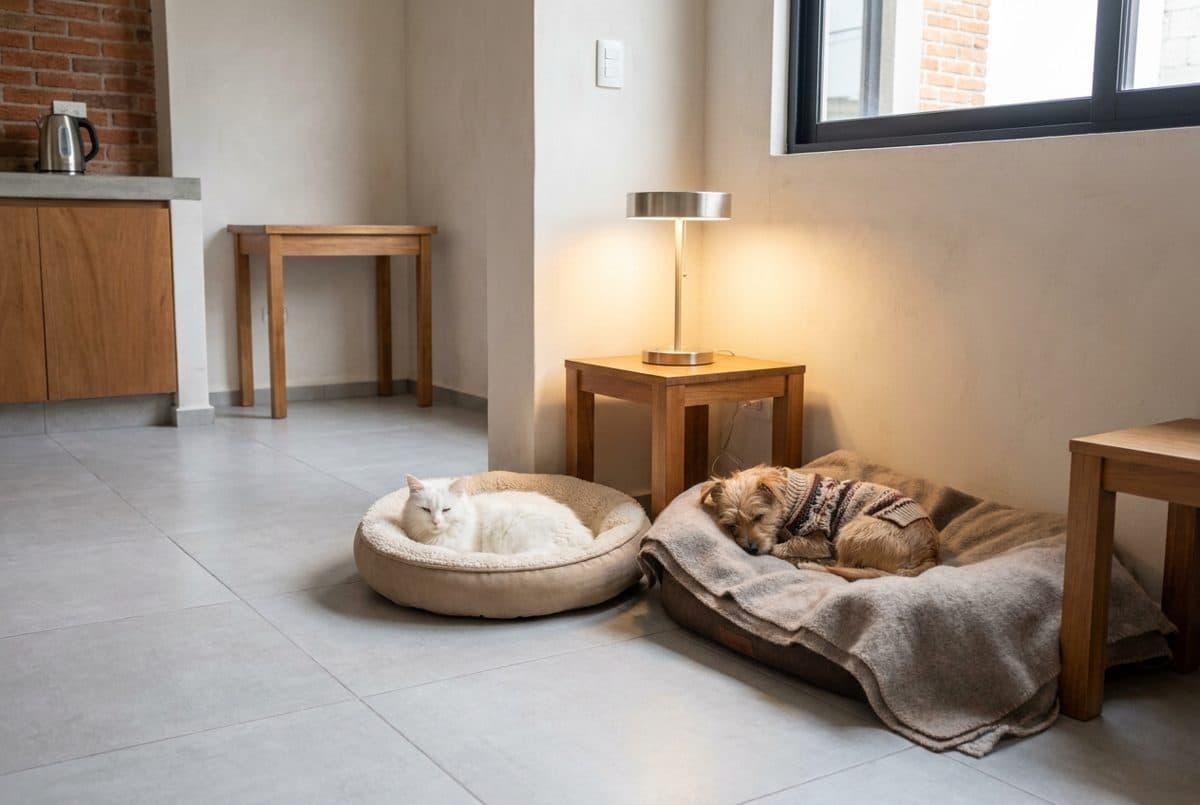
Raise your pet's bed off the floor and place it away from drafts.
Cold floors absorb body heat from resting animals. Elevating the sleeping cushion shields your pet from chilly drafts moving across the room.
Insulate outdoor doghouses and raise them several inches off the soil. This elevation stops damp ground moisture from soaking into the floor boards and cooling the shelter interior.
[S4][S5]How do you protect cats from car engine hazards in winter?
Hit your vehicle hood firmly or sound your horn before turning on the engine.
Outdoor cats frequently climb inside warm engine bays and wheel wells to sleep near residual engine heat. Starting the vehicle catches sleeping cats in moving fan belts and causes severe trauma.
Parked cars trap cold air like refrigerators. Keep your pets inside your home during freezing weather to prevent fatal exposure.
- Bang loudly on your car's hood with your hand.
- Tap your horn to startle hidden animals out of the engine compartment.
How do you prevent winter heating burns and gas poisoning in pets?
Block pet access to hot heating surfaces and operate fuel generators outdoors.
Pets curl up against portable heaters, wood stoves, and open radiators, which causes painful thermal skin burns. Never apply electric heating pads directly to your pet's skin, because concentrated heat produces burns and circulatory shock.
Fuel-burning heaters, unvented stoves, and vehicle exhaust produce carbon monoxide. This dangerous gas has no smell and no color. A cat locked in a closed garage with an idling engine absorbs toxic levels in ten minutes.
Place portable fuel generators outdoors at least 20 feet (6.1 meters) away from windows, doors, and building vents.
[S2][S7][S9][S10]How do you prevent antifreeze poisoning in pets?
Wipe your pet's paws after every walk and switch to propylene glycol coolant.
Engine antifreeze contains ethylene glycol. This liquid has a sweet taste that attracts dogs and cats, but swallowing even two teaspoons can kill a cat, and a few tablespoons can kill a medium dog through sudden kidney failure.
Use propylene glycol formulations in your vehicles, which present lower toxicity. Road grit, chemical salts, and spilled coolant collect on paw pads during neighborhood walks. Wipe your pet's paws and belly with a damp towel before they can lick their fur.
[S4][S5][S11][S12]What temperature drops put pets in danger of hypothermia?
Cats experience discomfort below 45°F (7.2°C), and freezing temperatures at or below 32°F (0°C) expose pets to hypothermia and frostbite.
Mexico experiences an average of 48 cold fronts annually, with peak activity bringing freezing weather to the northern states and the central Altiplano. Low outdoor temperatures cause metabolic stress as pets burn energy to maintain their internal warmth.
Healthy body temperature ranges between 100.5°F and 102.5°F (38.1°C to 39.2°C) in cats, and between 99.5°F and 102.5°F (37.5°C to 39.2°C) in dogs. Hypothermia begins when a dog's rectal temperature drops to 98°F to 99°F (36.7°C to 37.2°C) or lower, or when a cat's temperature falls below 100°F (37.8°C).
If your pet suffers from cold exposure, bundle them in warm blankets with cloth-wrapped warm water bottles and transport them straight to an animal hospital.
[S1][S2][S6][S7][S8]How should you adjust your pet's feeding and grooming in winter?
Leave your dog's coat at its natural length and adjust daily food intake to their outdoor activity level.
Never shave your dog down to the skin during the winter months. A full fur coat serves as your dog's primary thermal insulation against cold air.
Outdoor pets burn extra calories to maintain core temperature and need slightly larger meal portions. Indoor pets with reduced winter activity do not need extra calories, because extra food leads to excess weight.
[S3][S4]When should you go to the vet right away?
- Persistent shivering, muscle stiffness, pale gums, cool paws, and slow movements
- Cessation of shivering accompanied by dilated pupils, slow breathing, slow heart rate, or collapse
- Lethargy, stumbling, breathing distress, collapse, or seizures following exposure to fuel heaters or exhaust
- Known or suspected ingestion of engine coolant or sweet-tasting chemical puddles
This is general guidance. Always ask your vet.
Checked against sources; veterinary review pending. Information checked on September 28, 2026. Updated on September 28, 2026.
Written with AI help from the cited sources. A second model checked every fact against them.
Sources
- S1 Prepárate para la temporada invernal 2025-2026 | Centro Nacional de Prevención de Desastres | Gobierno | gob.mx
- S2 Perros y gatos: ¿qué hacer en época de frío? - UNAM Global
- S3 Cuidados invernales para animales de compañía: mitos y realidades
- S4 Cold Weather Safety Tips | ASPCA
- S5 Preparing Your Pets for Winter | VCA Animal Hospitals
- S6 8 Outdoor Dangers for Cats and How To Keep Your Feline Safe | PetMD
- S7 Hypothermia in Dogs: Signs and Treatment | PetMD
- S8 Hypothermia in Cats | PetMD
- S9 Carbon Monoxide Poisoning in Cats | PetMD
- S10 Carbon Monoxide Poisoning Basics | Carbon Monoxide Poisoning | CDC
- S11 Antifreeze Is Toxic To Dogs | Pet Poison Helpline®
- S12 Keep Pets Safe in Cold Weather - RSPCA - rspca.org.uk