Bringing a new dog home begins a major adjustment period for your entire household. Setting up clear boundaries and consistent schedules keeps your dog safe and builds long-term confidence.
This is general guidance. Always ask your vet.
How do you dog-proof your home for a new dog?
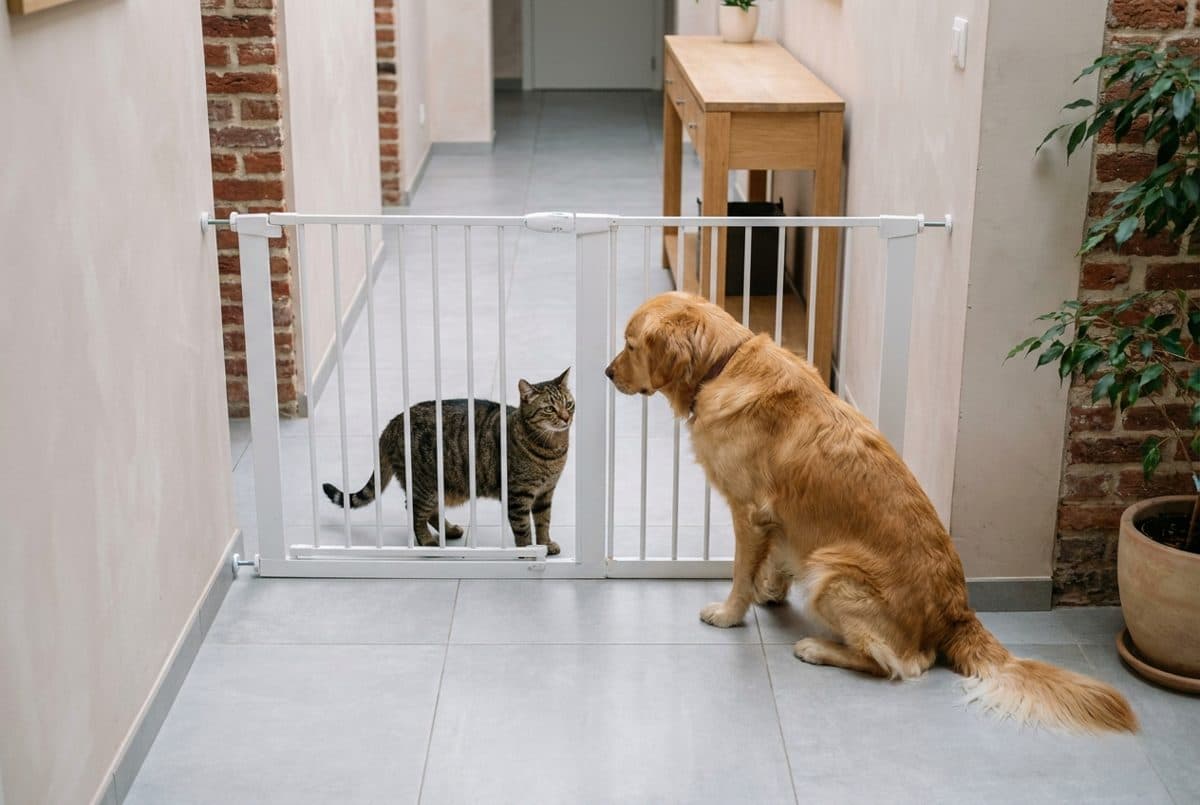
Dog-proof your home by locking away hazardous household items, securing food and garbage, and inspecting your yard perimeter.
Curious dogs chew and swallow household objects. Unplug loose electrical cords or tuck them out of sight to prevent electric shocks. Store human medicines in high, inaccessible cabinets because dogs chew through childproof bottle caps.
Food and waste present serious health hazards. Store all dog food in latching bins to prevent overeating and gorging. Keep trash cans behind closed doors or use latching lids to prevent intestinal blockages, vomiting, and poisoning.
Inspect fence lines for holes or escape routes before letting your dog loose in the yard. Post telephone numbers for your primary vet, the nearest emergency veterinary clinic, and pet poison control on your refrigerator.
- Unplug or conceal all loose electrical cords throughout your living spaces.
- Place human medications inside high, inaccessible cabinets.
- Secure household garbage cans behind closed doors or use cans with latching lids.
- Store dog food bags inside bins with latching tops.
- Inspect fence lines for holes and escape gaps before releasing your dog into the yard.
- Post emergency veterinary and poison control telephone numbers on the refrigerator.
Where should your new dog sleep and rest?
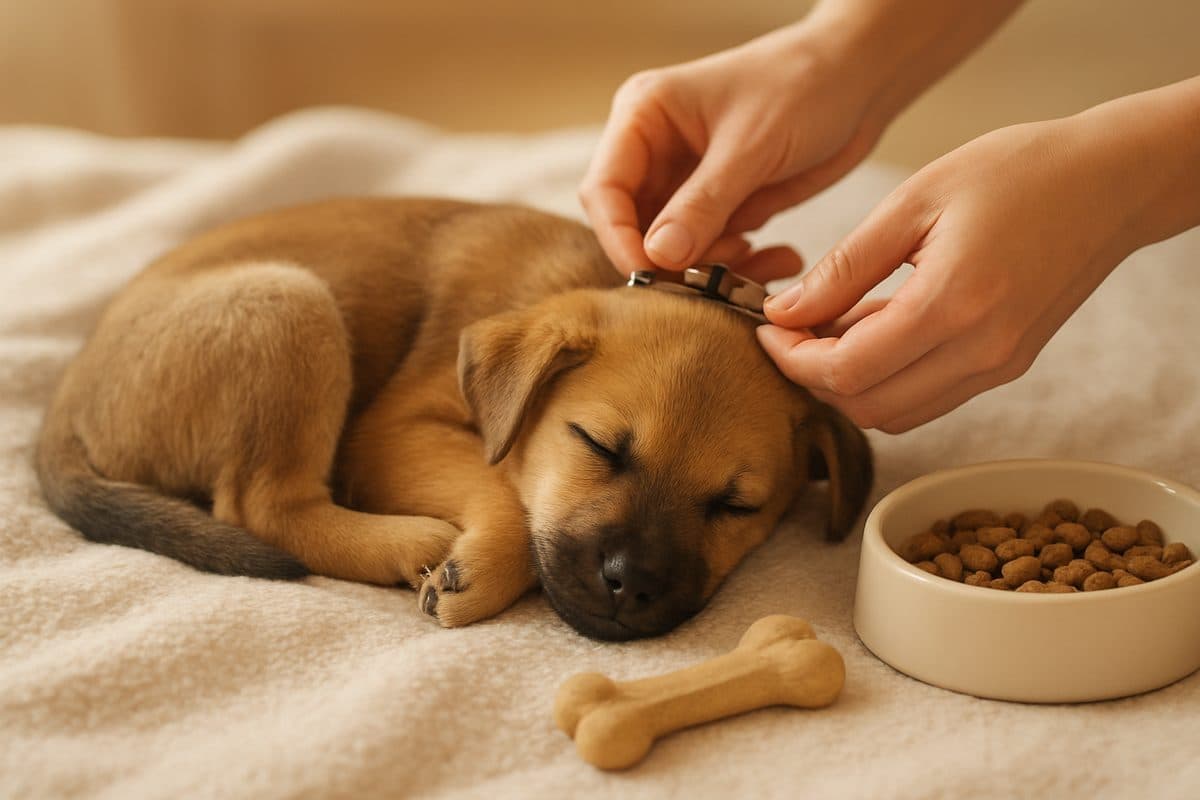
Provide a warm, quiet resting area elevated off the bare floor away from household drafts.
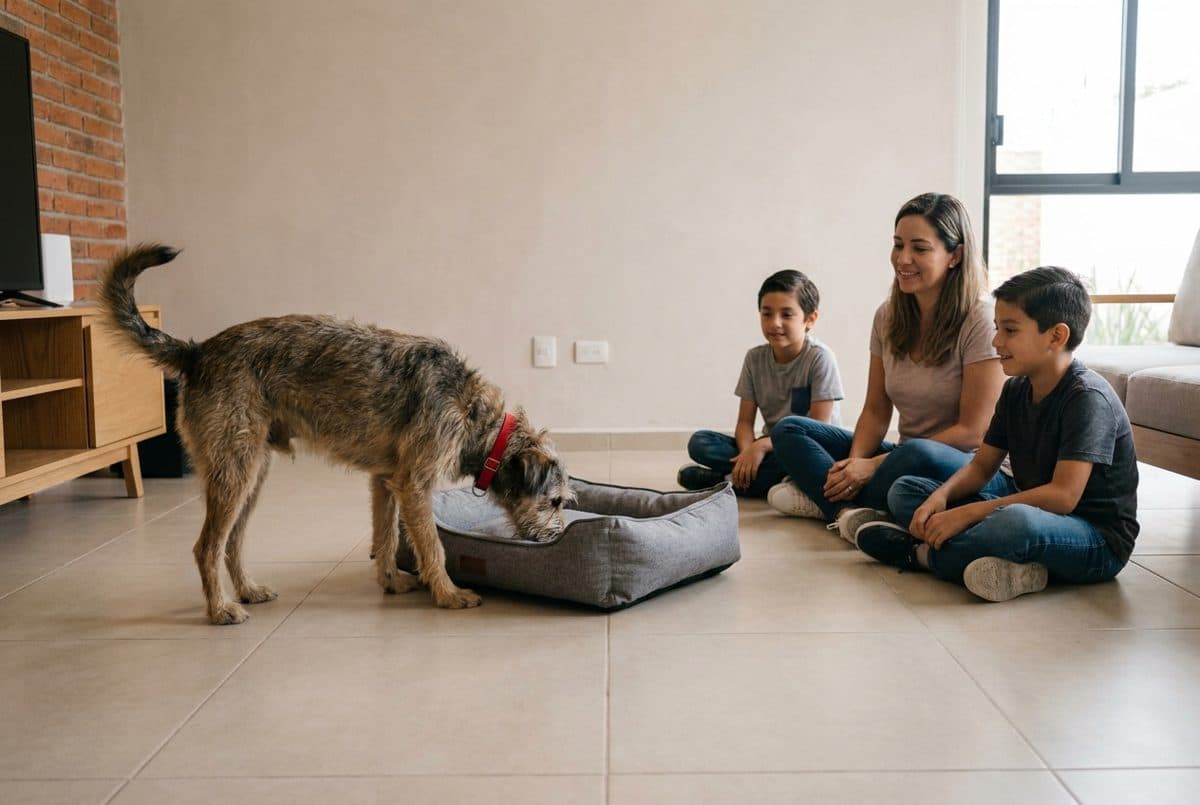
Dogs need a dedicated space to retreat when they feel overwhelmed. Place a warm bed off the bare floor in a low-traffic room. Provide durable chew toys that your dog cannot shred or swallow.
Select a crate that gives your dog enough space to stand up, turn around, and lie down comfortably without hitting its head.
[S5][S9]What is the 3-3-3 rule for a new dog?
The 3-3-3 guideline outlines three phases of adjustment: three days to decompress, three weeks to learn routines, and three months to build trust.
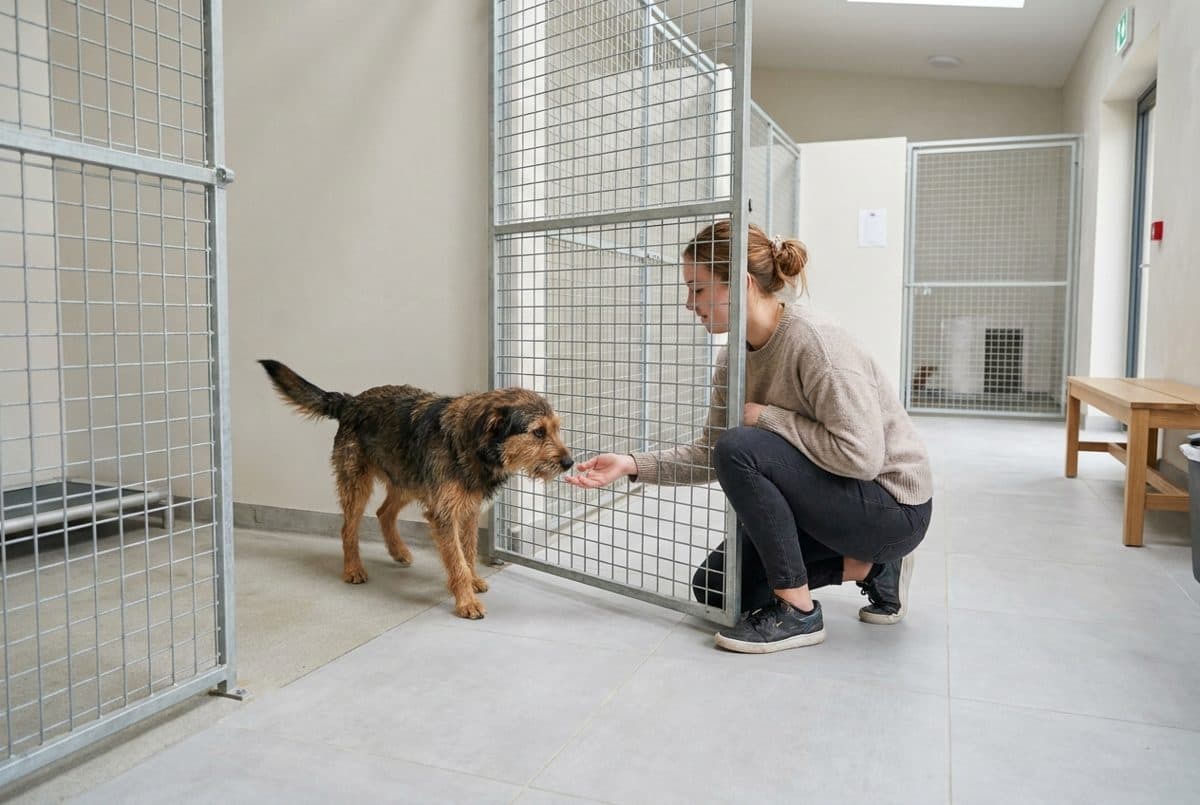
The first 3 days serve as a quiet decompression phase. Your new dog often feels overwhelmed by unfamiliar surroundings and needs a calm environment.
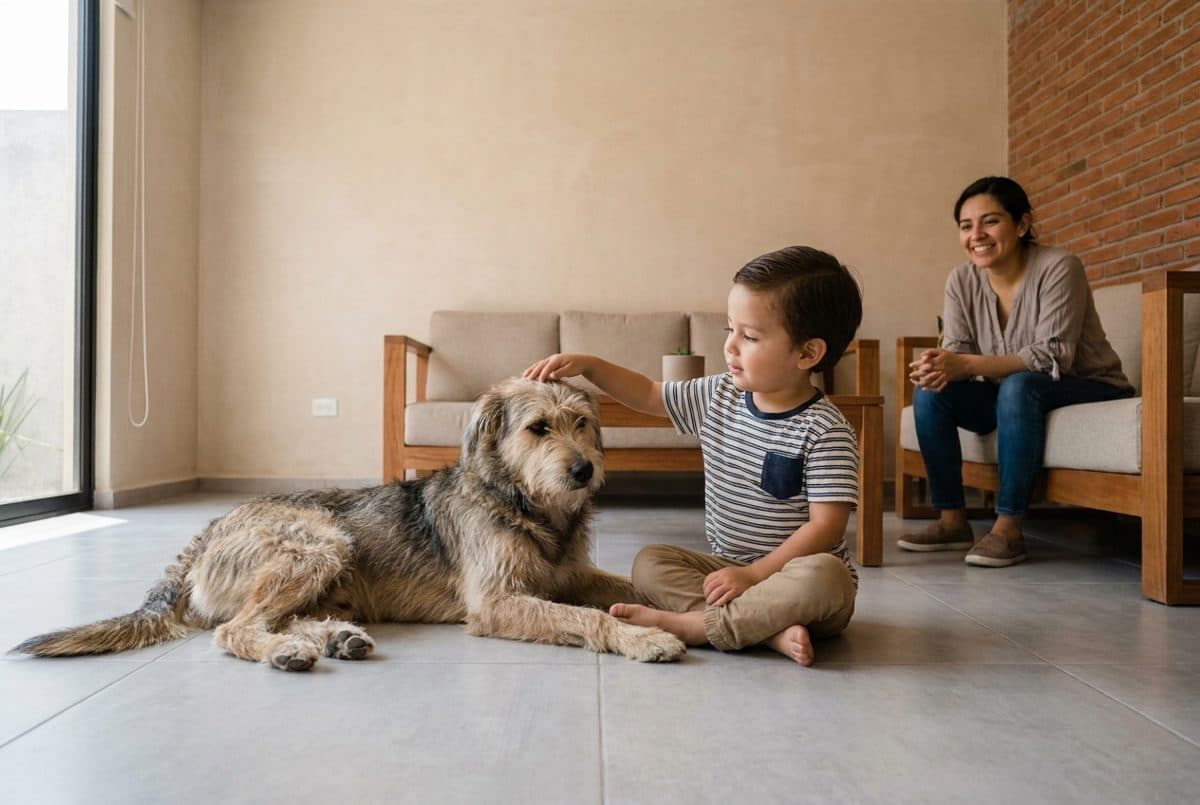
During the first 3 weeks, your dog starts learning daily household habits and family schedules. By 3 months, your dog develops confidence, builds trust, and feels secure in your home.
[S8]How often should you feed your new dog each day?
Feed young puppies two to four times daily depending on their age, and feed adult dogs once or twice daily.
Puppies require frequent meals to support rapid growth. Feed young puppies aged 8 to 12 weeks 4 meals per day. Feed puppies aged 3 to 6 months 3 meals per day.
Feed adolescent dogs aged 6 to 12 months 2 meals per day. Adult dogs aged 1 year and older eat 1 meal daily, while larger breeds prone to bloat benefit from 2 smaller daily meals.
[S9]How do you house train your new dog?
Establish successful house training by taking your dog outside through the same door on a strict schedule and rewarding outdoor elimination immediately.
Lead your dog through the exact same exterior door to the chosen bathroom spot on every trip. Deliver praise and treats right at the outdoor spot the moment your dog eliminates. Clean indoor accidents with an enzymatic cleaner to neutralize pet waste odors that prompt repeat accidents.
Awake puppies need bathroom breaks every 1 to 2 hours, along with outings immediately after eating, drinking water, or waking from naps. Puppies often require overnight bathroom trips until reaching 5 months of age. Limit puppy crate confinement to 3 hours between bathroom breaks.
Avoid physical punishment and rubbing the dog's nose in waste. Punishment creates fear and prompts dogs to hide future eliminations. Grant unsupervised freedom in the house after your puppy achieves 8 to 12 consecutive weeks without an indoor accident.
- Take your puppy out immediately after meals, drinking water, and naps.
- Deliver praise and treats directly at the outdoor spot the moment elimination finishes.
- Clean indoor accidents with an enzymatic cleaner to remove waste odors.
- Limit puppy crate confinement to 3 hours without a bathroom break.
- Wait until 8 to 12 consecutive weeks pass without accidents before allowing unsupervised house freedom.
When should you go to the vet right away?
- Repeated vomiting or severe diarrhea after accessing household garbage
- Suspected gastrointestinal obstruction from swallowed trash or foreign items
- Suspected ingestion of human medications or household toxins
This is general guidance. Always ask your vet.
Checked against sources; veterinary review pending. Information checked on September 28, 2026. Updated on September 28, 2026.
Written with AI help from the cited sources. A second model checked every fact against them.