Bringing a new pet home requires a structured introduction plan over several weeks. Controlled interactions help your pets share living spaces safely.
This is general guidance. Always ask your vet.
How do you introduce a new dog to your resident dog?
You introduce two dogs by walking them parallel on loose leashes in neutral territory before bringing them home.
Schedule the introduction when you have a full weekend at home for continuous supervision.
Train your resident dog to settle on a mat and follow verbal commands using reward-based methods prior to the meeting.
- Walk the dogs parallel on leashes at a calm distance in a quiet park or unfamiliar street.
- Allow the dogs to investigate each other's scent by retracing each other's walking paths.
- Keep leashes loose to prevent tension and allow natural posturing.
- Allow a brief, controlled greeting on loose leashes before continuing the walk.
- Move the dogs into an enclosed, secure neutral area for off-leash play after several successful leashed walks.
- Guide the new dog into your home yard before entering the house to keep entryways open.
How do you introduce a new cat to your resident cat?
You introduce two cats by keeping them in separate rooms and swapping their scents before allowing visual and physical contact.
Kittens have an early socialization window between 2 and 9 weeks of age that shapes feline social behavior.
Cats reach social maturity between 2 and 4 years of age, when territorial conflicts commonly emerge.
Synthetic feline facial pheromone diffusers or sprays placed in living areas help reduce anxiety.
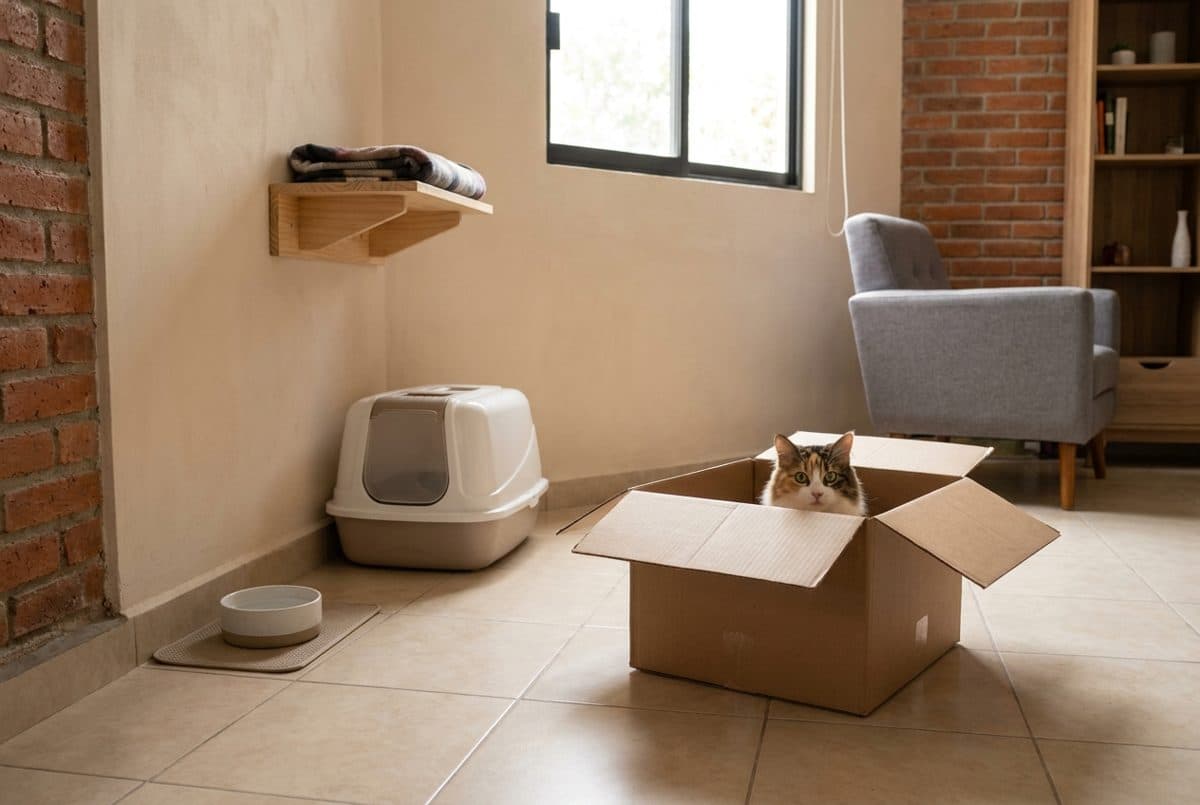
- Confine the new cat to a dedicated sanctuary room with a closed door and basic necessities for the first few days.
- Allow the cats to sniff each other under the closed door while rewarding calm behavior.
- Transfer bedding, toys, or cloths rubbed gently along facial scent glands between the two areas.
- Let the resident cat enter the sanctuary room while the newcomer explores the house alone for 15 to 120 minutes.
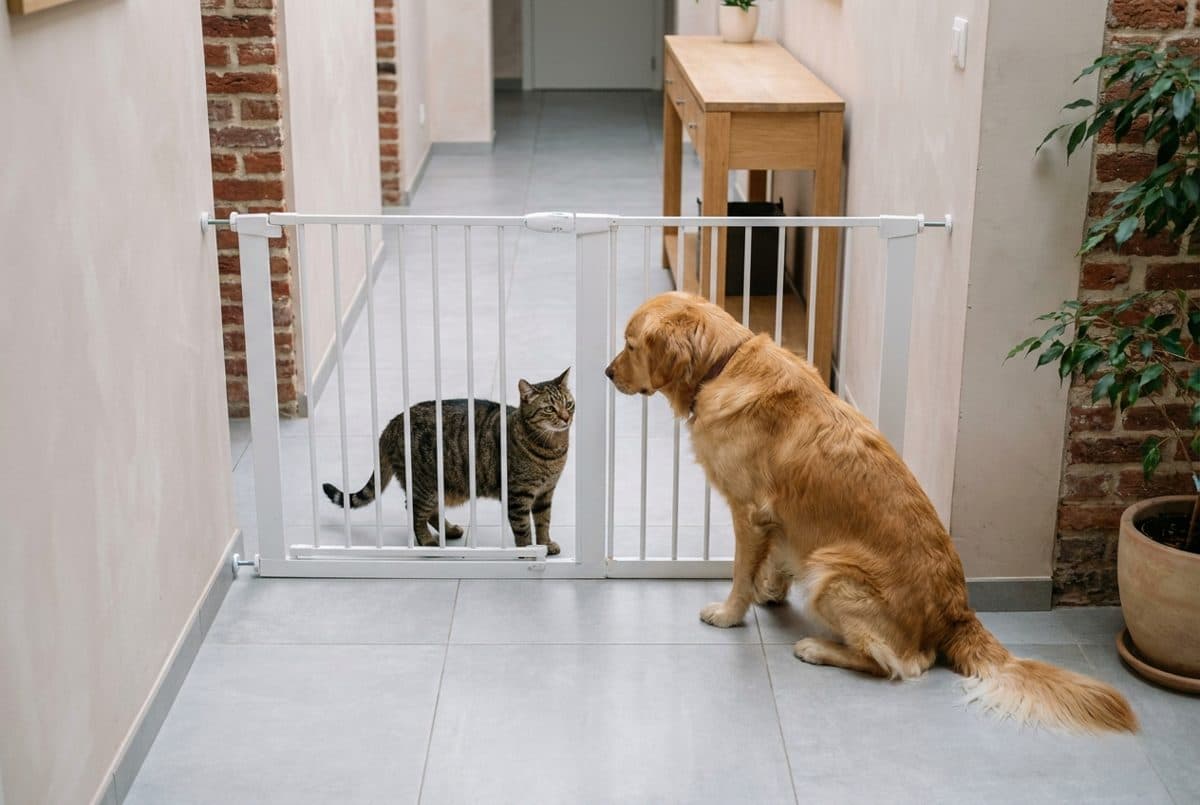
- Place a pet gate, baby gate, or mesh screen in the doorway to allow visual contact while maintaining physical separation.
- Feed meals or play with both cats near the barrier to create positive associations.
- Allow direct physical contact for a few minutes while engaging both cats with food or toys.
How do you introduce a dog to a cat?
You introduce a dog to a cat by keeping the dog on a loose leash behind barriers while providing high escape routes for the cat.
Assess your dog's prey drive and tendency to chase small animals on walks before bringing a cat home.
Feed and play with dogs and cats in separate spaces to prevent high arousal and food conflicts.
- Set up an elevated refuge or safe room inaccessible to the dog where the cat can retreat.
- Confine the new dog to one or two rooms behind baby gates until the cat walks comfortably and approaches the gate.
- Supervise direct meetings with the dog on a loose lead.
- Redirect the dog with a calm command if you see staring, lunging, or chasing.
How do you set up resources for multiple pets?
You support harmony in multi-pet homes by providing separate feeding areas, multiple water stations, and extra litter boxes.
Multi-pet homes require an environment of abundance with separate resting areas, individual beds, and multiple water bowls.
Separate feeding eliminates resource disputes and keeps mealtime calm.
- Provide one litter box per cat plus one extra box, placed in separate, accessible locations.
- Feed dogs in separate rooms with closed doors or physical barriers to eliminate food-guarding aggression.
- Put away resident dogs' favorite toys before a new dog enters the home.
- Remove high-value treats, rawhides, and real bones from shared areas until dogs establish a stable relationship.
How do you read pet body language during introductions?
You identify relaxed pets by loose postures and soft faces, and detect stress through stiff bodies, staring, and defensive signals.
Relaxed dogs show loose posture, soft facial expressions, open mouths, and play bows. Deferent dogs look away, yield space, and move away from confrontation.
Warning signs of canine stress or aggression include stiff posture, hard staring, lip lifting, growling, and raised hackles.
Relaxed cats show ears pointed forward, loose posture, and an upright tail with flat fur. Friendly interactions include cheek rubbing, gentle mouthing, and mutual grooming.
Signs of feline fear include dilated pupils, ears flattened outward, flattened whiskers, tucked tails, and crouching low. Feline aggression shows dilated pupils, ears flattened backward, arched backs, raised fur, hissing, and growling.
[S1][S3][S4][S6]What should you do if pets show aggression during introductions?
You separate fighting pets using physical barriers and return to the previous successful stage of the introduction.
The introduction process spans several weeks to several months depending on the individual animals.
Scolding, punishment, or physical force suppresses warning signals like growling and increases defensive aggression.
Allow unsupervised cohabitation after multiple successful, calm interactions over extended periods.
- Place physical barriers such as cardboard panels or gates between fighting animals.
- Keep your hands and body parts away from fighting pets to protect yourself.
- Return to the previous successful step whenever negative interactions, hissing, or growling occur.
This is general guidance. Always ask your vet.
Checked against sources; veterinary review pending. Information checked on September 28, 2026. Updated on September 28, 2026.
Written with AI help from the cited sources. A second model checked every fact against them.
Sources
- S1 Dog Behavior and Training - Introducing a New Dog to Your Family Dog | VCA Animal Hospitals
- S2 Introducing dogs - PDSA
- S3 Introducing a New Dog to Your Current Dog | Indoor Pet Initiative
- S4 How To Introduce Cats the Right Way | PetMD
- S5 Introducing New Adult Cats | VCA Animal Hospitals
- S6 Feline Behavior Problems: Aggression | Cornell University College of Veterinary Medicine
- S7 Introducing cats and dogs - PDSA
- S8 Introducing Dogs and Cats | Indoor Pet Initiative