Bringing a cat home begins with a dedicated safe room where your pet builds confidence at its own pace. Setting up practical supplies and scheduling an early veterinary exam create a calm environment for your pet.
This is general guidance. Always ask your vet.
How do you set up a safe room for a new cat?
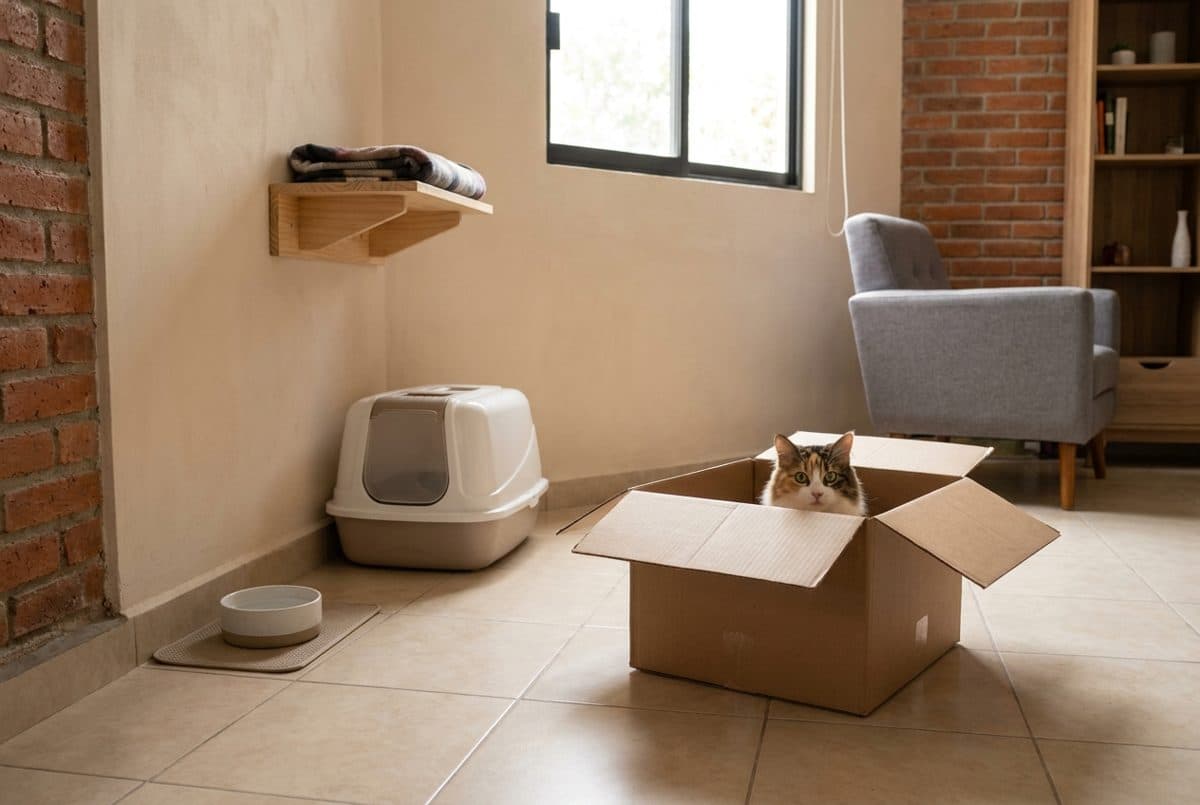
You prepare a quiet room with separate stations for food, water, and litter, alongside cozy hiding spots and high perches.
Pick a low-traffic room away from resident pets. Cats take several days to two weeks in this private base to feel confident in a new territory.
Add dedicated hiding retreats such as cardboard boxes, covered beds, or open carriers with blankets. Allow your cat to emerge on its own schedule, and leave hiding cats alone.
Install vertical perches like cat trees or cushioned shelving so your cat can survey the room from above. Secure trailing power cables, swallowable items, cleaning chemicals, and tight wall gaps before the cat arrives.
- Select a quiet room closed off from other household pets.
- Add brand-new supplies or items that your new cat already owns.
- Place food bowls and water bowls in separate spots, far from the litter box.
- Place cardboard boxes or open carriers lined with blankets on the floor.
- Secure electrical wires, swallowable clutter, and narrow hiding crevices.
How do you set up a litter box for a new cat?
You provide an open tray measuring 1.5 times the length of your cat and fill it with 3 centimeters of unscented litter.
Provide one litter box per cat in your household, plus one extra box. In homes with multiple floors, put at least one box on each level.
Most domestic cats choose open litter boxes without hoods. Select a tray with low entry sides for kittens or senior cats with joint stiffness.
Fill the box with 3 centimeters of fine-textured, unscented litter. Position boxes far from full-length glass windows and pet flaps to avoid outdoor stress triggers.
- Supply one box per cat plus one additional box across your home floors.
- Choose an uncovered tray with low sides for young kittens or seniors.
- Pour 3 centimeters of fine-textured, unscented litter into the tray.
- Scoop solid waste out of the box once or twice every day.
- Wash non-clumping litter boxes weekly, or wash clumping boxes every two to four weeks without ammonia, deodorizers, or citrus cleaners.
What kind of scratching post does a new cat need?
A cat needs a sturdy scratching post measuring at least 3 feet tall with a stable base that resists tipping.
Scratching marks territory through paw gland scents, sheds outer claw sheaths, stretches leg and back muscles, and displays feline confidence. Supply an adult-sized scratching post for a young kitten so the animal can use it as it grows.
Choose a post with a heavy base that stays firm during vigorous use. Trim your cat's claw tips every two to three weeks to keep the ends blunt and prevent household snags.
- Buy a scratching post that stands at least 3 feet (90 centimeters) high.
- Test the base to verify it remains upright under full pressure.
- Trim the tip of each claw every two to three weeks.
How do you protect a new cat from home hazards?
You protect a new cat by securing all window openings with sturdy screens and removing poisonous plants from your living spaces.
Cats fall from elevated windows or balconies when distracted by insects and birds on slick window ledges. Short falls from one or two stories carry high injury risks, including broken jaws and punctured lungs, because cats need distance to align their bodies for landing.
Cover every accessible window with a snug, heavy-duty screen. Cats slip through standard child window guards.
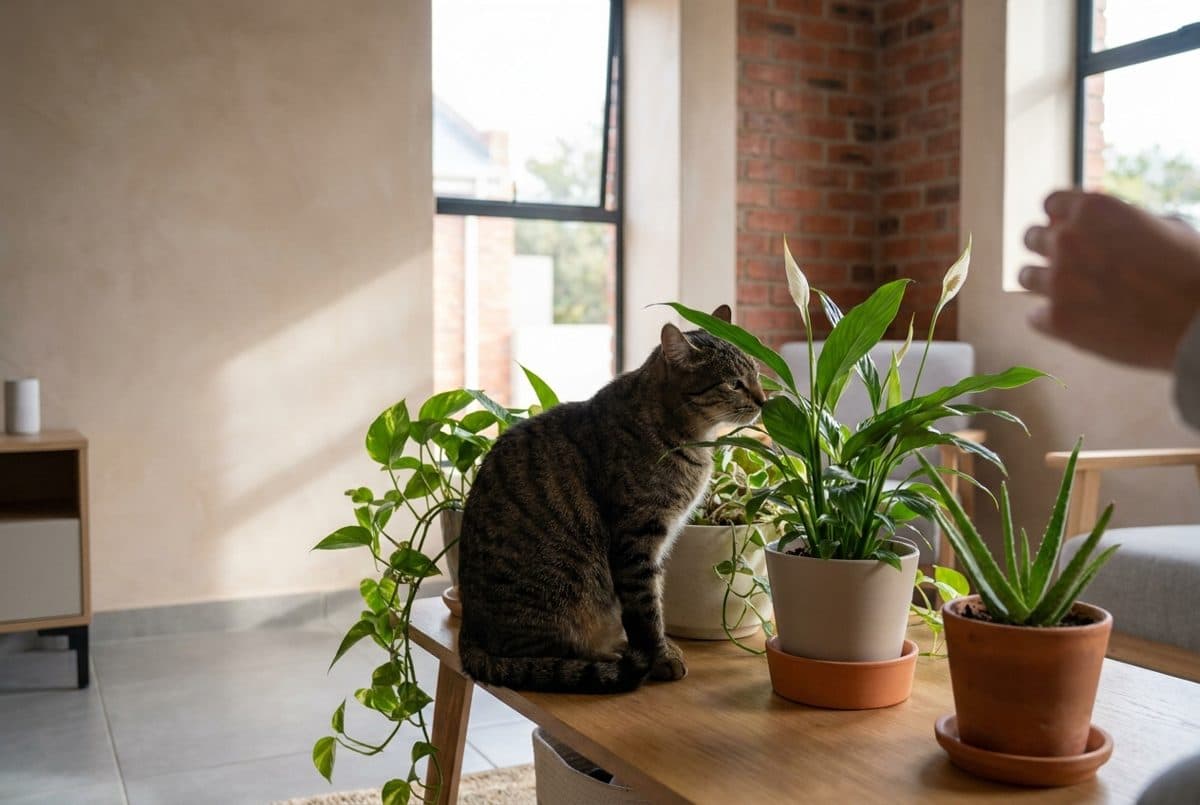
Clear all dangerous plants out of your house. True lilies, daylilies, sago palms, oleander, and lily-of-the-valley cause organ failure and heart problems in cats.
- Install tight, sturdy screens on all open windows and balcony exits.
- Discard or relocate true lilies, daylilies, sago palms, oleander, and lily-of-the-valley.
- Bundle exposed electrical wires and store small household objects in drawers.
How do you introduce a new cat to resident pets?
You introduce pets by swapping scent-marked blankets and separating the animals with a tall barrier during early visual meetings.
Exchange sleeping blankets between your new cat and resident pets before visual greetings. This builds a shared group scent.
Set up a mesh screen or a baby gate measuring at least 36 inches (91 centimeters) high across the safe room doorway for early visual contact.
Keep resident dogs on a secure hand-held leash in a quiet posture when entering the space. Supervise every animal interaction for one month before allowing unsupervised shared time.
- Swap bedding blankets between your pets to mix their scents.
- Place a barrier at least 36 inches high between the rooms.
- Keep dogs on a short leash in a calm position during visual sessions.
- Supervise all shared pet time for one full month.
When should you take a new cat to the vet?
You schedule a veterinary visit during your cat's first week at home to verify its health and update preventative care.
Your veterinarian screens your cat for feline leukemia virus (FeLV) and feline immunodeficiency virus (FIV) before direct contact with other cats. Plan spay or neuter surgery before five months of age.
Ask your veterinarian for a microchip to establish permanent radio-frequency identification. Microchips lack GPS location tracking, so keep your cat indoors to avoid infectious illnesses, parasites, moving cars, and predators.
Indoor cats need daily interactive hunting play and climbing spots. This active stimulation protects against feline obesity and stress-related behavioral struggles.
- Book an exam with your veterinarian within seven days of arrival.
- Complete FeLV and FIV lab screening before introducing other felines.
- Schedule spay or neuter surgery prior to five months of age.
- Register an identification microchip with your clinic.
- Schedule daily interactive play sessions with hunting toys.
When should you go to the vet right away?
- Ingestion, chewing, or contact with any part of a true lily or daylily, including petals, leaves, stems, pollen, or vase water.
- Ingestion of sago palm seeds or leaves.
- Ingestion of oleander or lily-of-the-valley plants.
- Any fall from a window, balcony, or high ledge.
This is general guidance. Always ask your vet.
Checked against sources; veterinary review pending. Information checked on September 28, 2026. Updated on September 28, 2026.
Written with AI help from the cited sources. A second model checked every fact against them.
Sources
- S1 High-Rise Syndrome: Lifesaving Tips for Cat Parents | ASPCA
- S2 General Cat Care | ASPCA
- S3 Do You Know Which Flowers and Plants are Toxic to Pets? Our Experts Explain! | ASPCA
- S4 New Kitten Checklist: First Vet Visit, Supplies & First-Year Care - AAHA
- S5 Choosing and Caring for Your New Cat | Cornell University College of Veterinary Medicine
- S6 Feline Behavior Problems: Destructive Behavior | Cornell University College of Veterinary Medicine
- S7 Choosing a litter tray for your cat - International Cat Care
- S8 Introducing Cats - International Cat Care
- S9 Bringing Your Kitten Home | Blue Cross
- S10 Introducing Dogs to Cats - American Humane Society
- S11 Lovely Lilies and Curious Cats: A Dangerous Combination | FDA