Losing a pet causes immense stress, but proper identification helps finders return your companion quickly. Equipping your pet with both a visible collar tag and an implanted microchip ensures reliable protection under any circumstance.
This is general guidance. Always ask your vet.
Why should my pet have both an ID tag and a microchip?
A collar tag provides immediate contact information to any person who finds your pet, while an implanted microchip remains permanently in place if the collar falls off.
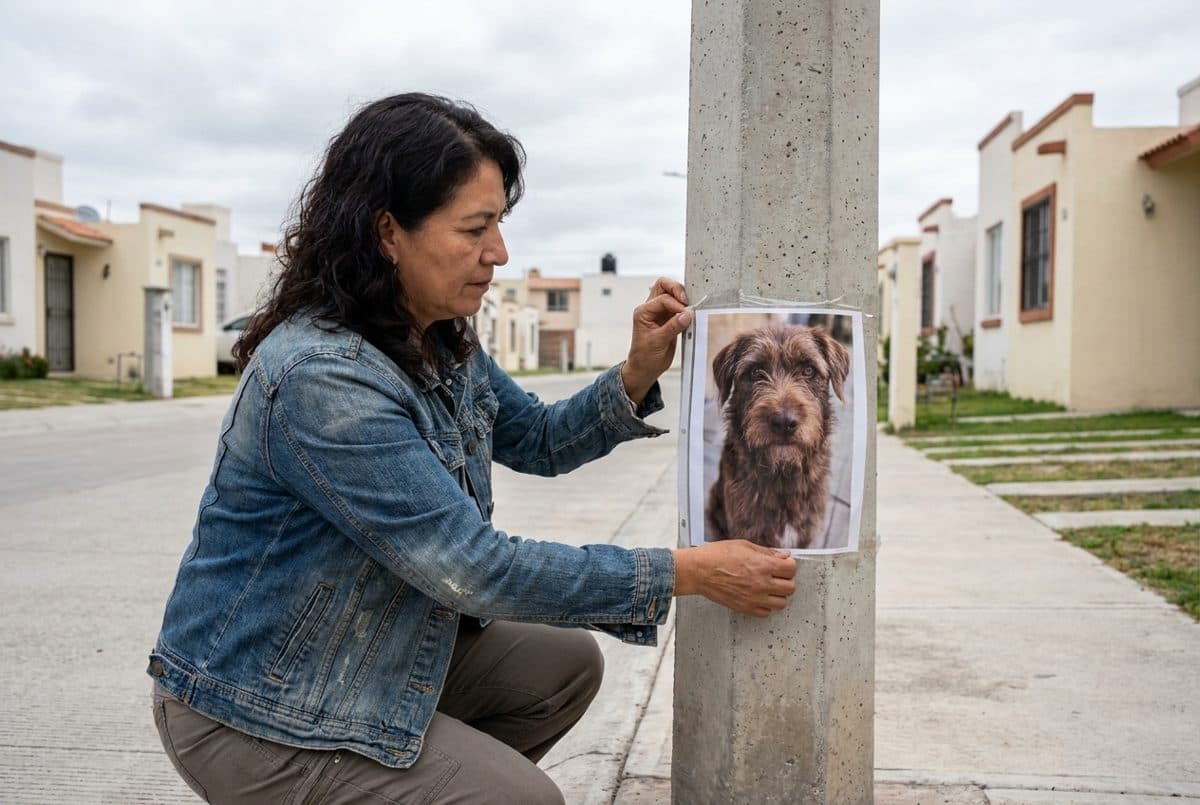
A personalized collar tag offers the fastest way for a finder to return your pet because anyone can read your phone number directly.
Collar tags can wear down, break, or fall off during an escape. The ASPCA recommends pairing a collar tag with an implanted microchip to give your pet two protective layers of identification.
[S1][S2][S3][S8]What information should I put on a pet ID tag?
Engrave your primary telephone number with the area code directly on the tag so finders can reach you immediately.
Include your active telephone number with the area code to enable direct communication.
The RSPCA recommends omitting your pet's name from the tag. Knowing the name allows a pet thief to make the animal respond, which makes claiming false ownership or reselling the pet easier.
[S7][S8]How does a pet microchip work?
A pet microchip is a passive radio frequency transponder the size of a grain of rice that transmits an assigned identification code when energized by a scanner.
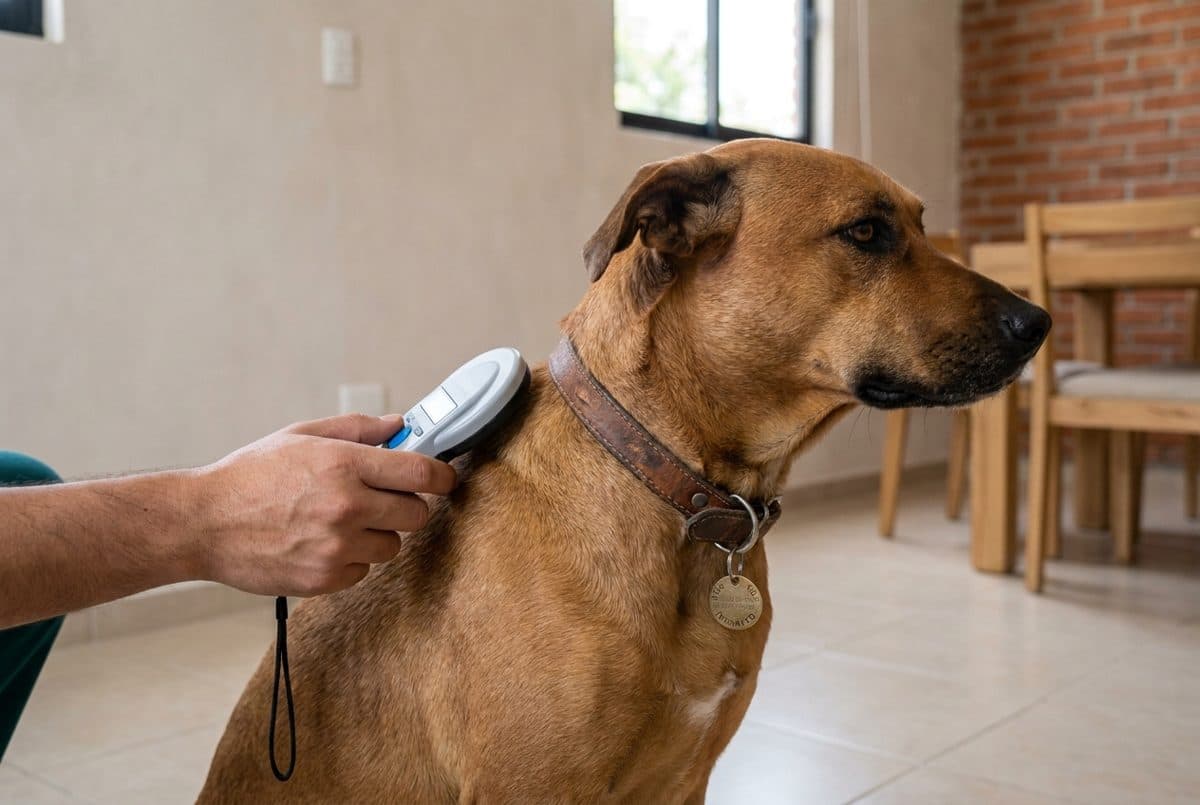
The passive microchip activates when a microchip scanner passes overhead and emits an electromagnetic field.
The transponder carries an assigned 9, 10, or 15-digit code. Standard international microchips comply with ISO 11784 and 11785 specifications, which provide a 15-digit numeric code readable by universal 134.2 kHz scanners. The device lasts for your pet's entire natural life.
[S2][S4][S8][S9]How is a microchip implanted in a pet?
A veterinarian injects the microchip under the loose skin between your pet's shoulder blades using a sterile needle.
Microchipping is a quick outpatient procedure performed while your pet remains awake. The sensation feels like a routine vaccination injection or a blood draw.
Veterinarians can use food distractions like peanut butter or apply topical numbing agents to maximize your pet's comfort. Side effects occur rarely and involve minor tenderness at the injection site for up to 24 hours. Because chips occasionally shift under the skin, veterinary teams scan the pet's entire body during exams.
- The veterinary team scans the microchip inside its sterile packaging to confirm the transmitted code matches the package label.
- The veterinarian injects the transponder under the loose skin between the shoulder blades with a pre-loaded syringe.
- The team scans your pet to verify that the chip transmits its code properly.
How do I register and update my pet's microchip?
You must enter your contact details and the microchip number into an active pet recovery database right after implantation.
Update your contact information immediately whenever you change your telephone number, physical address, or email address. You can identify which database holds your pet's file by entering the chip number into the American Animal Hospital Association lookup tool at petmicrochiplookup.org.
- Obtain the official microchip transponder number from your veterinary clinic.
- Register your name, phone number, address, and email on the designated registry website.
- Update your online account immediately after any change in your phone number or home address.
- Ask your veterinarian to scan the microchip at every annual checkup to confirm proper function.
What collar safety rules apply to cats?
Cats should wear collars equipped with snap-open breakaway buckles that release under the animal's weight.
International Cat Care requires breakaway safety buckles that pull apart if the collar catches on an object. Collars with elastic stretch sections create danger because a cat can wedge a paw or jaw into the expanded loop, causing deep lacerations or strangulation.
Fit the collar snugly so that you can slide one or two fingers beneath it. Keep indoor cats microchipped, as unexpected escapes through doors, screens, or during emergency evacuations frequently leave indoor pets lost.
[S3][S5][S6]What microchip requirements apply to international pet travel?
International travel requires an ISO 11784 and 11785 compliant 15-digit microchip implanted on or before the date of your pet's rabies vaccination.
Foreign governments frequently enforce strict microchip protocols for entry. Under United States CDC importation rules, all dogs arriving from Mexico must possess an ISO-compatible microchip detectable by universal scanners.
The CDC considers any rabies vaccine given before microchip implantation invalid for travel. If border officials cannot scan and verify your pet's microchip upon arrival, authorities can deny entry and return your pet to the departure country at your expense.
- Confirm that your veterinarian implants a 15-digit ISO 11784/11785 compliant microchip.
- Ensure your pet receives the rabies vaccination on the day of microchipping or at a later appointment.
- Have your veterinarian scan the microchip prior to departure to verify readability.
- Keep the microchip number listed accurately on all international health certificates.
This is general guidance. Always ask your vet.
Checked against sources; veterinary review pending. Information checked on September 28, 2026. Updated on September 28, 2026.
Written with AI help from the cited sources. A second model checked every fact against them.
Sources
- S1 Microchips Result In Higher Rate Of Return Of Shelter Animals To Owners
- S2 Microchipping Your Dog | VCA Animal Hospitals
- S3 Microchipping Your Cat | VCA Animal Hospitals
- S4 Dog Microchips: Common Questions and Answers | PetMD
- S5 Identifying your cat - International Cat Care
- S6 Should my cat wear a collar? - International Cat Care
- S7 Taking Your New Pet Home
- S8 Position Statement on Pet Identification | ASPCA
- S9 Frequently Asked Questions on Dog Importations | Importation | CDC
- S10 Dog Microchipping Questions & Answers | Dog Advice | Dogs Trust