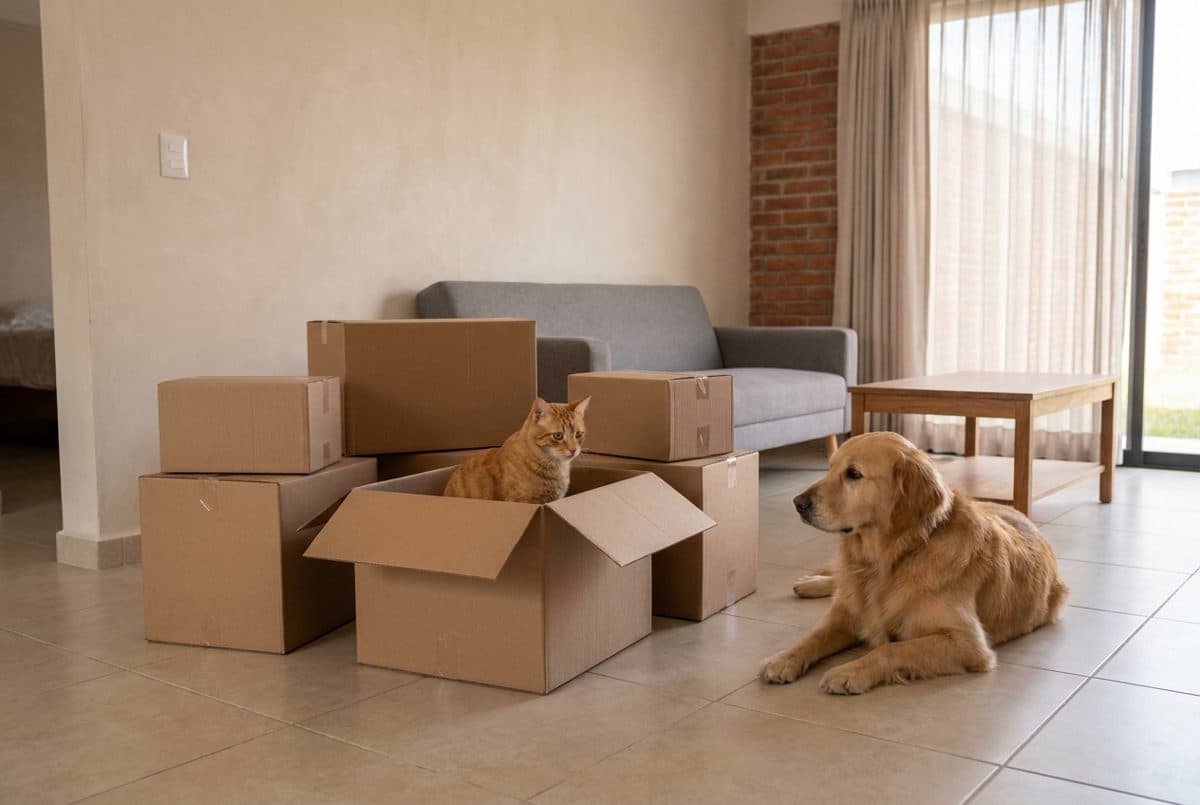
Relocating to a new residence disrupts familiar scents, territories, and daily habits for dogs and cats. Careful preparation before moving day protects your pet's safety and supports their emotional health.
This is general guidance. Always ask your vet.
How do you prepare your pet before moving day?
You prepare your pet by maintaining consistent daily schedules, introducing packing boxes gradually, training with travel crates, and updating registration records.
Animals rely on predictable schedules to feel secure. Keep mealtimes, walks, and bedtimes on their normal timetable throughout the packing process.
Bring cardboard moving boxes into your living areas weeks before the move. Early exposure lets cats and sensitive dogs examine the boxes and adjust to their presence.
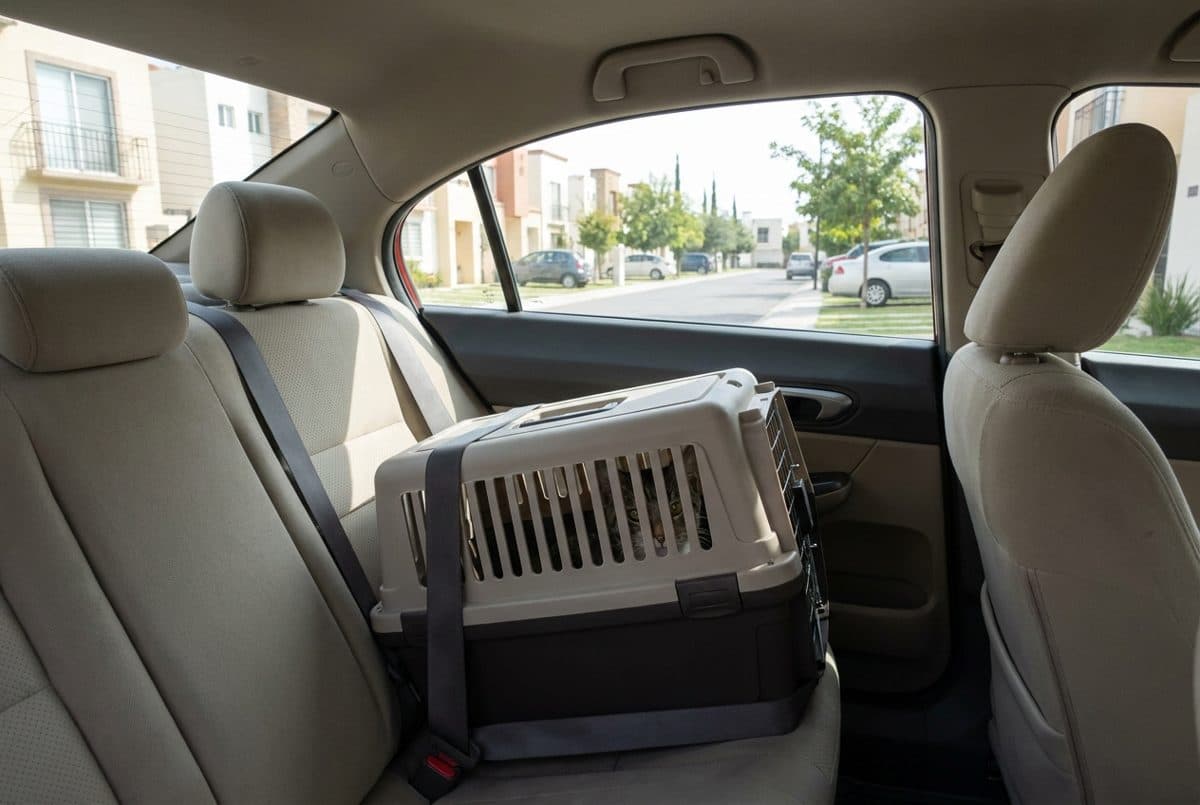
Acclimate your pet to their travel crate weeks or months ahead of moving day. Feed meals inside the crate and take brief practice car trips to build familiarity.
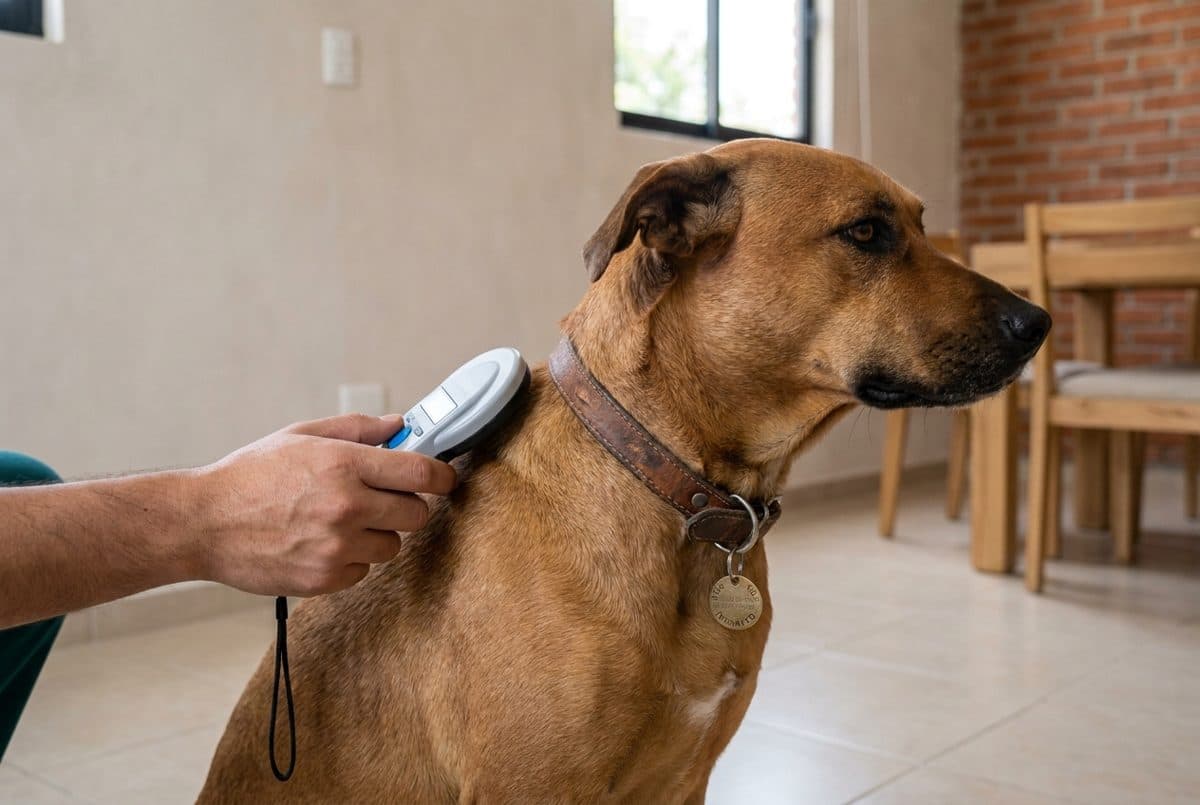
Update the database registry for your pet's microchip with your new address and active phone number. Place a collar on your pet with an ID tag that lists your current contact details and new street address. VCA Animal Hospitals recommends an elasticized breakaway safety collar for cats during this transition period.
- Update your microchip registry and collar ID tags with your new address and phone number.
- Place moving boxes in living areas weeks early to normalize their presence.
- Feed your pet inside their travel crate and complete short practice drives.
- Pack your pet's bedding, food dishes, water bowls, and favorite toys last.
How do you keep pets safe on moving day?
You keep pets safe on moving day by placing them in an isolated quiet room, withholding food before transit, and using crash-tested vehicle restraints.
Open doors and active movers create escape hazards. Confine your pet to a quiet room with a closed door, or place them with a trusted boarding facility or friend while the moving crew loads your furniture.
Travel anxiety and vehicle motion can trigger nausea. Both the ASPCA and Dogs Trust recommend withholding food for three to four hours before departure for animals prone to motion sickness.
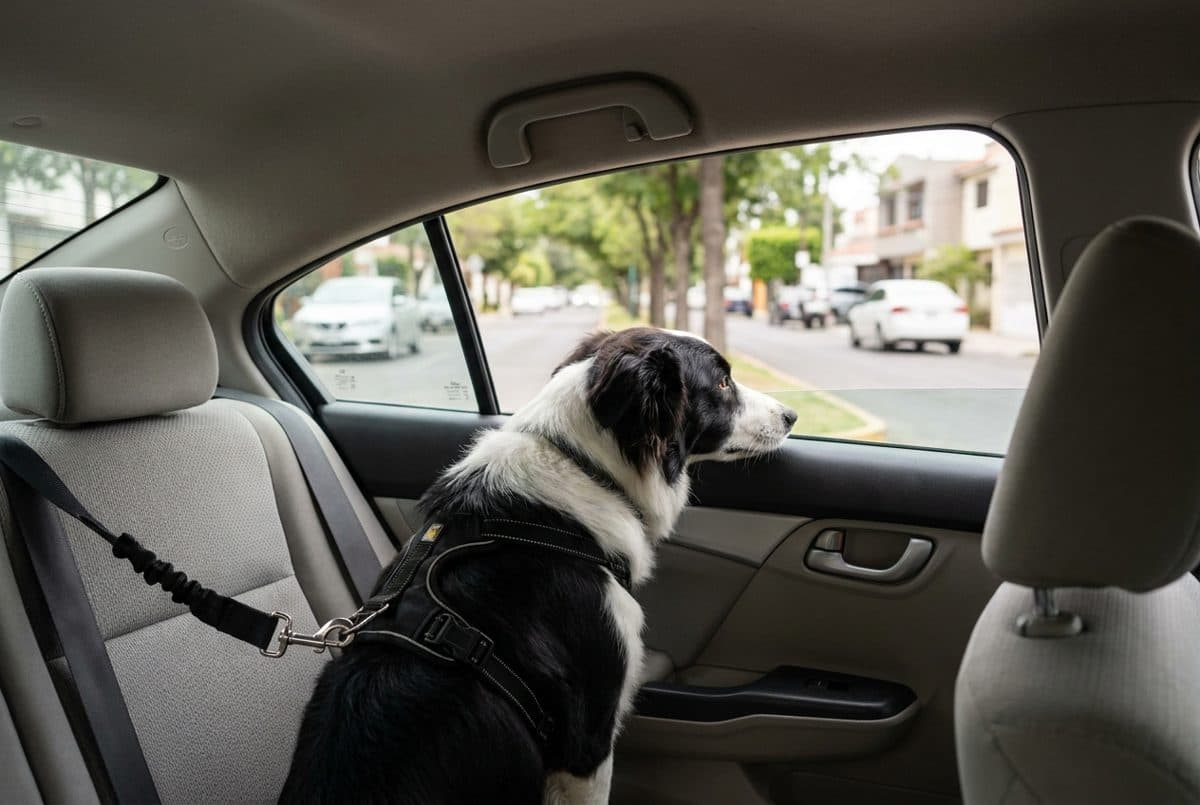
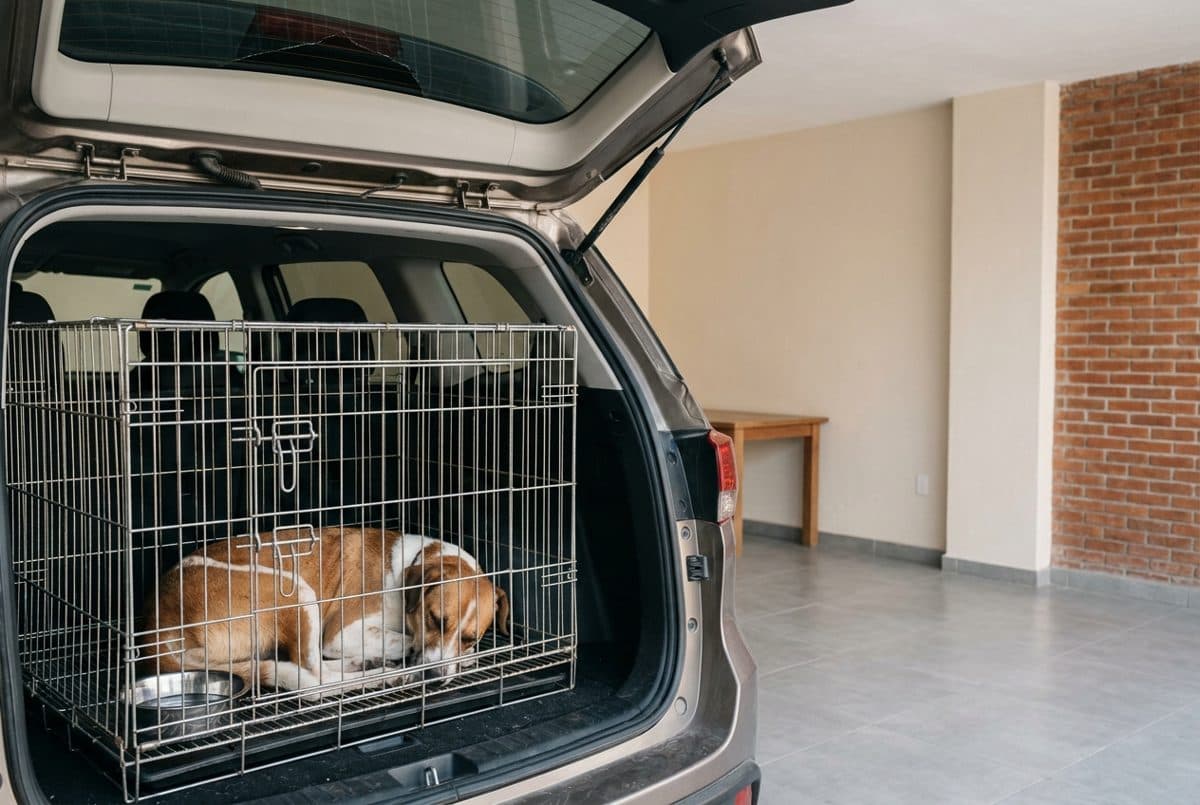
Restrain dogs inside your vehicle during travel. Use a secure travel crate, a dog guard barrier, or a crash-tested seatbelt harness to protect your dog on the road.
- Withhold meals for three to four hours before departure if your pet experiences motion sickness.
- Secure your dog inside your vehicle using a travel crate, guard barrier, or crash-tested harness.
How do you pet-proof a new house and yard?
You pet-proof a new property by removing hazardous pest control chemicals, tucking away wires, sealing structural openings, and inspecting the yard for toxic plants.
Examine every room before releasing your pet. Tuck away loose electrical wires, confirm window screens are securely fastened, and seal gaps around crawlspaces where small pets can wedge themselves.
Search cabinets, baseboards, and closets for pest control items left behind by previous occupants. Discard all rodenticide baits and insect traps immediately to prevent poisoning.
Inspect outdoor fencing for gaps and broken boards that permit escapes. Remove wild mushrooms and poisonous garden plants before granting yard access.
Check garden fertilizers stored on the property. Fertilizers containing blood meal or bone meal attract dogs and cause severe stomach obstructions or acute pancreatitis if swallowed.
- Search all interior spaces and dispose of previous rodenticide baits and insect poison traps.
- Fasten window screens, conceal electrical cords, and block openings to crawlspaces.
- Walk the perimeter fence to identify and repair escape gaps.
- Pull wild mushrooms, remove toxic plants, and lock away bone meal or blood meal fertilizers.
How do you settle your pet into a new home?
You settle your pet by establishing a dedicated home base room, maintaining their established daily routine, and introducing new rooms in stages.
Set up a single quiet room as a temporary home base upon arrival. Furnish this space with your pet's familiar bedding, water dishes, toys, and a litter box for cats.
Allow your pet to relax in the home base room before opening access to the rest of the house. Expand exploration one room at a time while keeping non-essential interior doors shut.
Dogs Trust advises keeping your dog's daily routine identical for the first few weeks. Feed meals, schedule walks, and initiate bedtimes at your established hours to restore confidence.
Move a cat's litter box from the home base room to its permanent location gradually. The ASPCA recommends advancing the litter box one foot (0.3 meters) per day until it reaches the desired room.
- Set up a closed home base room with familiar beds, dishes, toys, and a litter box.
- Keep the daily schedule for meals, outdoor walks, and sleep identical to your old home.
- Open additional rooms gradually while keeping non-essential doors closed.
- Shift the litter box forward by one foot per day toward its permanent location.
When can a cat go outside after moving to a new home?
You keep cats indoors for two to three weeks after moving before allowing supervised outdoor access on a harness during daylight.
Cats require time to establish mental maps of their new territory. Confinement indoors prevents your cat from attempting to travel back toward your previous residence.
Veterinary and welfare organizations publish specific indoor confinement guidelines. VCA Animal Hospitals recommends keeping cats indoors for a minimum of two weeks (14 days). The RSPCA advises an indoor confinement period of two to three weeks (14 to 21 days).
Begin outdoor access during daylight hours with direct supervision. Keep initial outdoor sessions short and walk your cat on a secure harness and leash.
- Confine your cat strictly indoors for two to three weeks following your move.
- Verify that your cat wears an elasticized breakaway safety collar with your new address.
- Introduce your cat to the outdoor area during daylight hours for brief intervals on a harness.
What are the signs of moving stress in dogs and cats?
Moving stress produces observable changes in posture, vocalization, sleep duration, grooming habits, and digestive function in dogs and cats.
Stressed dogs exhibit bodily tension through trembling, pinned-back ears, cowering, weight shifted to rear legs, and a tucked tail. Optical indicators include rapid blinking, dilated pupils, prolonged yawning, lip licking, and whale eye, where the white sclera becomes visible. Dogs also vocalize by whining or barking, shake while dry, shed heavily, or pace and dig.
Cats communicate stress through frequent vocal yowling, meowing, growling, and defensive aggression. A stressed cat often retreats into seclusion or extends sleep past the normal adult baseline of 16 to 20 hours per day. Leave hiding cats undisturbed in their chosen sanctuary to avoid elevating their anxiety.
Stress can cause cats to eliminate outside the litter box or spray vertical walls with urine to spread familiar scents. Compulsive overgrooming serves as an endorphin-releasing response in cats, which strips fur and causes skin inflammation.
Stress disrupts digestion in dogs and cats, prompting vomiting, diarrhea, food refusal, or urinary urgency. Schedule an evaluation with a veterinarian to rule out underlying physical illnesses or urinary tract infections.
[S5][S6]How do you transfer pet veterinary records to a new clinic?
You transfer veterinary records by contacting your current clinic to authorize the direct release of comprehensive medical files to your new provider.
Dogs Trust recommends selecting and registering with a veterinary clinic in your new neighborhood before moving day. Evaluate potential practices by assessing clinic location, operating hours, emergency services, and voluntary quality accreditations.
Veterinary clinics require explicit owner authorization to release medical files. Contact your current provider directly to request transmission of your pet's complete medical history to the new practice.
Request comprehensive medical charts from your provider. Full medical charts include physical examination findings, weight trends, diagnostic values, and veterinary clinical assessments. Invoices record only purchase dates and vaccine billing.
Transfer records of previous sedative and anesthetic reactions so your new veterinarian can select safe medications and prevent adverse events. Clinical notes also detail your pet's specific handling preferences, fear triggers, and blood-draw requirements.
- Select and register with an accredited clinic in your new neighborhood before moving day.
- Contact your current veterinarian to sign an authorization for medical record release.
- Request complete clinical charts containing exam notes, lab results, and vaccination histories.
- Confirm that sedation responses, adverse drug reactions, and handling triggers are documented.
When should you go to the vet right away?
- Ingestion of rodenticide baits, insect poison traps, toxic mushrooms, or poisonous garden plants.
- Consumption of garden fertilizers containing bone meal or blood meal.
- Persistent vomiting, severe diarrhea, total food refusal, or urinary urgency.
This is general guidance. Always ask your vet.
Checked against sources; veterinary review pending. Information checked on September 30, 2026. Updated on September 30, 2026.
Written with AI help from the cited sources. A second model checked every fact against them.
Sources
- S1 Moving With Your Pet | ASPCA
- S2 Moving Home With Your Dog | Dogs Trust
- S3 Moving to a New Home with Cats | VCA Animal Hospitals
- S4 The Importance of Sharing Medical Records | VCA Animal Hospitals
- S5 Signs Your Dog is Stressed and How to Relieve It | VCA Animal Hospitals
- S6 8 Signs Your Cat Is Stressed | PetMD
- S7 Creating a Good Home for Cats - RSPCA - rspca.org.uk
- S8 Dog microchipping | RSPCA - RSPCA - rspca.org.uk
- S9 Moving With a Cat | PetMD
- S10 Herbicides Are Poisonous To Dogs | Pet Poison Helpline®