Cats enter their senior life stage around 10 to 11 years of age, undergoing gradual physiological changes across vital organs. Partnering with your veterinarian ensures appropriate wellness screenings, nutritional planning, and household accommodations for your older cat.
This is general guidance. Always ask your vet.
How often should my senior cat visit the vet?
Senior cats between 10 and 15 years of age need veterinary examinations at least every six months, while healthy cats over 15 years require visits every four months.
The 2021 AAFP Guidelines recommend physical examinations at least every 6 months for cats aged 10 to 15 years. Healthy cats over 15 years of age require checkups every 4 months, and cats managing chronic health conditions need visits at higher frequencies.
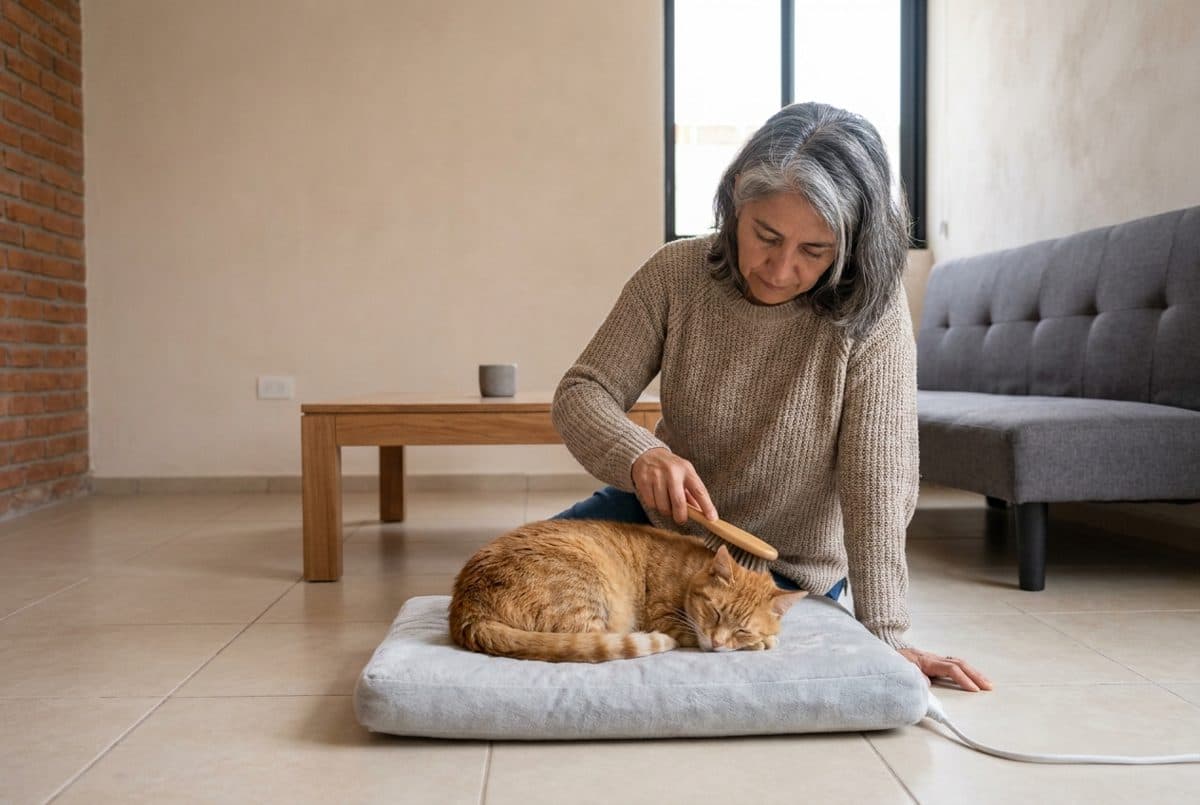
Routine examinations for cats aged 10 and older include blood pressure measurement at every visit to detect hypertension before irreversible target organ damage happens. Your veterinarian also tracks body condition and muscle condition scores to detect progressive muscle loss, known as sarcopenia.
Veterinary care plans consider your four budgets of care: financial, time, emotional, and physical.
[S1]How do I adapt my home for an arthritic senior cat?
You can support an arthritic cat by installing low-entry litter trays, placing essential resources on every floor, and adding ramps or pet stairs to high resting spots.
Joint disease affects older cats widely. Cornell notes that 90% of cats over 12 years of age show radiographic evidence of osteoarthritis. Osteoarthritis and spondylosis deformans represent the two most prevalent forms of degenerative joint disease in aging felines.
Senior cats with joint pain show subtle behavioral shifts. They hesitate before jumping, refuse to leap onto furniture, and choose lower resting spots. Reduced mobility also causes cats to stop scratching, leaving claws thick, brittle, and prone to curling into paw pads.
- Place food dishes, water bowls, and litter boxes on every floor of your home to remove the need for stairs.
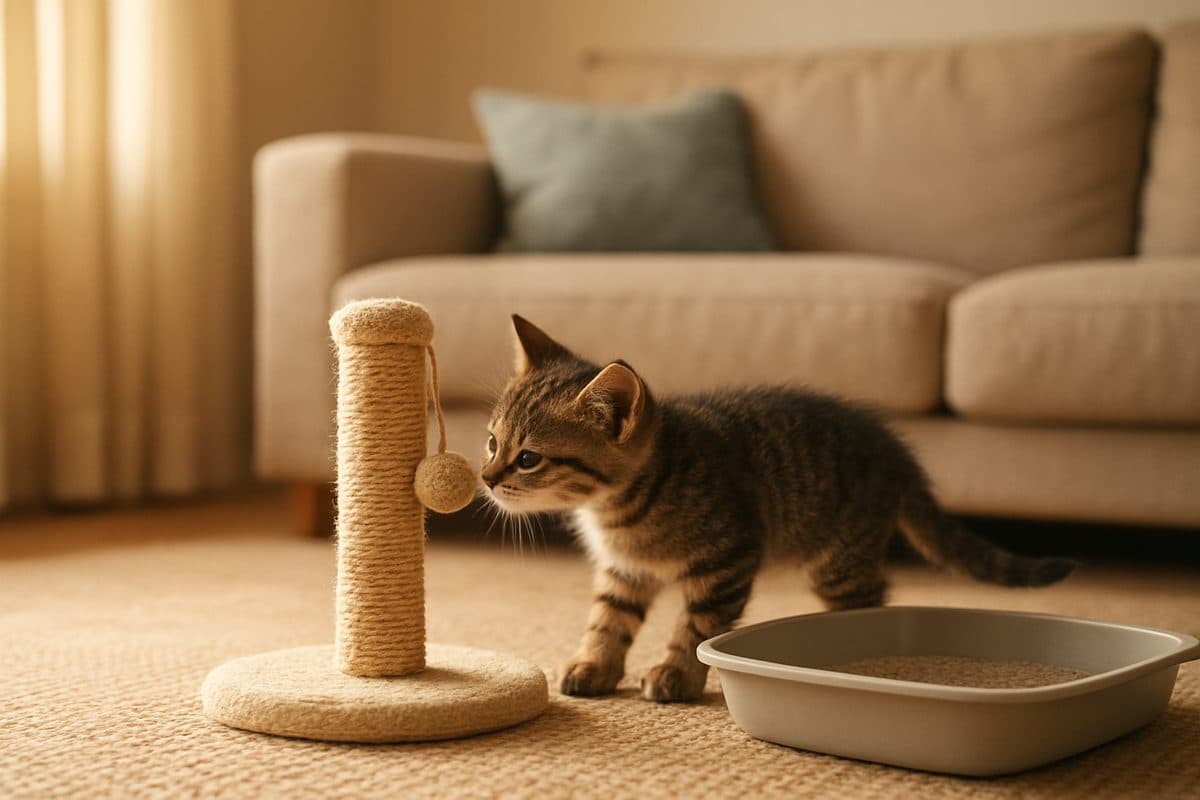
- Provide litter boxes with low entry cutouts or use large rimmed baking sheets so your cat steps in without joint discomfort.
- Position carpet-covered pet stairs, ramps, or stable box steps next to favorite furniture and beds.
- Install nightlights in hallways and near litter boxes to guide cats with declining vision or nighttime disorientation.
- Inspect and trim your cat's claws regularly to prevent overgrowth into paw pads.
How do I monitor my senior cat for weight and muscle loss at home?
Weigh your senior cat on a digital scale at least every two months and examine the spine and hips for progressive muscle loss.
Gradual weight loss and loss of muscle mass along the spine or hips signal early systemic disease. Routine home tracking enables early detection before illness advances.
- Weigh your cat on the same digital scale at least once every two months.
- Record each weight entry to track subtle trends over time.
- Feel gently along your cat's spine and hip bones to check for thinning muscle.
- Schedule a veterinary appointment whenever you detect steady weight loss or pronounced bones.
What common diseases affect senior cats?
Senior cats frequently develop chronic kidney disease, hyperthyroidism, diabetes mellitus, and periodontal disease.
Chronic kidney disease affects up to 40% of cats over 10 years of age and up to 80% of cats over 15 years. Blood creatinine increases after 75% of renal function is lost, while symmetric dimethylarginine, or SDMA, detects loss earlier at 40%. Approximately 60% of cats with kidney disease develop secondary hypertension. Prescription renal diets restricted in phosphorus and protein multiply average feline survival time by two to three times.
Hyperthyroidism stems from a benign thyroid tumor producing excess thyroid hormones. Clinical signs include progressive weight loss accompanied by a ravenous appetite, increased thirst, and increased urination. Excess thyroid hormones cause elevated heart rates, heart muscle thickening, and secondary hypertension. Physical neck palpation reveals an enlarged thyroid gland in 80% or more of affected cats. Radioactive iodine therapy provides a definitive cure within three months in approximately 95% of cases without general anesthesia.
Diabetes mellitus develops in 1 in 100 to 1 in 500 cats, with Type II being the most frequent form. Obese cats face up to four times the risk of diabetes mellitus. Uncontrolled diabetes can cause nerve damage that produces a plantigrade stance, in which the cat walks flat on its hind hocks. Low-carbohydrate diets improve blood sugar control and increase the likelihood of diabetic remission.
Periodontal disease creates severe oral pain, reluctance to eat, and reduced grooming. Untreated periodontal bacterial inflammation also contributes to secondary organ dysfunction.
[S1][S3][S4][S5][S6][S7]How can I tell if my senior cat is drinking excessive water?
Daily water consumption exceeding 100 milliliters per kilogram of body weight indicates abnormal thirst requiring veterinary diagnostic testing.
VCA Animal Hospitals states that normal feline daily water intake stays well below 100 milliliters per kilogram, or 45 milliliters per pound, of body weight. Sustained intake above this level indicates pathological polydipsia.
Cornell defines abnormal thirst as daily water intake exceeding 1 ounce per pound of body weight, which equals approximately 65 milliliters per kilogram. If your cat drinks above these thresholds, schedule a veterinary visit for blood and urine evaluations.
[S3][S7]When should you go to the vet right away?
- Resting respiratory rate exceeding 35 breaths per minute
- Walking flat on the hind hocks (plantigrade stance)
- Progressive weight loss combined with ravenous appetite, increased thirst, and increased urination
- Daily water intake exceeding 100 milliliters per kilogram or one ounce per pound of body weight
- Overgrown claws curling into paw pads
- Oral pain causing reluctance or refusal to eat
This is general guidance. Always ask your vet.
Checked against sources; veterinary review pending. Information checked on September 26, 2026. Updated on September 26, 2026.
Written with AI help from the cited sources. A second model checked every fact against them.
Sources
- S1 2021 AAFP Feline Senior Care Guidelines - PMC
- S2 Loving Care for Older Cats | Cornell University College of Veterinary Medicine
- S3 The Special Needs of the Senior Cat | Cornell University College of Veterinary Medicine
- S4 Chronic Kidney Disease | Cornell University College of Veterinary Medicine
- S5 Hyperthyroidism in Cats | Cornell University College of Veterinary Medicine
- S6 Feline Diabetes | Cornell University College of Veterinary Medicine
- S7 Senior Cat Care - Special Considerations | VCA Animal Hospitals