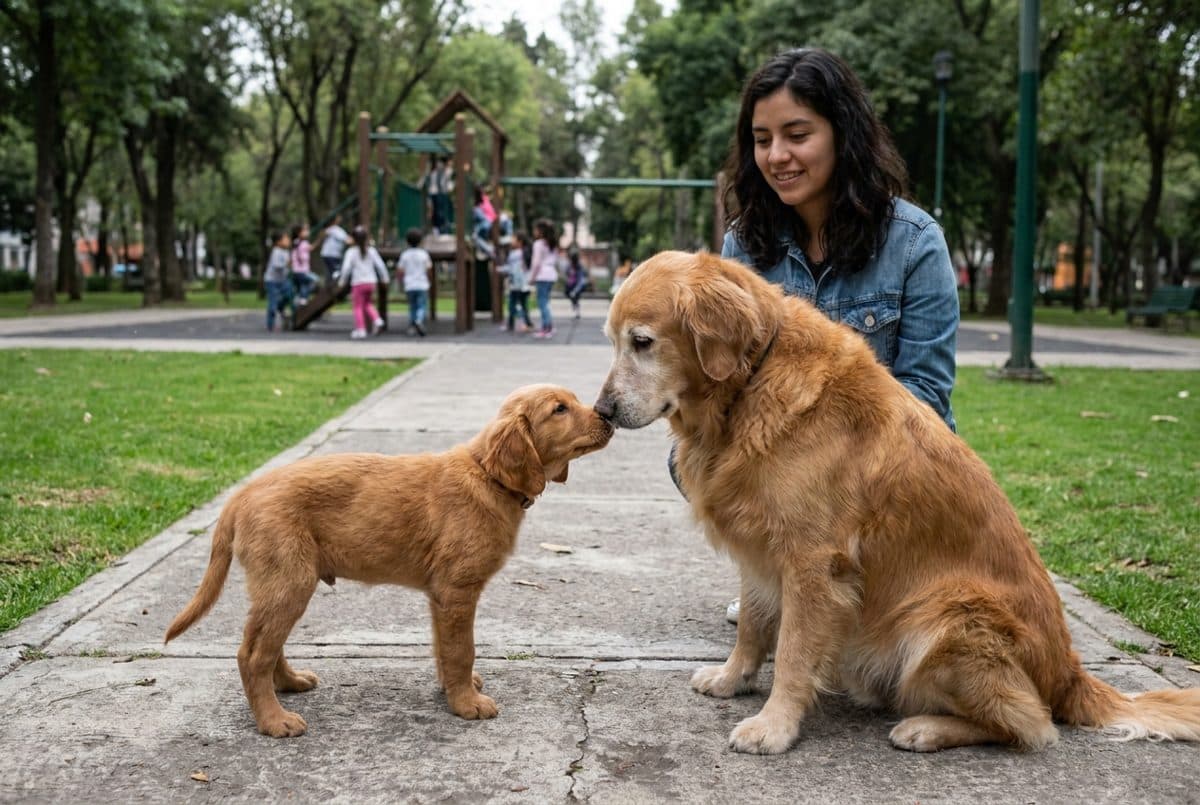
Early socialization teaches your puppy how to interact safely with the world. Your veterinarian guides vaccine schedules and health plans to support safe growth throughout this period.
This is general guidance. Always ask your vet.
When does the puppy socialization window open and close?
The puppy socialization window starts at 3 weeks of age and concludes between 14 and 20 weeks of age.
Puppies direct their social interactions toward other dogs between 3 and 8 weeks of age. Their social attention shifts toward human companions between 5 and 12 weeks of age.
Eight weeks of age is the recommended adoption time. Puppies need to remain with their mother and littermates until at least 7.5 weeks of age.
Puppies isolated in kennels or lacking human contact by 14 weeks of age suffer permanent damage to their social skills.
[S1][S3][S4][S6][S8]Can your puppy attend socialization classes before finishing vaccines?
Puppies can safely begin indoor socialization classes at 7 to 8 weeks of age after receiving their initial vaccination and deworming.
The American Veterinary Society of Animal Behavior endorses socialization classes before full vaccination as the standard of veterinary care. Behavioral disorders are the primary cause of death for dogs under 3 years of age and the top cause of shelter surrender.
Group classes protect puppy health through strict cleaning standards. Facilities must use indoor spaces with non-porous floors that staff sanitize regularly.
- Complete an initial veterinary deworming to ensure your puppy is free of parasites.
- Administer at least 1 round of vaccines at least 7 days before entering the facility.
- Attend classes held indoors on washable, non-porous surfaces.
How do you socialize an unvaccinated puppy outdoors?
You can carry your puppy in your arms, a sling, or a carrier to explore public environments safely.
Puppies without full vaccine protection must avoid public dog parks and high-traffic ground visited by unfamiliar dogs. Carrying your puppy lets them observe vehicles, pedestrians, and neighborhoods while keeping their paws off contaminated ground.
Arrange early canine meetings with healthy, fully vaccinated adult dogs known for gentle behavior. Aggressive growls or snaps from unfamiliar dogs can cause lasting psychological trauma during this sensitive stage.
[S1][S3][S5][S6]What household sounds, handling, and surfaces should a puppy experience?
You should expose your puppy to full-body handling, diverse walking textures, household appliances, and people of varied appearances.
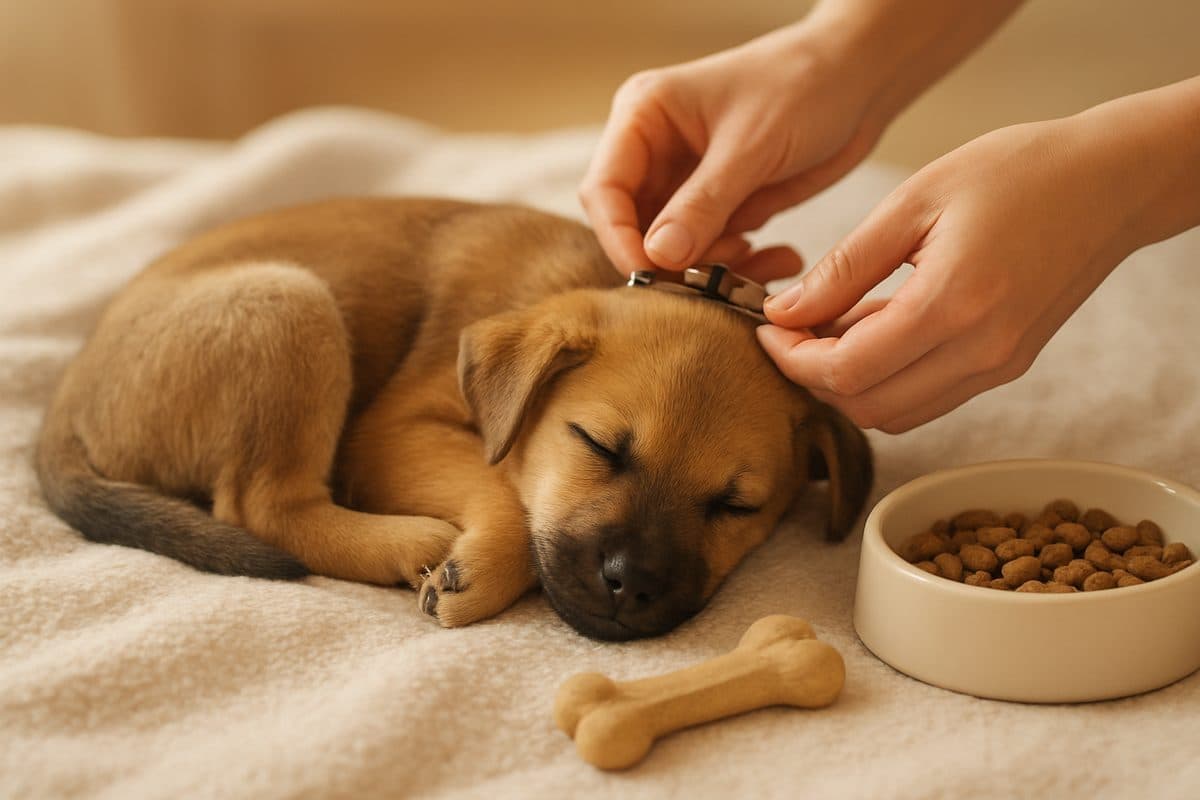
Gently touch your puppy across their entire body from birth, focusing on their ears, paws, mouth, and nails. Let unfamiliar people approach calmly and allow the puppy to initiate contact at its own pace.
Walk your puppy across different textures such as wood floors, tiles, rugs, ramps, and outdoor grounds. Introduce appliances like vacuums and hair dryers while turned off first, then activate them at a distance before bringing them closer.
Play recorded sound therapy tracks of fireworks and thunderstorms at low volume to condition your puppy to loud events.
[S1][S3][S5][S6][S7]How do you train a puppy for car travel and alone time?
You prepare your puppy by exploring stationary vehicles in the driveway and scheduling daily solitary crate sessions with food toys.
Habituate your puppy to vehicles in gradual stages. Let the puppy investigate the interior of a parked car and listen to the engine before you drive on roads.
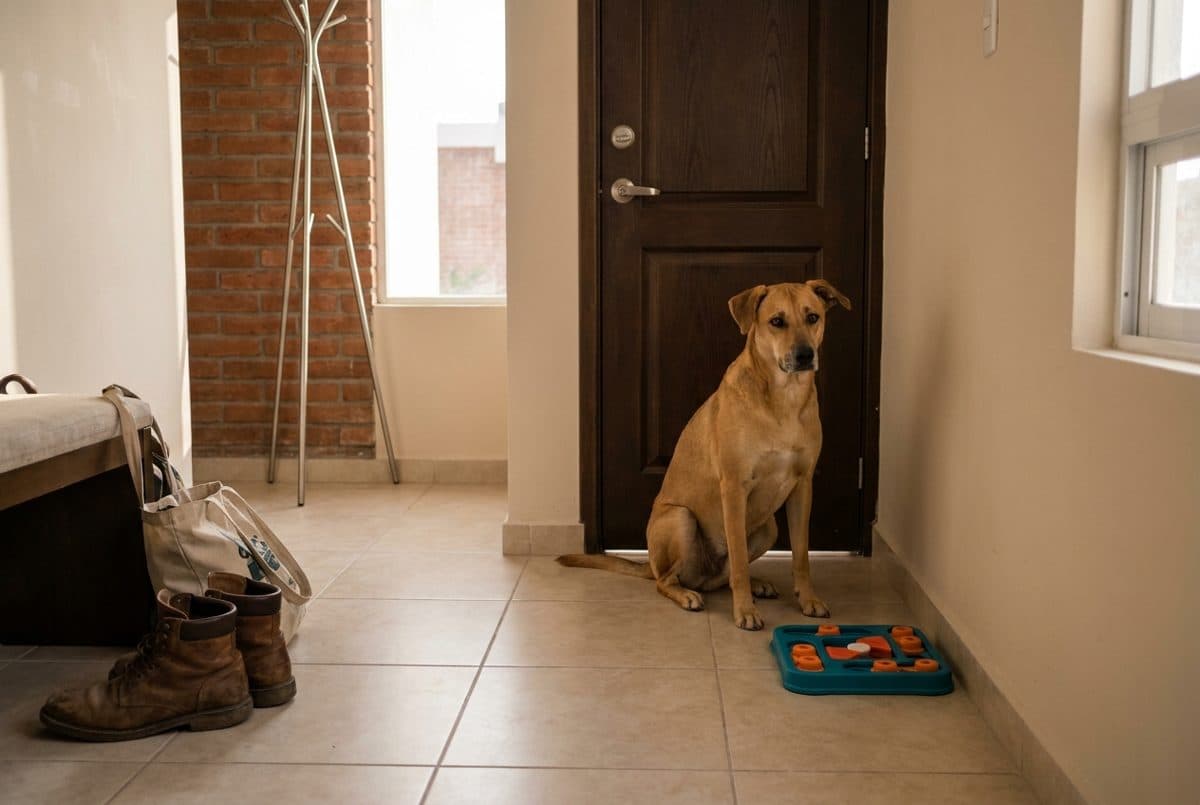
Schedule daily solitary periods in a pen or crate with food-dispensing puzzle toys. This independent time builds emotional resilience and prevents separation anxiety.
- Allow your puppy to explore the inside of a parked car.
- Turn on the vehicle engine while parked in your driveway.
- Drive short distances once your puppy remains calm.
- Place your puppy in a crate or pen with a food toy for regular solo rest periods.
How do you recognize and handle fear during socialization?
You recognize fear by watching for low body posture, facial stress cues, or treat refusal, and you respond by creating distance from the trigger.
Frightened puppies lower their heads, crouch toward the floor, and tuck their tails between their hind legs. Facial signs include flattened ears, widened pupils, rapid lip licking, yawning, and looking away.
A fearful puppy may freeze, shake, retreat, or refuse food treats. A wagging tail can reflect stress, conflict, or defensive tension.
Train using positive reinforcement with food treats, petting, and praise. Harsh corrections and dominance techniques increase fear, conflict, and defensive aggression.
- Stop the social interaction immediately when your puppy shows signs of fear.
- Move your puppy further away from the frightening object or animal.
- Give your puppy time to relax without forcing direct contact.
How should adult dogs socialize with other dogs?
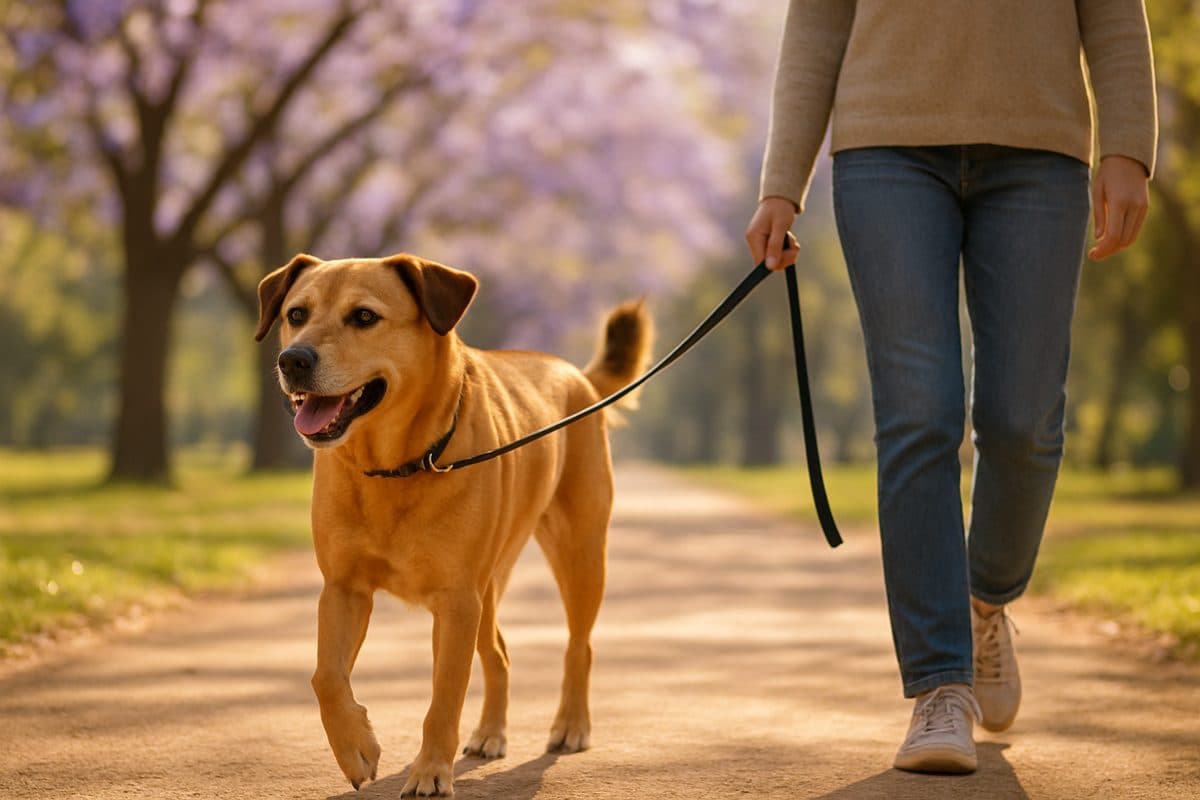
Adult dogs socialize successfully by remaining calm and neutral around unfamiliar dogs in public environments.
Adult canine play works best when dogs interact in matched pairs. Keep group play sessions limited to 3 dog pairs under direct human supervision.
- Reward your adult dog for maintaining calm neutrality around other dogs in public spaces.
- Pair your adult dog with a single compatible play partner.
- Limit group interactions to a maximum of 3 matched pairs.
When should you go to the vet right away?
- Lunging or snapping behaviors toward other animals or people, which require an evaluation by a veterinary professional.
This is general guidance. Always ask your vet.
Checked against sources; veterinary review pending. Information checked on September 27, 2026. Updated on September 28, 2026.
Written with AI help from the cited sources. A second model checked every fact against them.
Sources
- S1 AVSAB Position Statement On Puppy Socialization
- S2 Behavior society supports early puppy socialization
- S3 Puppy Behavior and Training - Socialization and Fear Prevention | VCA Animal Hospitals
- S4 Normal Social Behavior in Dogs - Dog Owners - Merck Veterinary Manual
- S5 Caring For Your Puppy - 6 weeks to 12 months - RSPCA - rspca.org.uk
- S6 Introducing your puppy to the world around them | Dogs Trust
- S7 Dog Bite Prevention | ASPCA
- S8 Social Groups for Dogs | VCA Animal Hospitals