Separation anxiety is a distress disorder triggered when a pet is separated from their primary caregiver. You can identify the signs early and help your pet through structured training and medical care.
This is general guidance. Always ask your vet.
What are the signs of separation anxiety in dogs?
Dogs with separation anxiety show distress through exit-point scratching, vocalization, house soiling, pacing, and food refusal when left alone.
Dogs direct destructive scratching, chewing, and digging toward doors and window frames. These actions cause fractured teeth and damaged nails.
Distress barking, whining, and howling begin within minutes of your departure.
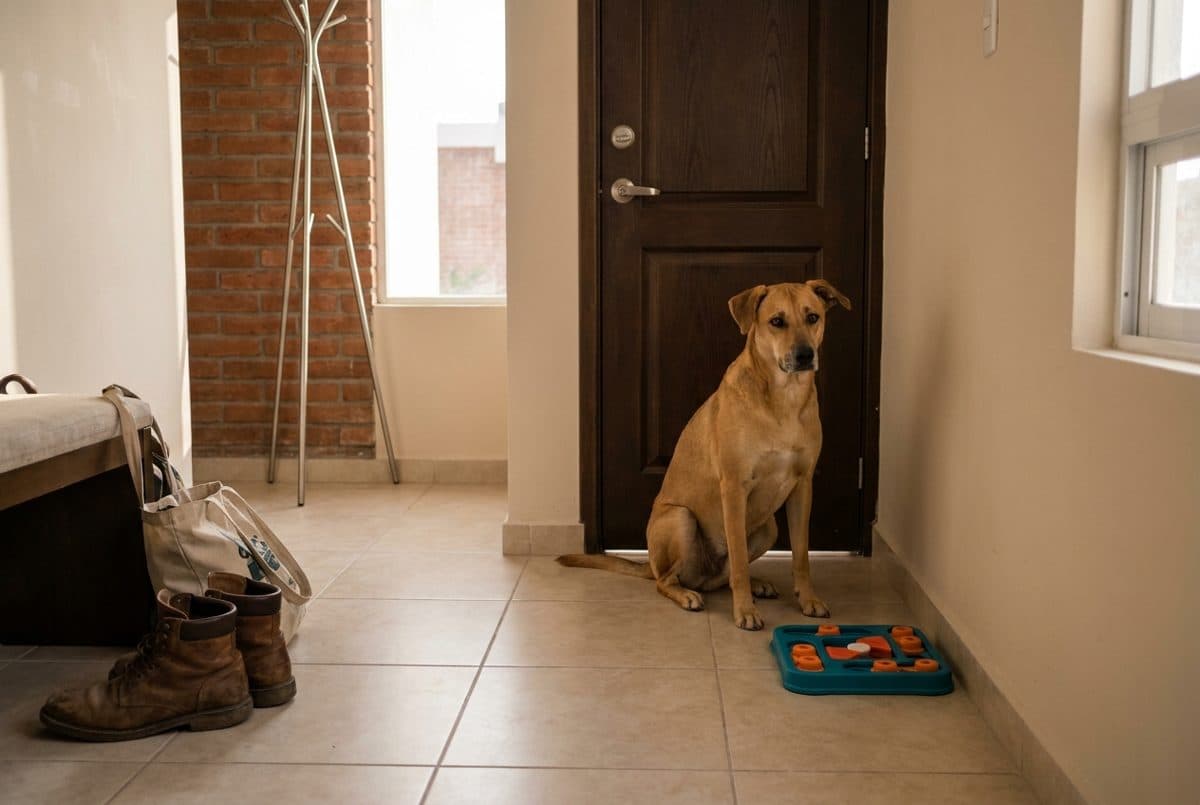
Dogs also tremble, pant heavily, salivate excessively, and pace in repetitive circuits. Many dogs leave meals, treats, and food puzzle toys untouched.
[S1][S2][S3][S4]What are the symptoms of separation anxiety in cats?
Cats display separation anxiety through crying, inappropriate urination, food refusal, and compulsive grooming.
Research shows that 64% of domestic cats form secure attachment styles to their human caregivers and experience reduced stress in their presence.
Male cats frequently show destructive behaviors. Female cats exhibit excessive grooming that causes hair loss. Cats left alone for long periods also refuse food entirely.
[S4][S5]How can you tell if a pet has separation anxiety when left alone?
You set up a video camera to record your pet during the first 30 to 60 minutes after you leave home.
In research studies, 8 out of 10 dogs struggle when left alone, and half exhibit silent distress.
Distress behaviors begin within the first 10 to 30 minutes following your departure.
Video recordings reveal silent signs of suffering, including pacing, heavy panting, lip licking, and complete immobility.
[S2][S3][S4]How do you train a dog with separation anxiety?
You train your pet to stay home alone through graduated micro-separations that maintain complete calm.
Desensitization requires keeping your pet below their anxiety threshold during every session.
Practicing predeparture routines decouples daily accessories from abandonment distress.
- Pick up your keys, put on your shoes, and wear your coat, then sit down inside your home without leaving.
- Step behind an interior door for 1 to 2 seconds before returning calmly.
- Move to exterior doors and build tolerance in short increments up to 40 minutes.
- Increase absence intervals by 5 to 15 minutes once your pet stays calm for 40 minutes.
What should you avoid doing with an anxious pet?
You must avoid scolding your pet, using crates for panicking animals, and encouraging emotional greetings.
Confining a panicked animal to a crate causes fractured teeth, torn nails, and severe confinement distress. A pet-proofed room behind a baby gate provides a safer alternative.
Letting pets cry it out causes sustained surges of stress hormones and risks learned helplessness. Dramatic departures and enthusiastic greetings increase arousal.
[S1][S2][S3][S4][S5]How can you calm a pet before leaving home?
Daily aerobic exercise, sensory buffers, and chew toys soothe your pet's nervous system before departure.
Physical exercise expends energy and allows your pet to settle. Sensory buffers muffle visual and auditory triggers that provoke distress.
- Provide 30 minutes of vigorous aerobic exercise completed 30 minutes before your departure.
- Close window blinds to block outside visual triggers.
- Play calming music or white noise to muffle exterior sounds.
- Offer food-dispensing puzzle toys and long-lasting chews to stimulate calming chewing responses.
When should a pet with separation anxiety see a vet?
You schedule a veterinary visit to run diagnostic tests that identify underlying medical issues.
A veterinarian performs physical exams, blood tests, and urinalysis to detect medical conditions such as urinary tract infections or systemic pain.
Veterinarians evaluate and prescribe anti-anxiety medications to balance brain neurochemistry.
Veterinarians provide referrals to board-certified veterinary behaviorists for specialized therapy when distress persists.
[S1][S2][S3][S5]When should you go to the vet right away?
- Broken or fractured teeth from biting exit points or crates
- Torn or bleeding nails from digging at doors or enclosures
- Severe hair loss and skin damage from compulsive over-grooming
- Complete food refusal during extended periods alone
- Sudden house soiling that may indicate urinary tract infections or systemic pain
This is general guidance. Always ask your vet.
Checked against sources; veterinary review pending. Information checked on September 27, 2026. Updated on September 28, 2026.
Written with AI help from the cited sources. A second model checked every fact against them.
Sources
- S1 Separation Anxiety | ASPCA
- S2 Separation Anxiety in Dogs - RSPCA - rspca.org.uk
- S3 How to tell if your dog has separation anxiety and 5 things to do if she does - AVSAB
- S4 Preventing Separation Distress During and After the COVID-19 Pandemic | VCA Animal Hospitals
- S5 Separation Anxiety in Cats | PetMD