
Argentina establishes entry rules to prevent the spread of animal diseases. SENASA inspects all pets at the border to verify their sanitary documents and health status.
This is general guidance. Always ask your vet.
What documents do I need to enter Argentina with a dog or cat?
You need an official International Veterinary Certificate (CVI) or an official legalized pet passport endorsed by the exporting country's veterinary authority.
A private veterinarian must perform a clinical examination within 10 days before certificate issuance to confirm the animal is free of infectious diseases and parasitosis. The government veterinary agency of the origin country, such as SENASICA in Mexico or USDA APHIS in the United States, must endorse the certificate before travel.
- Schedule a clinical examination with a licensed veterinarian within 10 days of certificate issuance.
- Obtain the completed health certificate certifying freedom from disease and parasites.
- Submit the certificate to the national veterinary authority in your origin country for official endorsement.
What are Argentina's rabies vaccination requirements for pets?
Argentina requires mandatory rabies vaccination for all dogs and cats aged three months and older, administered at least 21 days before entry for primary doses.
Rabies immunity duration follows the vaccine manufacturer's authorization, lasting one year in Latin America and up to three years in the United States and Canada. Keep the original vaccination certificate with you during your trip, as border officials return it to your custody.
SENASA exempts animals under three months old from rabies vaccination when the exporting authority certifies their age and verifies an absence of urban rabies at their residence for the preceding 90 days. Animals originating from regions officially certified as rabies-free under WOAH standards also qualify for vaccination exemptions. Argentina waives rabies antibody titration tests for all arriving dogs and cats.
- Verify that your pet is at least three months old before the rabies vaccination.
- Administer primary rabies shots at least 21 days before your arrival date.
- Retain the original rabies certificate to present at border control.
When must my pet receive parasite treatments before entering Argentina?
Your veterinarian must administer broad-spectrum internal and external parasite treatments within 15 days before the health certificate issuance date.
Your veterinarian selects authorized broad-spectrum products to eliminate internal and external parasites. They must record the exact treatment date, brand name, laboratory manufacturer, and active ingredients on the official certificate.
Border authorities check these entries to confirm compliance with MERCOSUR sanitary protocols. Missing product information can delay entry clearance.
- Bring your pet to the veterinarian within 15 days prior to document issuance.
- Have the veterinarian apply authorized internal and external antiparasitic treatments.
- Ensure the veterinarian records the dates, brands, manufacturers, and active ingredients on the certificate.
Does Argentina require a microchip for dogs and cats?
SENASA requires microchip information only when your pet already carries a transponder or when your departure country mandates electronic identification.
When your pet carries an electronic identification microchip, the transponder must comply with ISO standard 11784 or ISO standard 11785 Annex A.
Your veterinarian must record the transponder number, implantation date, and anatomical location directly on the health certificate for verification.
[S2][S3]What happens during pet inspection at Argentine border ports?
SENASA inspectors verify your pet's documents, perform a physical health check, and confirm the animal's identity at the border control post.
Pets traveling as accompanied baggage in the cabin or cargo hold do not require advance import permits, prior arrival notices, or landing authorizations. SENASA conducts border sanitary verification free of charge for accompanied baggage pets.
Unaccompanied pets shipped under cargo modalities require an intervention request submitted at least 24 business hours before arrival and incur official landing permit fees. Service dogs entering with handlers who present disability documentation and veterinary verification receive full exemptions from extraordinary inspection fees.
Arrivals with non-compliant documents face sanitary measures, including quarantine, isolation, or return transport at the owner's expense.
- Present your endorsed health certificate and original vaccination records to SENASA agents.
- Permit the sanitary officer to inspect your pet's physical condition.
- Receive clearance to enter the country once the officer validates your paperwork.
What are the rules for flying with pets to Argentina?
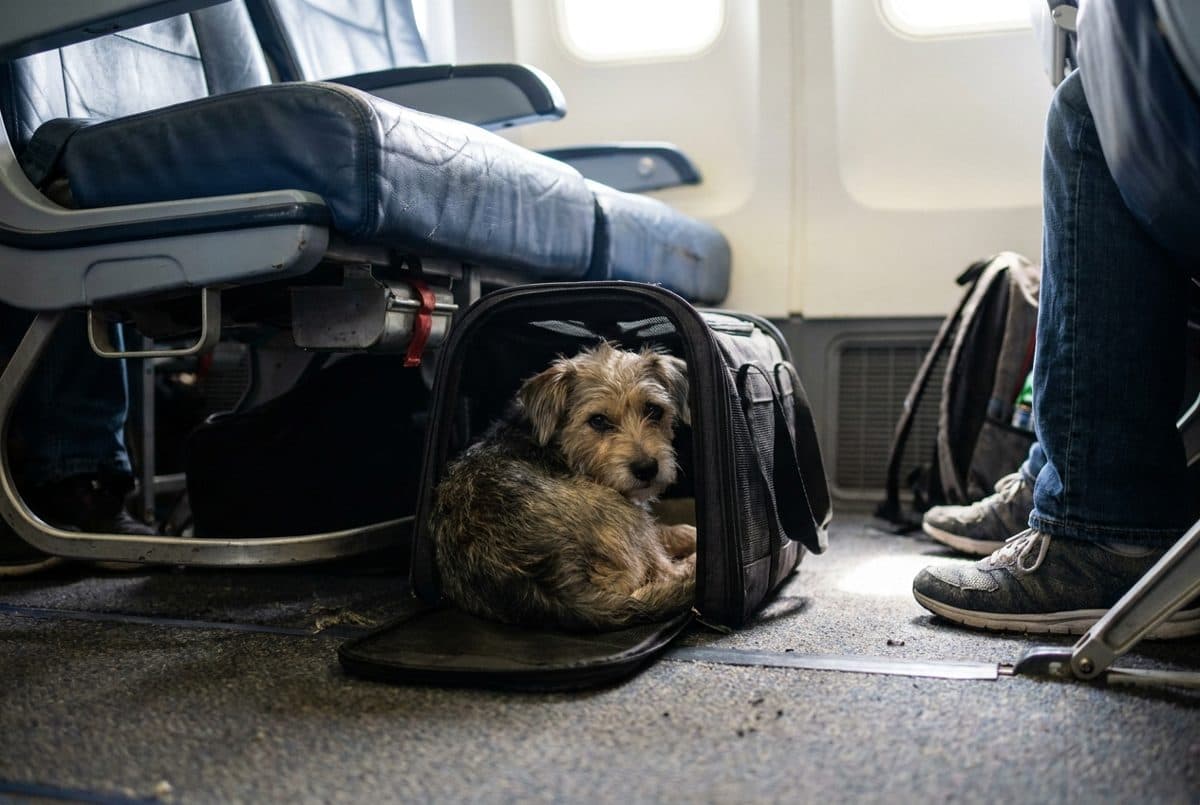
Airlines follow IATA Live Animals Regulations, which require travel carriers large enough for your pet to stand erect, turn around freely, and lie down naturally.
Choose an airline-approved crate that fits your pet's dimensions. International veterinary guidelines advise against sedating pets during air transport, as altitude changes increase the risk of cardiovascular and respiratory depression.
- Measure your pet to select a crate that permits standing, turning, and lying down.
- Consult your veterinarian about travel management without chemical sedatives.
How do I return home from Argentina with my pet?
You must obtain a new export certificate from SENASA through the SIGTrámites online portal before departure, unless your entry certificate explicitly covers your return trip.
To obtain an export certificate in Argentina, schedule an evaluation with a local licensed veterinarian to secure fresh clinical and rabies certificates for the SENASA portal. Pets with unexpired entry certificates containing return validity or pets with valid legalized passports may travel without new SENASA export paperwork.
For travel into Mexico, SENASICA requires a health certificate issued within 15 days of departure demonstrating health, valid rabies vaccination, and parasite treatments given within six months. For dogs entering the United States, CDC rules require an age of at least six months, a universal microchip, healthy appearance, and an online CDC Dog Import Form receipt.
- Visit a private licensed veterinarian in Argentina for health and rabies certification.
- Submit the records into SENASA's SIGTrámites portal to generate an export certificate.
- Complete the destination country's import forms before boarding your flight.
This is general guidance. Always ask your vet.
Checked against sources; veterinary review pending. Information checked on September 30, 2026. Updated on September 30, 2026.
Written with AI help from the cited sources. A second model checked every fact against them.
Sources
- S1 Ingresos con perros y/o gatos | Argentina.gob.ar
- S2 Modelo de Certificado Veterinario Internacional para la Importacion a la Argentina de Caninos y Felinos Domésticos - Senasa
- S3 Resolución 17/2015 | Argentina.gob.ar
- S4 Consideraciones generales y legislación | Argentina.gob.ar
- S5 Solicitar certificación veterinaria para traslados al exterior de perros y gatos | Argentina.gob.ar
- S6 Preguntas frecuentes para el viaje al exterior de perros y gatos - Senasa
- S7 Pet Travel From the United States to Argentina | Animal and Plant Health Inspection Service
- S8 Veterinary Health Certificate for Export of Dogs and Cats from the United States of America to Argentina - USDA APHIS
- S9 Entry Requirements for Dogs from Dog-Rabies Free or Low-Risk Countries | Importation | CDC
- S10 High-Risk Countries for Dog Rabies | Importation | CDC
- S11 Requisitos y procedimientos para viajar a México con tu mascota | Servicio Nacional de Sanidad, Inocuidad y Calidad Agroalimentaria | Gobierno | gob.mx
- S12 IATA - Traveler's Pet Corner